The manufacturing sector is currently navigating a profound demographic transition. According to the U.S. Census Bureau, nearly one-fourth of the manufacturing workforce is age 55 or older. As this generation of veteran machine operators and maintenance technicians approaches retirement, the industry faces the “Silver Tsunami”: a massive outflow of undocumented, experience-based tribal knowledge. This demographic shift exposes a critical vulnerability in traditional production systems: the fragility of autonomous maintenance.
For decades, facilities have relied on the intuition and sensory experience of veteran operators to keep complex machinery running. These operators can hear a subtle change in a spindle’s pitch, feel an abnormal vibration in a conveyor housing, or notice a slight discoloration in a lubricant before a catastrophic failure occurs. This is the essence of autonomous maintenance in practice. However, as these veterans exit the workforce, they take this intuitive understanding with them.
Replacing this expertise with paper checklists and rigid standard operating procedures has proven insufficient. New operators can follow a checklist to wipe down a machine or check a fluid level, but without the underlying context of why those actions matter, the process degrades into a compliance exercise rather than a strategic reliability initiative. The result is a resurgence of the “Maintenance Paradox”: manufacturers invest millions in advanced industrial equipment but rely on increasingly inexperienced operators using analog methods to maintain it.
This article provides a definitive answer to “what is autonomous maintenance” in the context of modern, digitally connected manufacturing. We will define autonomous maintenance meaning, explore why equipment deteriorates without it, outline the foundational seven steps of implementation, and demonstrate how digital connected worker platforms (specifically Intelycx ARIS and CORE) are decoupling autonomous maintenance success from individual human memory to secure long-term operational resilience.
Autonomous Maintenance Definition: What Is Autonomous Maintenance?
Autonomous maintenance is a foundational maintenance strategy where machine operators assume responsibility for the routine care, inspection, and minor upkeep of their own equipment, rather than relying exclusively on a dedicated maintenance department. It is fundamentally a transfer of ownership. Instead of operating a machine until it breaks and then calling a technician to fix it, the operator actively monitors the equipment’s condition to prevent the breakdown from occurring in the first place.
Historically, autonomous maintenance meaning is rooted in the Total Productive Maintenance (TPM) framework. Developed in Japan in the 1960s by Seiichi Nakajima and formalized by the Japan Institute of Plant Maintenance (JIPM), TPM established autonomous maintenance as its first and most critical pillar. The philosophy is straightforward: the person who interacts with the machine for eight hours a day is in the best position to notice when its condition begins to deviate from the optimal baseline.
In practice, autonomous maintenance involves training operators to perform basic tasks such as cleaning, lubricating, tightening loose fasteners, and conducting visual inspections. More importantly, it requires operators to develop the technical competency to detect early signs of abnormality, such as unusual noises, excessive heat, or fluid leaks, and either correct them immediately or escalate them accurately. By shifting these routine, high-frequency tasks to the production floor, autonomous maintenance frees highly skilled maintenance technicians to focus on complex diagnostics, planned overhauls, and strategic reliability engineering.
Why Does Equipment Deteriorate Without Autonomous Maintenance?
The strategic imperative for autonomous maintenance becomes clear when examining the root causes of equipment failure. According to extensive foundational research within the Total Productive Maintenance (TPM) framework, originally developed by Seiichi Nakajima and the Japan Institute of Plant Maintenance (JIPM), approximately 70% of all equipment breakdowns are caused by the deterioration of basic equipment functions. This deterioration is rarely sudden or catastrophic; rather, it is a slow, cumulative process driven by contamination, inadequate lubrication, and loosened components.
When a facility operates without a structured autonomous maintenance program, it invariably falls victim to “accelerated deterioration.” This occurs when the foundational conditions required for optimal machine performance are neglected. Dust accumulates on sensors, altering their calibration. Metal shavings mix with lubricating oil, transforming a friction-reducing fluid into an abrasive compound. Vibrations slowly loosen mounting bolts, leading to misalignment and increased mechanical stress.
Without operators actively monitoring and correcting these minor issues, the deterioration accelerates exponentially. What begins as a microscopic contaminant eventually causes a bearing to seize, which in turn causes a motor to overheat and fail, halting the entire production line. The financial impact of this chain reaction extends far beyond the cost of the replacement motor. It includes the cost of lost production time, the wages of idle operators, the expedited shipping fees for spare parts, and the potential penalties for missed delivery deadlines. By interrupting this cycle of accelerated deterioration, facilities that successfully implement autonomous maintenance typically see a 10% to 15% improvement in Overall Equipment Effectiveness (OEE) and a corresponding reduction in unplanned downtime within the first year. Autonomous maintenance resolves the root causes (dirt, friction, and vibration) before they compound into systemic failures.
How Does Autonomous Maintenance Work? The Restore, Improve, Maintain Framework
While autonomous maintenance is often described as a series of sequential steps, it is more accurately understood as a continuous cycle of learning and equipment improvement. The most effective implementations structure this cycle around three distinct phases: Restore, Improve, and Maintain. This framework shifts the focus from simply completing a checklist to fundamentally changing the relationship between the operator and the machine.
Phase 1 — Restore: The Initial Cleaning and Inspection
The Restore phase is the foundation of the autonomous maintenance process. The objective is not merely to make the equipment look presentable, but to return it to a “like-new” baseline condition. During this phase, cross-functional teams of operators, maintenance technicians, and engineers conduct an exhaustive, deep cleaning of the machine.
This cleaning is simultaneously an inspection process. As operators remove years of accumulated grime, oil, and debris, they uncover hidden defects that have been masked by the contamination. They identify cracked housings, frayed electrical cables, missing guards, and persistent fluid leaks. Every abnormality is documented, tagged, and systematically repaired. By the end of the Restore phase, the equipment is functioning at its designed capacity, and the operators have gained an intimate, tactile understanding of the machine’s components and normal operating state.
Phase 2 — Improve: Eliminating Contamination at the Source
Once the equipment is restored to its baseline condition, the Improve phase focuses on ensuring it stays that way. If operators must spend two hours every shift cleaning the same accumulation of metal dust, the autonomous maintenance program will quickly lose momentum. The goal of this phase is to identify the root sources of contamination and engineer solutions to eliminate or contain them.
This involves modifying the equipment to prevent dirt from entering critical areas and to make routine cleaning and inspection significantly easier. Operators and engineers collaborate to install better seals, redesign protective guarding, and route exhaust ventilation more effectively. Furthermore, they improve visual accessibility by replacing opaque metal covers with transparent acrylic panels, allowing operators to inspect internal belts or fluid levels without stopping the machine or removing safety guards.
Phase 3 — Maintain: Standardizing and Sustaining the Gains
The Maintain phase secures the improvements achieved in the previous phases through rigorous standardization. This is where the facility establishes the specific, routine tasks that the operators will perform daily, weekly, and monthly.
The standards dictate exactly what must be cleaned, lubricated, and inspected, detailing the methods, tools, and acceptable parameters for each task. Crucially, these standards are developed collaboratively with the operators, ensuring they are practical and realistic. To sustain these standards, facilities deploy visual management tools directly on the equipment. Gauges are marked with green and red zones to indicate acceptable operating ranges, lubrication points are color-coded to match the correct oil type, and alignment marks are painted on critical fasteners to make loosening instantly visible.
Autonomous Maintenance vs. Traditional Maintenance
To fully grasp what is autonomous maintenance, it is necessary to contrast it with the traditional maintenance paradigm that still dominates many manufacturing environments. The distinction is not merely a reallocation of tasks; it is a fundamental shift in organizational culture and responsibility.
| Characteristic | Traditional Maintenance | Autonomous Maintenance |
|---|---|---|
| Primary Responsibility | Maintenance technicians handle all equipment upkeep, from complex repairs to basic lubrication. | Operators handle routine cleaning, inspection, and lubrication; technicians focus on complex repairs. |
| Operational Mindset | “I operate the machine; you fix the machine.” | “We share responsibility for keeping the machine running optimally.” |
| Response Trigger | Reactive: Maintenance intervenes after a breakdown or performance drop has occurred. | Preventive: Operators intervene to correct minor abnormalities before they cause a breakdown. |
| Equipment Knowledge | Operators know how to run the machine; technicians know how it works internally. | Operators receive technical training to understand the machine’s functions, components, and failure modes. |
| Collaboration Level | Siloed: Operations and Maintenance function as separate, often adversarial departments. | Integrated: Operators and technicians collaborate daily on equipment health and continuous improvement. |
| Task Focus | Technicians spend significant time on low-value, routine tasks, leading to a backlog of critical repairs. | Technicians are freed from routine tasks, allowing them to focus on root cause analysis and reliability engineering. |
What Are the 7 Steps of Autonomous Maintenance?
The Japan Institute of Plant Maintenance (JIPM) established a formalized, seven-step methodology for implementing autonomous maintenance. This structured approach ensures that operators gradually build their technical competency, preventing facilities from shifting responsibility faster than the workforce can absorb it.
The process begins with initial cleaning and inspection. During this first step, operators perform a deep, comprehensive cleaning of the equipment to remove all contamination and expose hidden defects. This is not merely a housekeeping exercise; it establishes the baseline condition and serves as the operator’s initial technical training on the machine’s physical anatomy.
Once the baseline is established, the team must eliminate sources of contamination. Operators and engineers identify exactly where dirt, dust, and leaks are originating and implement physical modifications to contain or eliminate them at the source. By preventing contamination from reaching critical components, this step reduces the time required for future cleaning and protects the equipment from accelerated wear.
With the equipment stabilized, the facility establishes cleaning and lubrication standards. Based on the experience gained in the first two steps, the team develops provisional, documented standards detailing exactly how, when, and where the equipment must be cleaned and lubricated. This ensures the machine is maintained at its optimal baseline condition consistently across all shifts.
The fourth step requires operators to conduct general equipment inspections. At this stage, operators receive formal training from maintenance technicians on the specific subsystems of the machine, such as pneumatics, hydraulics, electrical circuits, and drive components. Armed with this technical knowledge, operators begin conducting detailed, routine inspections of these critical systems, actively monitoring the Failure Development Period (FDP): the crucial window between when a potential failure becomes detectable and when it degrades into a functional breakdown.
Following these inspections, the facility must standardize autonomous inspections. The team consolidates the cleaning, lubrication, and general inspection standards into a cohesive, highly visual autonomous maintenance schedule. This schedule is integrated seamlessly into the operator’s daily workflow, utilizing visual cues, color-coded gauges, and point-of-use instructions to make the right action the easiest action.
The principles of autonomous maintenance are then expanded to organize and manage the workspace. The team applies 5S methodologies (Sort, Set in order, Shine, Standardize, and Sustain) to ensure that tools, spare parts, and materials surrounding the machine are organized and easily accessible. A chaotic workspace inevitably leads to neglected maintenance tasks, so controlling the environment is as critical as controlling the machine.
In the final step, the facility achieves continuous autonomous execution. Autonomous maintenance transitions from a project into a self-sustaining culture. Operators continuously execute the established standards, track equipment performance data, and proactively suggest improvements to both the maintenance procedures and the equipment design. At this level of maturity, the operator is no longer just running the machine; they are actively managing its lifecycle.
Why Is Traditional Autonomous Maintenance Fragile Without Digital Support?
Despite its proven benefits, traditional autonomous maintenance is inherently fragile. It relies heavily on analog tools such as paper checklists, printed standard operating procedures (SOPs), and static visual aids, and the accumulated experience of the operators using them. As the Silver Tsunami accelerates the loss of veteran operators, this fragility becomes a critical operational risk.
When an experienced operator uses a paper checklist to inspect a hydraulic pump, they are not merely checking a box. They are applying years of context. They know that a specific pitch in the pump’s whine indicates cavitation, or that a slight drop in pressure on a specific gauge precedes a seal failure. When that veteran retires and a new operator inherits the same paper checklist, the context is lost. The new operator checks the box because the gauge is technically within the green zone, completely unaware of the subtle acoustic or vibratory cues that signal impending failure.
Furthermore, traditional autonomous maintenance suffers from the “Backlog Paradox.” When a facility first implements the program and operators begin inspecting equipment closely, they inevitably discover a massive volume of previously unnoticed defects. The maintenance department is suddenly flooded with work orders generated by the operators. If the facility lacks a digital system to efficiently triage, prioritize, and manage this influx of data, the maintenance team becomes overwhelmed. The operators, seeing their reported issues ignored, lose faith in the program, and the autonomous maintenance initiative collapses.
To survive the demographic transition and deliver sustainable reliability, autonomous maintenance must evolve from an analog, memory-based practice into a digital, data-driven system.
How Intelycx ARIS and CORE Enable Digital Autonomous Maintenance
While many industry sources suggest that a Computerized Maintenance Management System (CMMS) or an Enterprise Resource Planning (ERP) module is sufficient to digitize autonomous maintenance, Intelycx offers a different, operator-centric path. A CMMS is designed for maintenance technicians to manage work orders, not for operators to execute daily routines at the machine. Intelycx addresses the fragility of traditional autonomous maintenance by providing the digital infrastructure necessary to capture tribal knowledge and connect operator actions directly to real-time machine data. Through the integration of Intelycx ARIS and Intelycx CORE, facilities can deploy a resilient, digital autonomous maintenance strategy that does not degrade when personnel change.
Intelycx ARIS is an AI-powered connected worker platform that digitizes the entire autonomous maintenance workflow. Instead of relying on static paper checklists, operators access dynamic, step-by-step guidance via mobile devices or tablets directly at the machine. When a new operator is prompted to inspect a specific bearing, ARIS provides more than just a checkbox; it delivers rich, multimedia context. The platform can display a brief video demonstrating exactly how to check for excessive play, or an annotated image showing the precise location of the lubrication point.
More importantly, ARIS captures the tribal knowledge of veteran operators before they retire by digitizing the concept of the One-Point Lesson (OPL). Traditionally, an OPL is a brief, highly visual training document taped to a machine to communicate a single, specific piece of knowledge. In ARIS, the OPL becomes dynamic. If a senior technician knows a specific workaround for a recurring misalignment issue, that knowledge is recorded directly into the platform. When a new operator performs that specific inspection in the future, ARIS automatically presents the digital OPL precisely when it is needed. This ensures that the “why” behind the maintenance task is preserved, contextualized, and transferred, standardizing expertise across the entire workforce.
Intelycx CORE amplifies this capability by providing the underlying machine connectivity. CORE bridges the gap between the operator’s physical inspection and the machine’s internal telemetry. When an operator using ARIS notes an abnormal vibration during an autonomous maintenance round, CORE can simultaneously pull real-time vibration data from the machine’s sensors. This creates a closed-loop system where human observation is instantly validated by empirical data. By combining the digitized workflow of ARIS with the real-time visibility of CORE, Intelycx transforms autonomous maintenance from a vulnerable, analog routine into a robust, data-verified reliability engine.
Which Industries Apply Autonomous Maintenance Principles?
Autonomous maintenance principles are universally applicable, but the specific tasks and areas of focus vary significantly across different manufacturing sectors. The most successful implementations tailor the seven steps to their unique operational challenges and regulatory requirements.
Aerospace and Defense
Aerospace manufacturing operates under the rigorous constraints of AS9100 standards, where component failure is not an option. Autonomous maintenance in this sector focuses heavily on Foreign Object Debris (FOD) prevention and precision tooling care. Operators are responsible for meticulously cleaning workstations and inspecting composite lay-up tools or multi-axis machining centers before every shift. Because aerospace components are often high-value and low-volume, the cost of a single defect caused by a misaligned or dirty tool is astronomical. Operators are trained to identify micro-abrasions on cutting tools and verify the calibration of critical holding fixtures, ensuring that every part meets exact dimensional tolerances.
CNC Machining and Metal fabrication
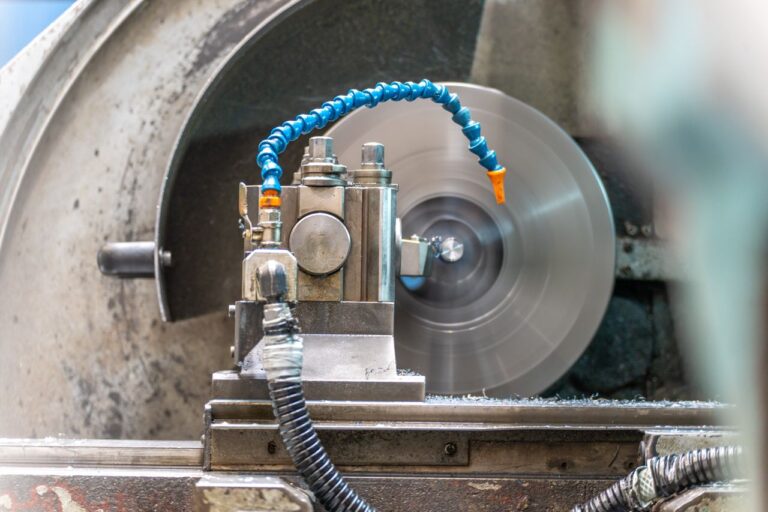
In precision machining environments, autonomous maintenance focuses heavily on preventing contamination and ensuring geometric accuracy. Operators are responsible for daily tasks such as clearing metal chips and debris from guide rails and work surfaces to prevent scoring. They routinely inspect and top up lubrication oil and coolant levels, as inadequate lubrication rapidly degrades tool life and surface finish. Furthermore, operators monitor spindle performance for unusual vibrations that could indicate bearing wear or tool imbalance.
Food and Beverage Processing
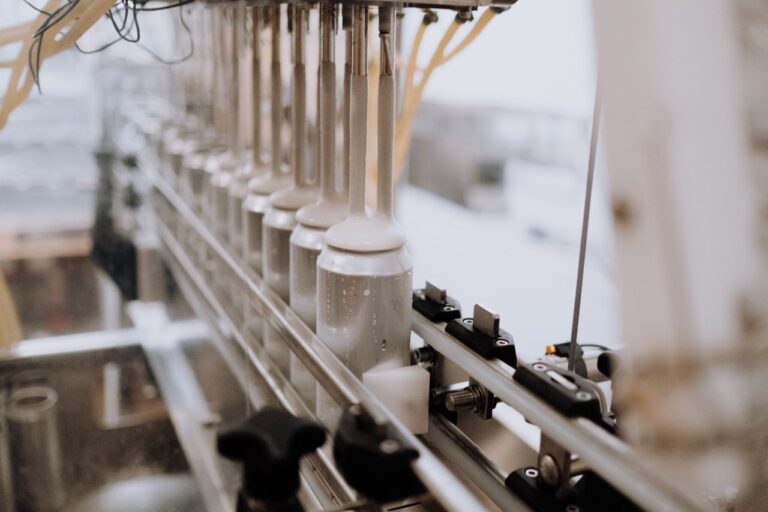
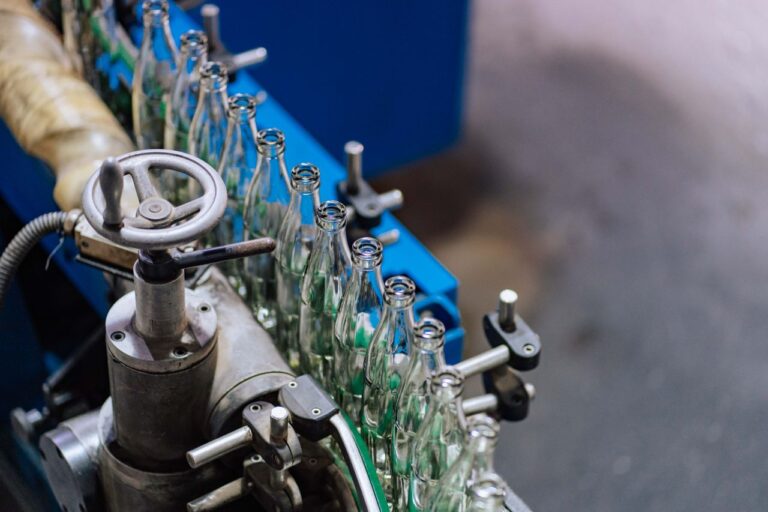
In the food and beverage industry, autonomous maintenance is inextricably linked to sanitation and food safety compliance. Operators perform rigorous, standardized cleaning of all product contact surfaces to prevent bacterial contamination and cross-contact between allergens. They inspect sealing jaws and cutting blades on packaging equipment for wear that could compromise package integrity. Additionally, operators routinely check pneumatic hoses and hydraulic lines for leaks, ensuring that food-grade lubricants are not compromised by external fluids.
Pharmaceutical and Life Sciences
Pharmaceutical manufacturing requires the highest level of precision and regulatory documentation. Autonomous maintenance in this sector emphasizes the strict adherence to Standard Operating Procedures (SOPs) and the meticulous recording of all maintenance activities to satisfy compliance audits. Operators inspect cleanroom environments and filtration systems, verify the calibration status of critical sensors, and ensure that all equipment functions within tightly controlled temperature and humidity parameters. The focus is on preventing any deviation that could impact drug efficacy or patient safety.
The Future of Autonomous Maintenance: From Operator-Led to AI-Assisted
As manufacturing continues its digital transformation, autonomous maintenance is evolving from a purely operator-led initiative into an AI-assisted partnership between human workers and intelligent systems. The integration of advanced analytics and machine learning is redefining how operators interact with their equipment, shifting the paradigm from calendar-based routines to condition-based interventions.
Industry analysts project that operators will increasingly move away from relying solely on static schedules to determine when to clean or lubricate a machine. Instead, AI algorithms, analyzing vast datasets generated by connected platforms like Intelycx CORE, will predict exactly when a specific component requires attention based on its actual operating history and real-time condition. Rather than an operator checking a bearing every Tuesday regardless of its condition, the system will dynamically adjust the operator’s autonomous maintenance route in Intelycx ARIS, directing them to the precise location where intervention is needed most urgently. This optimization of operator time is critical as the workforce shrinks.
Furthermore, the convergence of augmented reality (AR) and computer vision technologies is expected to dramatically enhance the operator’s diagnostic capabilities on the shop floor. While currently in early adoption phases across the industry, the trajectory suggests that an operator wearing AR glasses or using a mobile tablet could look at a complex hydraulic manifold and instantly see an overlay indicating which specific valve is exhibiting a pressure drop. This visual diagnostic would be accompanied by step-by-step visual instructions on how to adjust it, effectively bridging the skills gap in real-time. By augmenting human intuition with artificial intelligence and real-time data, the future of autonomous maintenance promises unprecedented levels of equipment reliability, operational efficiency, and workforce empowerment, ensuring that the critical knowledge required to run a modern facility is never lost to retirement.
Technical Glossary of Autonomous Maintenance Terms
Accelerated Deterioration: The rapid degradation of equipment condition caused by the neglect of basic maintenance tasks, such as cleaning, lubrication, and tightening.
Autonomous Maintenance (AM): A maintenance strategy where machine operators perform routine equipment care and inspection, freeing maintenance technicians for complex tasks.
Failure Development Period (FDP): The time interval between the point when a potential failure becomes detectable and the point when it degrades into a functional failure.
JIPM (Japan Institute of Plant Maintenance): The organization that formalized the Total Productive Maintenance (TPM) methodology, including the seven steps of autonomous maintenance.
One-Point Lesson (OPL): A brief, highly visual training document designed to communicate a single, specific piece of knowledge regarding equipment operation, maintenance, or safety.
Overall Equipment Effectiveness (OEE): A standard metric that evaluates how effectively a manufacturing operation is utilized, calculated by multiplying Availability, Performance, and Quality.
Total Productive Maintenance (TPM): A comprehensive, company-wide approach to equipment maintenance that seeks to maximize equipment effectiveness through the active involvement of all employees.
How Intelycx Helps Turn Manufacturing KPIs into Daily Guidance
Manufacturing KPIs only create value when they are accurate, real-time, and connected to action. That is the gap Intelycx is built to close.
The Intelycx platform connects legacy and modern machines into a single data foundation, normalizes and enriches signals so KPIs are calculated consistently across lines and sites, and provides real-time dashboards for operators, engineers, and leaders. On top of this connected data, Intelycx layers AI-driven insights so teams understand not just what changed in a KPI, but why, and what to do about it.
If you are working to move beyond spreadsheets and lagging reports, a unified manufacturing AI platform like Intelycx can help you turn KPIs from static charts into a living system for maximizing production efficiency every day. You can learn more about our solutions and approach at Intelycx.com.