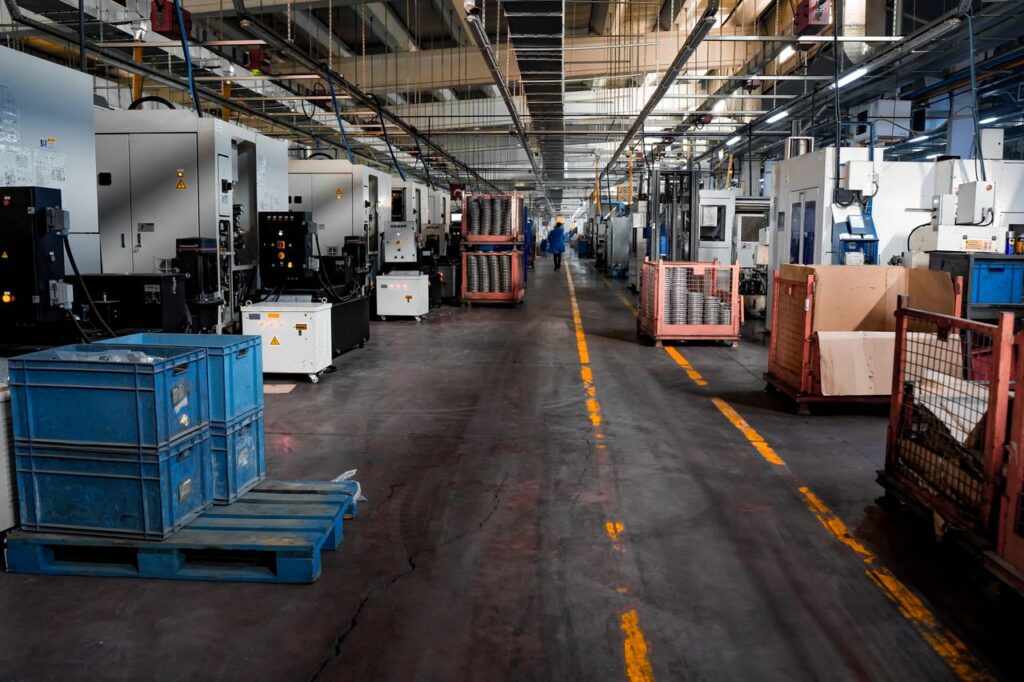
The modern manufacturing floor is navigating a high-stakes contradiction. Facilities invest millions in advanced automation and high-speed robotics, yet the physical workspace surrounding these machines remains disorganized, generating a hidden crisis of inefficiency. This creates the Visibility Paradox: manufacturers possess machines that process data in milliseconds, yet operators spend up to 20% of their shift searching for the right tool, navigating around misplaced materials, or interpreting outdated instructions. In an era where supply chain agility is the ultimate competitive moat, a disorganized workspace is not just a housekeeping issue; it is a strategic vulnerability that obscures real-time visibility and accelerates the loss of Tribal Knowledge as the Silver Tsunami of experienced operators retires.
This guide provides a definitive answer to how manufacturers overcome this paradox through rigorous 5s best practices. It covers the core 5s practices, a comprehensive 5s implementation guide, industry-specific examples, strategies for employee buy-in, and how modern digital tools serve as the nervous system of a visual factory. For those asking how to implement 5s effectively, this guide serves as the foundational blueprint.
What Are 5S Best Practices?
To define 5s best practices accurately, one must view them as the systematic, disciplined application of the five pillars of workplace organization: Sort, Set in Order (Straighten), Shine, Standardize, and Sustain. In a manufacturing environment, these best 5s practices are the tactical execution of visual management protocols designed to eliminate waste (muda) and establish a stable foundation for continuous improvement (kaizen). It is the discipline of ensuring that every tool, material, and piece of information has a specific location, enabling a new hire to operate with the same precision and safety as a 30-year veteran. In semantic terms, 5s manufacturing best practices represent the process of moving a production system from a state of high entropy (clutter and confusion) to a state of high conformance (visual control) through the constant application of standardized routines.
While many people view 5S as a simple cleaning initiative, true 5s lean best practices are far more robust. They serve as a real-time execution layer that integrates with Total Productive Maintenance (TPM), Overall Equipment Effectiveness (OEE) metrics, and Lean manufacturing goals. This connectivity ensures that every operator has the most current visual cues, every safety hazard is flagged instantly, and every machine anomaly is immediately visible. By eliminating the Information Gap on the shop floor, manufacturers move from a reactive state of firefighting to a proactive state of operational excellence.
| Feature | Traditional Housekeeping | 5S Best Practices |
|---|---|---|
| Focus | Surface-level cleanliness | Root cause elimination of waste (muda) |
| Goal | Make the area look presentable | Create a self-explaining, self-regulating workspace |
| Activity | Periodic cleaning events | Daily, standardized visual management routines |
| Nature | Reactive (clean when dirty) | Proactive (prevent dirt and disorganization) |
| Integration | Standalone activity | Embedded in TPM, OEE, and Kaizen systems |
Why Are 5S Practices the Backbone of Manufacturing?
5s practices are the strategic engine that converts raw production potential into operational resilience. In the US market, where regulatory standards from bodies like OSHA and the FDA are non-negotiable, a 5s guide is not merely a manual for neatness; it is a risk mitigation strategy. Effective 5s workplace organization guide principles ensure that every unit leaving the facility conforms to the Standard Work established by the engineering team, thereby reducing the Cost of Quality, which can consume up to 20% of a manufacturer’s total sales if left unmanaged.
The economic impact of ignoring 5s safety best practices is often visualized as the Hidden Factory of administrative waste and operational friction. The Delaware Valley Industrial Resource Center (DVIRC) documented a manufacturer that, after implementing 5S, gained 900 square feet of reclaimed floor space and achieved a 20% to 40% productivity increase, avoiding over $50,000 in operational costs. By implementing a rigorous 5s step by step implementation plan, manufacturers consistently achieve three categories of measurable return.
First, search time is eliminated. Identifying the exact location of tools via shadow boards and Kaizen foam inserts prevents the compounding cost of operators wandering the floor during a shift. Second, regulatory compliance is simplified. Maintaining the clear pathways and organized storage required for OSHA walking-working surface standards (29 CFR 1910.22) becomes a natural byproduct of the Set in Order and Standardize phases. Third, equipment reliability improves. Integrating Shine with Total Productive Maintenance (TPM) ensures that minor leaks, frayed belts, or loose fasteners are detected during the daily cleaning routine before they escalate into catastrophic, unplanned downtime events.
The 5S Maturity Model: Measuring Organizational Capability
To fully integrate 5s best practices, an organization must understand where it stands on the continuum of operational excellence. The 5S Maturity Model provides a structured framework for evaluating a facility’s progress from initial cleanup to a self-regulating, digitally enabled ecosystem.
Level 1: Reactive (The Baseline) At this stage, 5S is viewed strictly as a housekeeping activity. Cleaning occurs only before audits or VIP visits. Tools are frequently misplaced, and there are no standardized visual controls. The Information Gap is wide, and tribal knowledge dictates how work is organized.
Level 2: Defined (The Implementation Phase) The facility has completed initial Sort and Set in Order events. Basic visual controls, such as floor tape and shadow boards, are present. However, 5s guidelines are not consistently enforced, and the Sustain phase relies heavily on management pressure rather than operator habit.
Level 3: Managed (The Standardization Phase) Standard Operating Procedures (SOPs) are documented and accessible. Daily Shine routines are integrated into operator workflows. Audit scores are tracked, but the process remains manual and paper-based, leading to delayed corrective actions.
Level 4: Integrated (The Cultural Shift) 5S is fully integrated with Total Productive Maintenance (TPM) and continuous improvement initiatives. Operators take ownership of their workspaces. Cross-functional audits are routine, and the “Bonus S” (Safety) is explicitly managed. The culture has shifted from “I clean my area” to “We maintain our standards.”
Level 5: Predictive (The Digital Kaizen Era) The facility utilizes digital 5s practices. Real-time data from IIoT sensors and AI-guided audit platforms (like Intelycx ARIS) replace paper checklists. Anomalies are detected predictively, and the organization operates in a state of continuous, automated refinement.
How Does 5S Compare to Kaizen and Six Sigma?
When establishing a continuous improvement strategy, leaders often ask how 5S fits within the broader landscape of lean methodologies. While 5S, Kaizen, and Six Sigma are complementary, they serve distinct operational purposes. 5S is the prerequisite foundation; without the visual control and stability it provides, Kaizen events lack a baseline, and Six Sigma data is corrupted by environmental noise.
| Methodology | Primary Objective | Focus Area | Nature of Change |
|---|---|---|---|
| 5S | Workplace organization and visual control | The physical environment | Foundational, daily discipline |
| Kaizen | Continuous, incremental improvement | Process workflows | Iterative, cross-functional events |
| Six Sigma | Defect reduction and process stability | Statistical variance | Data-driven, project-based |
The 5S Implementation Guide: Sequential Simplicity
The 5s sort set in order shine standardize sustain sequence is not a menu of options; it is a dependent chain where each step builds upon the success of the previous one. Skipping Sort before attempting to Set in Order is the single most common reason 5S programs fail within 90 days of launch.
1. Sort (Seiri): Eliminating the Unnecessary
The first step in any 5s implementation guide is Sort. This involves going through all tools, materials, and equipment in a workspace and removing everything that is not strictly needed for current production operations. The core tool for this phase is the Red Tag System. When an item’s necessity is questionable, it receives a red tag and is moved to a central holding area. If it is not used within a defined period (typically 30 days), it is discarded, sold, or recycled. This immediately reclaims valuable floor space and reduces cognitive overload for the operators. In electronics manufacturing, for example, Sort routinely eliminates obsolete component trays and outdated tooling jigs that accumulate over product generations, reclaiming up to 15% of workstation surface area.
2. Set in Order (Seiton): A Place for Everything
Once the unnecessary items are removed, the next step is to Set in Order. This means arranging the remaining items so they are easy to find, use, and return. Best 5s practices dictate that tools used most frequently should be placed closest to the operator. This phase heavily utilizes visual management tools such as shadow boards, floor markings, and Kaizen foam in tool drawers. The goal is to make the workspace “self-explaining,” where anyone can walk into the area and immediately know where a specific wrench or gauge belongs. In apparel manufacturing, Set in Order standardizes the placement of cutting tools and measurement templates, reducing setup time between garment styles by up to 12 minutes per changeover.
3. Shine (Seisou): Inspection Through Cleaning
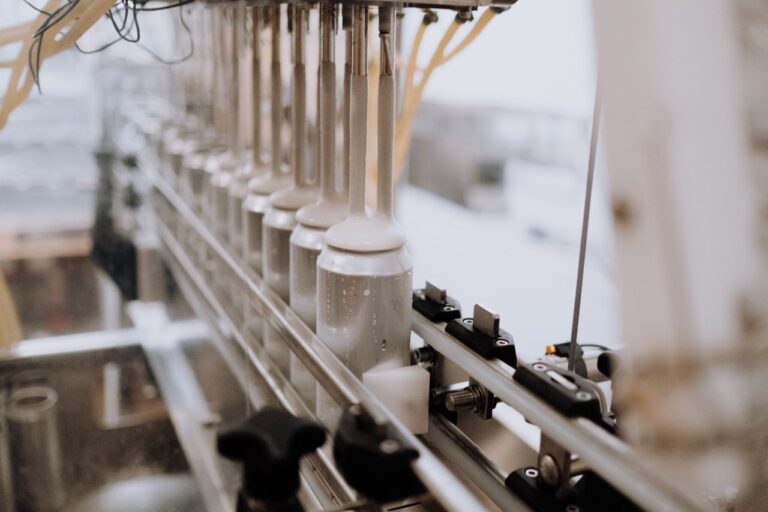
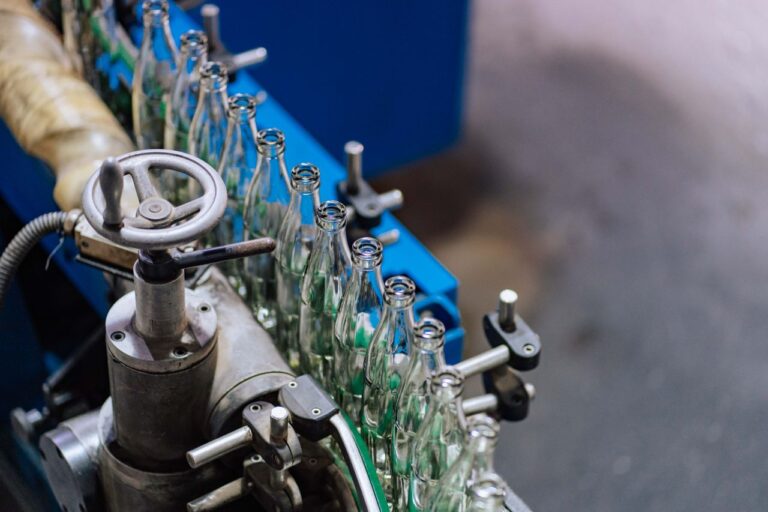
Shine is the practice of thoroughly cleaning the workspace and equipment on a daily basis. In the context of 5s continuous improvement practices, Shine is not just about aesthetics; it is an inspection process guided by the principle of “clean to understand.” As operators clean their machines, they are trained to look for abnormalities: a frayed belt, a loose bolt, or a minor oil leak. By catching these issues early, Shine becomes the first line of defense in Total Productive Maintenance (TPM), preventing minor wear from escalating into major unplanned downtime. In soft drink manufacturing, daily Shine routines on filling and capping machines detect micro-leaks in seals before they contaminate batches and trigger costly recalls.
4. Standardize (Seiketsu): Creating the Rules
Standardize is the bridge between a one-time cleanup and a permanent cultural shift. It involves creating the rules, schedules, and visual controls necessary to maintain the first three S’s. 5 s guidelines require the creation of standard operating procedures (SOPs) that explicitly detail who is responsible for which 5S tasks, when they must be completed, and what the best state looks like. Photo-based visual standards are posted directly at the workstation so operators have a clear, objective reference point. In cosmetics manufacturing, Standardize includes color-coded storage zones for raw ingredients, finished goods, and quarantine items, ensuring that FDA-regulated materials are never co-mingled.
5. Sustain (Shitsuke): Building the Habit
Sustain is universally recognized as the most difficult step. How to sustain 5s is the primary challenge for most organizations because it requires building a culture of discipline where 5S becomes a daily habit rather than a periodic event. 5s audit best practices play a critical role here. Regular, cross-functional audits using Gemba walks or Kamishibai boards ensure that standards are being met and provide a mechanism for continuous feedback and improvement. In precision farming equipment manufacturing, Sustain is reinforced through weekly cross-departmental 5S audits scored on a 100-point scale, with results posted publicly on the communication board to drive healthy competition between work cells.
The “Bonus S”: Safety
Many lean practitioners and organizations including the Lean Production community recognize a sixth S: Safety. While Safety is embedded within all five pillars (clear pathways in Set in Order, hazard identification in Shine, PPE storage in Standardize), naming it explicitly ensures it is never treated as an afterthought. A dedicated Safety audit checklist, integrated into the Sustain phase, ensures that OSHA compliance is a living, daily practice rather than a pre-audit scramble.
How to Encourage 5S Buy-In and Participation
The most technically perfect 5S program will fail without genuine employee engagement. Developing a timeline is the first strategy to drive sustainable buy-in across manufacturing organizations. A phased implementation timeline, communicated to all staff before the first Sort event, removes the fear of disruption. Operators who understand that Sort will happen in Cell A during Week 1 and Cell B during Week 2 are far more cooperative than those who experience 5S as a sudden, unannounced reorganization.
Demonstrating top-down support is equally critical. When plant managers and operations directors participate visibly in Gemba walks and 5S audits, the message is unambiguous: this is a strategic priority, not a housekeeping initiative. Leadership participation is the single most cited factor in 5S program longevity.
Tapping into technology accelerates adoption. Digital audit tools, mobile checklists, and real-time dashboards replace the paper-based systems that create the Information Gap. When operators can see their area’s 5S score updated in real time on a shared screen, accountability becomes self-reinforcing.
Finally, announcing awards cements the culture. Recognizing the top-performing work cell each month through a 5S merit award or a traveling trophy creates a culture of pride and healthy competition. Recognition programs cost almost nothing and consistently outperform financial incentives in sustaining 5S discipline.
What Should a 5S Communication Board Contain?
When asking what should a 5s communication board contain?, the answer is a dynamic, real-time management tool that empowers the team, not a static bulletin board. A world-class 5S board must contain visual standards, run charts for audit scores, a specific cleaning schedule, a red tag log, and an actionable improvement list.
Establish Visual Standards by posting high-resolution before-and-after photos of the work area to set the objective standard of cleanliness and organization. Display Audit Scores and Trends using a run chart that tracks the area’s 5S audit scores over the past 12 weeks, providing immediate visibility into sustainment. Post The 5S Schedule as a clear matrix detailing the daily, weekly, and monthly responsibilities, specifically naming the operators accountable for each task. Maintain The Red Tag Log as a tracking sheet for items in the holding area, ensuring they are processed within the defined timeframe. Manage The Action Item List to give operators a section to note safety hazards, broken tools, or ideas for continuous improvement, complete with assigned owners and due dates.
How Intelycx Elevates 5S Visual Management Best Practices
While many industry sources state that 5S is fundamentally a manual, paper-based discipline, Intelycx provides a different path by digitizing the visual factory. Traditional 5S relies on printed checklists and static whiteboards, which suffer from the Information Gap: a 24-hour lag between an audit finding and management visibility that allows non-conformances to compound undetected.
Intelycx bridges this gap by integrating digital 5s best practices directly into the manufacturing execution layer. Intelycx CORE connects to industrial assets to provide real-time data on machine health, reinforcing the Shine pillar by alerting operators to micro-stoppages or temperature anomalies before they require manual inspection. This predictive capability contributes to an up to 20% downtime reduction, transforming the daily cleaning routine from a reactive chore into a proactive reliability strategy.
Intelycx ARIS transforms the Standardize and Sustain pillars. Instead of relying on a physical binder of SOPs, ARIS delivers AI-guided, mobile-friendly 5S audit checklists directly to the operator’s tablet. It enables supervisors to conduct Gemba walks digitally, capturing photos of non-conformances and instantly routing action items to maintenance. By leveraging Generative AI and LLMs, ARIS codifies the tribal knowledge of how to properly organize and maintain a specific machine, driving a 40% faster onboarding process for new hires learning the facility’s 5S standards.
For automated visual inspection, Intelycx NEXACTO utilizes AI computer vision to provide continuous oversight of the production line. While operators focus on the 5S of their physical workspace, NEXACTO ensures the product itself meets rigorous standards, detecting defects as small as 250 microns in just 4.5 seconds per cycle with 99%+ accuracy. Together, these three platforms transform 5S from a housekeeping chore into a digitally enforced operational strategy that scales across every cell, shift, and facility.
The Future of 5S: Digital Kaizen and the 2026 Outlook
The concept of 5S is evolving from a physical discipline into a digital ecosystem. The era of Digital Kaizen is emerging, where AI and the Industrial Internet of Things (IIoT) augment the sustainment phase of 5S by providing continuous, data-driven feedback that no paper-based audit system can replicate.
The biggest challenge in 5s visual management best practices has always been the reliance on human discipline to maintain standards. Data from the American Society for Quality confirms that manufacturers who integrate digital visual management tools into their operations reduce the Cost of Poor Quality faster than those relying on manual 5S programs alone. As AI-powered vision systems and connected sensor networks become standard infrastructure, the Sustain pillar transitions from a cultural challenge into an automated, self-correcting system. By committing to these advanced 5s best practices, manufacturers transform their facilities from reactive environments into proactive, learning organizations that continuously close the gap between their current state and their operational ideal.
Technical Glossary of 5S Terms
5S: A workplace organization method originating in the Toyota Production System, using five Japanese words: seiri (Sort), seiton (Set in Order), seisou (Shine), seiketsu (Standardize), and shitsuke (Sustain).
Gemba Walk: A management practice of going to the actual place where value is created (the shop floor) to observe processes and engage directly with workers.
Kaizen: A Japanese business philosophy of continuous improvement that involves all employees, from the shop floor to senior management.
Kamishibai Board: A visual control board used to manage and track the completion of routine audits or tasks, typically using red and green cards to indicate completion status.
Muda: A Japanese word meaning wastefulness, and a key concept in lean process thinking that 5S is specifically designed to eliminate.
OEE (Overall Equipment Effectiveness): A gold-standard metric for measuring manufacturing productivity, calculated as the product of Availability, Performance, and Quality rates.
Red Tag System: A visual method used during the Sort phase of 5S to identify items that are not needed in the current workspace, placing them in a holding area for disposition.
Shadow Board: A visual management tool for organizing tools, where the outline of each tool is painted or drawn on the board so its absence is immediately obvious.
Total Productive Maintenance (TPM): A system of maintaining and improving the integrity of production and quality systems through the machines, equipment, processes, and employees that that add business value.
How Intelycx Helps Turn Manufacturing KPIs into Daily Guidance
Manufacturing KPIs only create value when they are accurate, real-time, and connected to action. That is the gap Intelycx is built to close.
The Intelycx platform connects legacy and modern machines into a single data foundation, normalizes and enriches signals so KPIs are calculated consistently across lines and sites, and provides real-time dashboards for operators, engineers, and leaders. On top of this connected data, Intelycx layers AI-driven insights so teams understand not just what changed in a KPI, but why, and what to do about it.
If you are working to move beyond spreadsheets and lagging reports, a unified manufacturing AI platform like Intelycx can help you turn KPIs from static charts into a living system for maximizing production efficiency every day. You can learn more about our solutions and approach at Intelycx.com.