
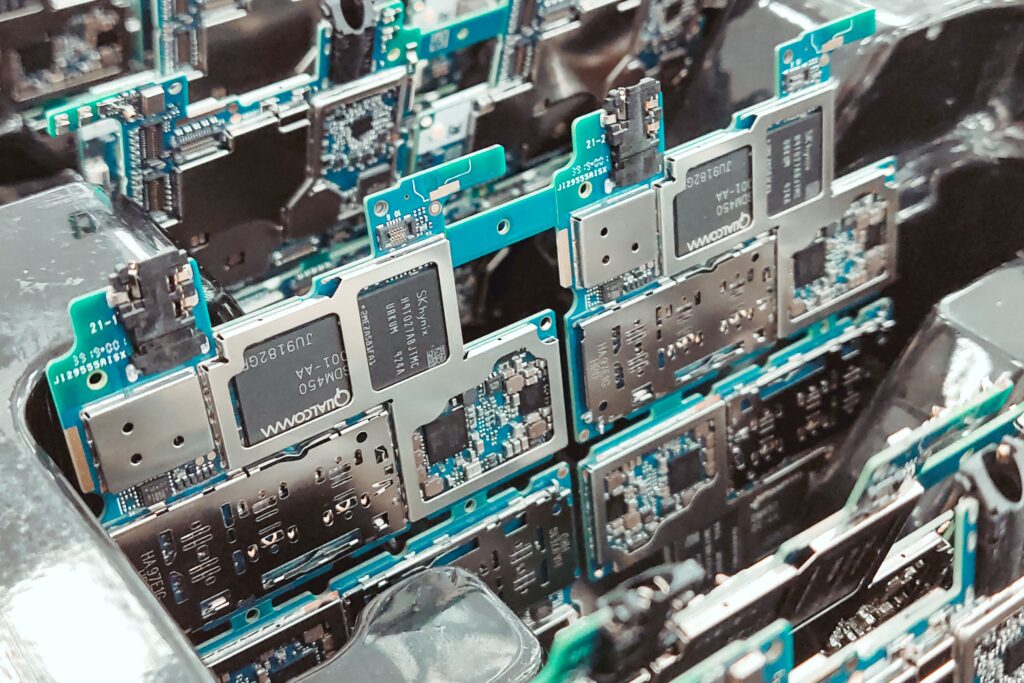
Electronics manufacturing is the industrial prdigital transformation in automotive manufacturingocess of converting engineered designs into functional electronic assemblies, sub-assemblies, and finished systems at commercial scale. It encompasses every step from design validation and component sourcing through printed circuit board assembly, system integration, functional testing, and outbound logistics. The electronics manufacturing industry serves virtually every sector of the modern economy, from automotive and aerospace to medical devices, industrial automation, and consumer electronics, making it one of the most structurally critical and operationally complex sectors in global manufacturing.
This article provides a definitive answer to what electronics manufacturing is, how the electronic manufacturing services industry (EMS) is structured, what the core process involves, which industries it serves, and why the data challenge in electronics manufacturing is the defining operational problem of the sector in 2026. The terms “electronics manufacturing” and “electronic manufacturing” are used interchangeably across the industry; both refer to the same sector and the same set of production capabilities.
How Is the Electronics Manufacturing Industry Structured?
The global EMS electronic manufacturing industry was valued at approximately $648 billion in 2025 and is projected to reach $1.2 trillion by 2035, driven by the proliferation of IoT devices, electric vehicles, advanced medical equipment, and defense electronics. The electronics manufacturing industry is not a single monolithic sector. It is a tiered ecosystem in which Original Equipment Manufacturers (OEMs) design and brand products, while Electronics Manufacturing Services (EMS) providers execute the physical production.
The distinction between OEM and EMS is foundational to understanding how the electronics manufacturing industry operates. An OEM owns the product design, the intellectual property, and the customer relationship. An EMS provider owns the manufacturing execution: the factory, the equipment, the process engineering, and the quality systems. This division of labor allows OEMs to focus on innovation and market development while EMS providers deliver the scale, compliance expertise, and supply chain infrastructure that volume production requires. The practice of manufacturing electronic products through an EMS partner rather than building in-house production capacity has become the dominant model across the electronics manufacturing industry.
The EMS industry is structured in four tiers based on annual revenue:
| Tier | Annual Revenue | Representative Companies | Primary Capability |
|---|---|---|---|
| Tier 1 | Above $5 billion | Foxconn, Pegatron, Jabil, Flex | Global scale, consumer electronics, hyperscale |
| Tier 2 | $500 million to $5 billion | Benchmark Electronics, Sanmina | Mid-volume, complex assemblies |
| Tier 3 | $100 million to $500 million | Regional specialists | High-mix, regulated industries |
| Tier 4 | Below $100 million | Local contract manufacturers | Prototype, low-volume, niche |
For most industrial OEMs in sectors such as medical devices, defense electronics, and industrial automation, Tier 3 and Tier 4 EMS providers are the most relevant partners. These providers specialize in high-mix, low-volume (HMLV) production, where the ability to manage frequent changeovers, complex bills of materials, and stringent regulatory requirements matters more than raw throughput.
Two further distinctions are essential for understanding how the electronics manufacturing industry is organized. The first is the difference between an EMS provider and an ODM (Original Design Manufacturer). An EMS provider manufactures to the OEM’s design and specification; the OEM retains full ownership of the intellectual property. An ODM designs the product itself and then manufactures it, typically offering it to multiple OEMs who rebrand it. For industrial OEMs with proprietary product designs, an EMS relationship is the correct model. The second distinction is between turnkey and consignment manufacturing. In a turnkey engagement, the EMS provider sources all components and manages the full supply chain. In a consignment engagement, the OEM supplies the components and the EMS provider provides only the labor and process capability. Most modern EMS relationships are turnkey or hybrid, because EMS providers’ purchasing scale and supplier relationships deliver component cost advantages that OEMs cannot replicate independently.
What Does the Electronics Manufacturing Process Involve?
The electronics manufacturing process converts a validated design into a shippable, tested product through six interconnected stages. Each stage must be executed with documented process control, because a defect introduced in any stage compounds in cost and complexity as the product moves downstream.
Design for Manufacturability (DFM) is the first and most leverage-generating stage. DFM is the upfront review that makes a design practical to build, inspect, and test. It addresses PCB pad geometry, trace width, component spacing, panelization strategy, test access points, and thermal management. A defect caught during DFM costs a fraction of what it costs to correct during assembly, and a fraction of a fraction of what it costs after a field failure. Facilities that skip or compress DFM consistently report higher scrap rates, longer cycle times, and elevated rework labor costs.
Component Sourcing and Supply Chain Management validates the bill of materials (BOM), qualifies component suppliers, manages lead times, and screens for counterfeit parts. In the electronics manufacturing industry, component availability is a structural constraint. Lead times for critical semiconductors have historically ranged from weeks to over a year during supply disruptions, and counterfeit components represent a multi-billion-dollar annual risk, particularly in defense and medical applications. A mature EMS provider maintains approved vendor lists, alternative component qualifications, and real-time supply chain visibility to protect production continuity.
PCB Assembly is the technical core of electronics manufacturing. Printed circuit board assemblies are produced using two primary technologies: Surface Mount Technology (SMT), in which components are placed on the PCB surface by automated pick-and-place machines and soldered in a reflow oven, and Through-Hole Technology (THT), in which component leads are inserted through drilled holes and soldered by wave soldering. Complex assemblies combine both technologies. The quality of PCB assembly is determined by solder paste deposition accuracy, component placement precision, reflow temperature profile control, and in-process inspection coverage.
IC Programming loads firmware, calibration data, and configuration parameters into integrated circuits (ICs) and microcontrollers during production. IC programming is performed either in-circuit (after the component is soldered to the PCB) or offline (before placement). For products that require software revisions during their production lifecycle, the EMS provider must have a controlled IC programming process that ensures every unit ships with the correct, verified firmware version. A programming error that ships undetected is a field failure.
System Integration and Box Build assembles completed PCBs with cables, wire harnesses, mechanical enclosures, thermal interfaces, and firmware into finished units. Box build is where the product takes its final form, and it is the stage where integration errors, connector mis-seating, and firmware loading failures are most likely to occur if work instructions are not tightly controlled.
Inspection and Testing verifies that every unit meets specification before it leaves the facility. The electronics manufacturing industry uses a layered inspection and test strategy:
| Method | What It Detects | When Applied |
|---|---|---|
| Solder Paste Inspection (SPI) | Paste volume, alignment, bridging | After paste printing, before placement |
| Automated Optical Inspection (AOI) | Component presence, polarity, solder quality | After reflow soldering |
| X-Ray Inspection | Hidden solder joints (BGA, QFN) | After reflow, for complex packages |
| In-Circuit Test (ICT) | Open circuits, shorts, component values | After PCB assembly |
| Functional Test (FCT) | End-to-end product performance | After box build |
| Environmental Stress Screening (ESS) | Latent defects under thermal/vibration stress | Before shipment in high-reliability sectors |
Outbound Logistics encompasses ESD-safe packaging, regulatory labeling, documentation packages, and shipment coordination. For regulated industries, the documentation package (traveler records, test data, and certificates of conformance) is as important as the physical product.
What Industries Does Electronics Manufacturing Serve?
Electronics manufacturing serves medical devices, aerospace and defense, automotive, industrial automation, consumer electronics, and telecommunications, with each sector operating under distinct quality systems, regulatory frameworks, and traceability requirements. The operational requirements vary so significantly by industry that an EMS provider certified for medical device production operates under a fundamentally different quality management system than one serving consumer electronics.
| Industry | Key Requirement | Governing Standard |
|---|---|---|
| Medical Devices | Full traceability, validated processes, FDA compliance | ISO 13485, 21 CFR Part 820 |
| Aerospace and Defense | ITAR compliance, AS9100 quality system, counterfeit prevention | AS9100D, ITAR, MIL-SPEC |
| Automotive | Zero-defect quality, functional safety, PPAP documentation | IATF 16949, ISO 26262 |
| Industrial Automation | High reliability, extended product lifecycle support | IPC-A-610, ISO 9001 |
| Consumer Electronics | High volume, rapid NPI, aggressive unit cost targets | IPC-A-610, RoHS, REACH |
| Telecommunications | Signal integrity, EMC compliance, density | IPC-A-610, FCC, CE |
The regulatory and quality requirements of medical, aerospace, and automotive electronics manufacturing are not incremental variations on standard EMS practice. They represent fundamentally different operating models, with validated processes, serialized unit-level traceability, and documented corrective action systems that require dedicated infrastructure and expertise.
What Makes Electronics Manufacturing Operationally Complex?
Electronics manufacturing is structurally more complex than most other manufacturing sectors because of five interconnected factors: high-mix, low-volume (HMLV) production models, component miniaturization, continuous regulatory compliance obligations, the Silver Tsunami workforce transition, and supply chain fragility exposed by the semiconductor shortage of 2020 to 2023.
High-Mix, Low-Volume (HMLV) Production is the dominant production model in industrial electronics manufacturing. Unlike automotive stamping or consumer goods packaging, where a single product runs for weeks or months on a dedicated line, an HMLV electronics facility may run dozens of different PCB assemblies in a single shift, each with its own placement program, solder profile, test fixture, and work instruction. Every changeover is a potential quality risk and a productivity loss. Managing HMLV production efficiently requires rapid changeover capability, digital work instructions, and real-time production tracking.
Miniaturization and Component Complexity have made electronics manufacturing progressively more demanding. Modern PCBs incorporate components with pitches below 0.4 mm, ball grid array (BGA) packages with hundreds of hidden solder joints, and multi-layer boards with 20 or more copper layers. These geometries require placement accuracy measured in microns, solder profile control within degrees Celsius, and inspection methods that can detect defects invisible to the human eye.
Regulatory Compliance in electronics manufacturing is not a one-time certification. It is a continuous operational discipline. RoHS and REACH compliance requires material traceability through the supply chain. ITAR compliance in defense electronics restricts who can handle certain components and data. FDA validation in medical electronics requires documented evidence that every process parameter is controlled and every deviation is investigated. Compliance failures in electronics manufacturing carry consequences that range from product recalls to criminal liability.
The Silver Tsunami is reshaping the electronics manufacturing workforce at an accelerating rate. The operators and process engineers who built the institutional knowledge of how specific products are assembled (which solder profile works for a particular board, which placement offset corrects for a specific feeder, which test sequence catches the failure mode that appears only under thermal stress) are retiring. This Tribal Knowledge is not documented in any ERP system or MES. It lives in the heads of individuals, and when those individuals leave, the knowledge leaves with them. A Tier-2 electronics contract manufacturer that loses its senior SMT process engineer does not just lose a person. It loses years of accumulated process optimization that cannot be reconstructed from documentation alone. This is the defining workforce challenge of manufacturing electronics at scale in 2026.
Supply Chain Fragility in the electronics manufacturing industry was exposed structurally by the semiconductor shortage of 2020 to 2023, which idled automotive and industrial production lines globally. The root cause was not a single disruption but a systemic vulnerability: deep, single-source supply chains optimized for cost with no visibility into sub-tier supplier capacity. Electronics manufacturers that had invested in supply chain visibility tools and alternative component qualification programs recovered faster and maintained delivery commitments that their competitors could not.
What Is the Data Challenge in Electronics Manufacturing?
Electronics manufacturing is the most data-intensive manufacturing sector in the world. A single PCB assembly line generates data from solder paste printers, pick-and-place machines, reflow ovens, AOI systems, X-ray systems, ICT fixtures, and functional test stations, continuously, across every production shift. A facility running 10 SMT lines generates tens of millions of data points per day.
The problem is not that electronics manufacturers lack data. The problem is that the data is fragmented across incompatible systems, proprietary machine protocols, and disconnected databases. The AOI system stores its results in one format. The ICT system stores its results in another. The ERP system holds the production order and BOM. The MES, if one exists, holds the routing and traveler. None of these systems speak to each other in real time, and the result is what Intelycx describes as the Industrial Data Gap: a facility that generates enormous volumes of process data but cannot use it to make real-time decisions.
The consequences of the Industrial Data Gap in electronics manufacturing are specific and measurable. When a field failure occurs and the root cause investigation begins, engineers must manually correlate AOI data, reflow oven logs, ICT results, and component lot traceability records across four or five separate systems. This process takes days in a facility without connected data infrastructure. In a facility with a Unified Namespace, it takes minutes. When a solder paste printer begins drifting outside its control limits, a connected system detects the trend and alerts the process engineer before defective boards reach the reflow oven. In a disconnected facility, the drift is not detected until AOI flags a batch of defective assemblies, after the damage is done.
This is the Hidden Factory of electronics manufacturing: the thousands of engineering hours spent each year manually extracting, reconciling, and formatting data from disconnected systems instead of using that data to prevent defects and reduce downtime. In a Tier-3 electronics contract manufacturer running 6 SMT lines, the Hidden Factory can consume 40% or more of the process engineering team’s available time, time that should be directed at yield improvement, new product introduction, and changeover reduction.
The data challenge in electronics manufacturing is also a Tribal Knowledge challenge. The process parameters that define how a specific product is built (the reflow profile, the placement offsets, the test thresholds) are often stored in the memory of the engineer who set them up, not in a system that a new operator can access. When that engineer is no longer available, the knowledge is gone. This is the Silver Tsunami’s most damaging expression in electronics manufacturing: not the loss of labor, but the loss of process intelligence.
How Does Intelycx Address the Electronics Manufacturing Data Challenge?
Intelycx addresses the Industrial Data Gap in electronics manufacturing through three integrated products: CORE, which unifies all machine and system data into a real-time Unified Namespace; ARIS, which captures and delivers the Tribal Knowledge of the electronics manufacturing workforce; and NEXACTO, which provides AI-powered visual inspection down to 250 microns.
Intelycx CORE connects every data source on the electronics manufacturing floor (SMT machines, reflow ovens, AOI systems, ICT fixtures, functional test stations, ERP, and MES) into a Unified Namespace that provides a real-time, single source of truth for the entire facility. CORE communicates with legacy equipment through standard industrial protocols (OPC-UA, MQTT, Modbus, PROFINET) and proprietary machine interfaces, eliminating the need for manual data extraction. A Tier-3 electronics contract manufacturer implementing CORE gains real-time visibility into line OEE, first-pass yield by product and by station, component consumption versus BOM, and reflow profile adherence, from a single dashboard, updated continuously. CORE eliminates the Hidden Factory by automating the data flows that previously required manual extraction and reconciliation, returning engineering time to productive use.
Intelycx ARIS captures and institutionalizes the Tribal Knowledge of the electronics manufacturing workforce before it retires. ARIS converts the tacit expertise of senior process engineers (solder profiles, placement offset corrections, test sequence logic, troubleshooting decision trees) into structured, searchable digital work instructions that any operator can access at the point of need. When a new SMT operator encounters a placement defect on a product they have never built before, ARIS provides the exact corrective action that the senior engineer would have prescribed, without requiring that engineer to be present. This is Just-in-Time knowledge delivery, and it is the structural answer to the Silver Tsunami in electronics manufacturing. ARIS also accelerates new product introduction by making the process setup knowledge for existing products immediately accessible to the engineers responsible for qualifying new ones, reducing the institutional memory dependency that slows NPI in HMLV facilities.
Intelycx NEXACTO provides AI-powered visual inspection with detection capability down to 250 microns, enabling electronics manufacturers to identify solder defects, component misalignment, and surface anomalies that are invisible to standard AOI systems and to the human eye. NEXACTO integrates directly into the production line, delivering inspection results in real time and feeding defect data back into CORE’s Unified Namespace for closed-loop quality control. For medical device and aerospace electronics manufacturers, where a single undetected defect can trigger a field recall, NEXACTO provides the inspection confidence that manual and standard automated inspection cannot. In HMLV production environments, where frequent product changeovers mean that each new board type introduces new defect risk, NEXACTO’s AI model adapts to each product’s specific inspection requirements without requiring manual reprogramming of inspection rules.
Use Case: Tier-3 Electronics Contract Manufacturer, Industrial Automation Sector
Consider a Tier-3 electronics contract manufacturer producing control boards for industrial automation customers across 14 active product families. The facility runs 6 SMT lines and processes approximately 800 PCB assemblies per shift. Before implementing Intelycx CORE, the facility’s process engineers spent an estimated 60% of their time manually extracting and correlating data from AOI, ICT, and reflow systems to generate weekly quality reports. First-pass yield across the facility averaged 91.4%, with the root cause of recurring defects taking an average of 4.2 days to identify and resolve.
After implementing CORE to unify all production data sources and ARIS to digitize the process knowledge of its three most experienced SMT engineers, the facility reduced its defect root cause investigation time from 4.2 days to 6 hours. First-pass yield improved to 96.1% within 90 days, driven by the ability to detect reflow profile drift in real time and correct it before defective boards reached AOI. The engineering team reclaimed approximately 35% of their working time from data collection and reporting, redirecting it to process improvement and new product introduction support.
What Is the Future of Electronics Manufacturing?
The electronics manufacturing industry in 2026 is being reshaped by four structural forces: reshoring and nearshoring pressure, AI-driven process optimization, miniaturization and advanced packaging demands, and sustainability reporting obligations under the EU’s Ecodesign Regulation and CSRD.
Reshoring and Nearshoring are accelerating as geopolitical risk and supply chain fragility push OEMs to reduce their dependence on distant, single-region production. The United States, Mexico, and Eastern Europe are attracting significant new electronics manufacturing investment. The operational challenge of reshoring is that it requires building high-throughput, high-quality production capability with a workforce that lacks the deep institutional knowledge of established Asian EMS facilities. This makes real-time data connectivity and digital knowledge capture not optional enhancements but foundational requirements for reshored facilities to compete.
AI-Driven Process Optimization is moving from pilot programs to production deployment across the electronics manufacturing industry. AI models trained on historical process data (reflow profiles, placement accuracy logs, AOI defect classifications) are beginning to predict quality outcomes before they occur and recommend process adjustments in real time. The prerequisite for AI in electronics manufacturing is connected data infrastructure. An AI model cannot optimize a process it cannot see.
Miniaturization and Advanced Packaging will continue to push the limits of assembly process capability. The transition to chiplets, system-in-package (SiP) architectures, and embedded components will require new soldering technologies, new inspection methods, and new process control disciplines. EMS providers that invest in process capability now will be positioned to serve the next generation of product designs. Those that do not will find themselves unable to quote the work.
Sustainability and Circular Economy Requirements are becoming contractual obligations in electronics manufacturing, particularly for OEMs serving European markets under the EU’s Ecodesign Regulation and Corporate Sustainability Reporting Directive (CSRD). Tracking material content, energy consumption, and end-of-life recyclability requires the same connected data infrastructure that quality and efficiency optimization demands. The sustainability reporting requirement and the operational excellence requirement converge on the same solution: a unified, real-time data layer across the entire facility.
Technical Glossary
AOI (Automated Optical Inspection): A machine vision system that inspects PCB assemblies for solder defects, component misalignment, and missing components after reflow soldering.
BGA (Ball Grid Array): A surface-mount component package in which solder balls on the underside of the component form the electrical connections to the PCB. BGA joints are hidden after reflow and require X-ray inspection to verify quality.
BOM (Bill of Materials): A structured list of all components, sub-assemblies, and materials required to produce a specific electronic assembly, including part numbers, quantities, and approved vendor information.
Box Build: The system-level integration stage in electronics manufacturing in which PCBs, cables, wire harnesses, and mechanical components are assembled into a finished unit.
DFM (Design for Manufacturability): The process of reviewing and optimizing a product design to ensure it can be manufactured reliably, efficiently, and cost-effectively at the intended production volume.
EMS (Electronics Manufacturing Services): The full scope of contract manufacturing capabilities provided to OEMs, including PCB assembly, system integration, testing, supply chain management, and lifecycle support.
HMLV (High-Mix, Low-Volume): A production model in which a facility manufactures many different product variants in relatively small quantities, requiring frequent changeovers and flexible production systems.
ICT (In-Circuit Test): An electrical test method that verifies the structural integrity of a PCB assembly by probing individual component connections to detect open circuits, short circuits, and out-of-tolerance component values.
OEM (Original Equipment Manufacturer): A company that designs and markets a product but outsources its physical production to an EMS provider.
Reflow Soldering: The process of melting solder paste to create permanent electrical connections between SMT components and PCB pads, performed in a reflow oven with a precisely controlled temperature profile.
SMT (Surface Mount Technology): The dominant PCB assembly technology in which components are mounted directly onto the surface of the PCB and soldered in a reflow oven, enabling high component density and automated assembly.
Tribal Knowledge: The accumulated process expertise held by experienced operators and engineers, covering specific solder profiles, placement offset corrections, and troubleshooting sequences, that is not formally documented and is at risk of being lost when those individuals retire.
Unified Namespace (UNS): A software architecture that aggregates data from all machines, systems, and applications across a manufacturing facility into a single, real-time accessible data layer.
How Intelycx Helps Turn Manufacturing KPIs into Daily Guidance
Manufacturing KPIs only create value when they are accurate, real-time, and connected to action. That is the gap Intelycx is built to close.
The Intelycx platform connects legacy and modern machines into a single data foundation, normalizes and enriches signals so KPIs are calculated consistently across lines and sites, and provides real-time dashboards for operators, engineers, and leaders. On top of this connected data, Intelycx layers AI-driven insights so teams understand not just what changed in a KPI, but why, and what to do about it.
If you are working to move beyond spreadsheets and lagging reports, a unified manufacturing AI platform like Intelycx can help you turn KPIs from static charts into a living system for maximizing production efficiency every day. You can learn more about our solutions and approach at intelycx.com.