
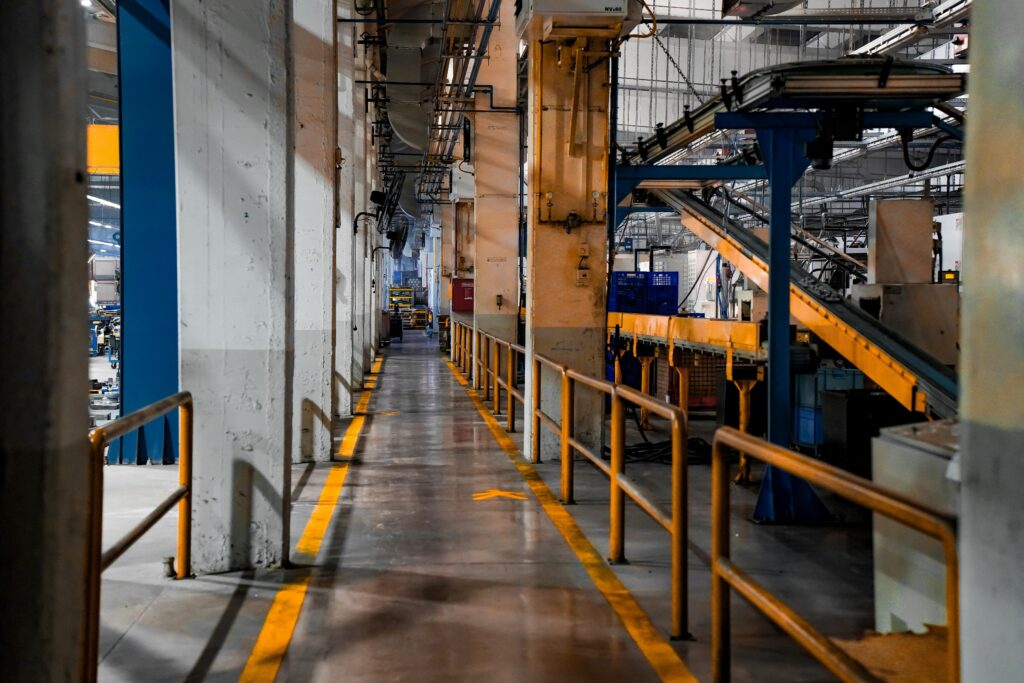
Your plant generates more data today than at any point in its history. Sensors report equipment states by the millisecond. ERP systems log every transaction. MES platforms track every work order. And yet, when a supervisor walks the floor, the most common question they ask is still: “What is actually happening right now?” The paradox of modern manufacturing is not a shortage of information; it is a shortage of clarity. Data trapped in dashboards that nobody opens, status updates buried in shift reports that arrive two hours after the problem, and performance metrics that only the plant manager can interpret are not information systems. They are information silos. Visual management is the discipline that converts data into immediate, shared understanding: making the state of operations visible to everyone, at the moment they need to see it, without requiring a login, a report, or a meeting.
The Definition of Visual Management
Visual management is a manufacturing and operational excellence methodology that uses physical and digital visual signals to communicate process status, standards, and performance in real time, at the point of work, without the need for verbal explanation or written reports. The visual management definition encompasses any system in which the workplace itself communicates: floor markings that define traffic lanes, Andon lights that signal line status, shadow boards that show where tools belong, production boards that display hourly output against target, and digital dashboards that surface OEE in real time.
The core principle of visual management is that any person (operator, supervisor, engineer, or visitor) should be able to walk through a work area and answer three questions within seconds: What is supposed to be happening here? What is actually happening? Is there a problem that requires action? When those three questions can be answered without asking anyone, the visual management system is working.
Visual management is not a single tool. It is a system of tools, standards, and behaviors that together create what lean practitioners call a “self-explaining workplace”: an environment in which the work itself reveals its own status.
Where Does Visual Management Come From?
Visual management originates from the Toyota Production System (TPS), developed by Taiichi Ohno and Shigeo Shingo at Toyota Motor Corporation in the decades following World War II. The concept is rooted in the Japanese principle of mieruka (見える化), which translates literally as “visualization” or “making visible.” Within TPS, visual management served a specific operational purpose: to make abnormalities immediately apparent so that any worker on the line could stop, signal, and address a problem before it propagated downstream.
The Andon cord — one of the most recognized visual management tools in manufacturing history — embodies this principle. When a Toyota assembly worker pulled the Andon cord to signal a quality problem, a light board above the line illuminated, production slowed, and the team leader responded within a defined time window. The entire system was visual: the problem was visible, the response was visible, and the resolution was visible. No report was filed. No meeting was scheduled. The workplace communicated.
As the Toyota Production System was codified into Lean Manufacturing and exported globally through the 1980s and 1990s, visual management became one of the foundational disciplines of lean thinking. Today, lean visual management is practiced across automotive, aerospace, food and beverage, pharmaceutical, electronics, and discrete manufacturing, in any environment where process transparency drives operational performance.
What Is the Difference Between Visual Management, Visual Control, and Visual Factory?
These three terms are frequently used interchangeably by competitors and practitioners, but they are distinct concepts with a precise relationship to each other. Understanding the distinction is essential for implementing any of them effectively.
| Term | Definition | Example |
|---|---|---|
| Visual Management | The overarching system and philosophy of making the workplace self-explaining through visual signals | The complete set of boards, markings, lights, and displays across a facility |
| Visual Control | A specific type of visual management tool designed to prevent errors, enforce standards, or trigger a defined response | An Andon light that stops the line when a defect is detected |
| Visual Factory | The physical environment that results from fully implementing visual management: a facility where every area, machine, and process communicates its status visually | A plant where floor markings, shadow boards, Andon systems, and production boards are integrated across all work areas |
Visual management is the discipline. Visual controls are the tools within that discipline. The visual factory is the outcome. A facility can have visual controls without having a visual management system (isolated tools without a coherent strategy), but it cannot have a visual factory without both.
Visual management in lean adds a further dimension: in a lean context, visual management is not merely about displaying information; it is about exposing waste. Every visual signal in a lean visual management system is designed to make the eight wastes of lean (defects, overproduction, waiting, non-utilized talent, transportation, inventory, motion, and extra processing) visible and therefore actionable.
What Are the Four Levels of Visual Management?
Visual management exists on a maturity spectrum. Most organizations implement the first one or two levels and stop, leaving significant operational value unrealized. The four levels, from least to most advanced, are:
Level 1: Visual Information: Information is made visible but does not require any action. Production schedules posted on a board, safety instructions on a wall, and process documentation at a workstation are all visual information. They inform but do not control. This is where most organizations begin, and where many stop.
Level 2: Visual Display: Performance data is displayed in real time, making the gap between actual and target immediately visible. Hourly production boards showing output vs. target, OEE dashboards on the shop floor, and quality charts at inspection stations are visual displays. They create awareness and accountability, but they do not prevent problems; they surface them after they have occurred.
Level 3: Visual Control: The workplace is designed so that abnormal conditions are immediately obvious and trigger a defined response. Andon systems, color-coded inventory zones with min/max markers, and shadow boards that reveal missing tools are visual controls. They do not merely display information; they make the correct state and the incorrect state visually distinguishable, and they prompt action.
Level 4: Visual Guarantee (Poka-Yoke): The workplace is designed so that incorrect actions are physically impossible or automatically prevented. Color-coded connectors that only fit together correctly, sequential lighting systems that guide operators through complex assembly steps, and mistake-proofing devices that prevent a component from being installed in the wrong orientation are visual guarantees. At this level, visual management merges with error-proofing: the workplace does not just communicate the correct state, it enforces it.
The maturity of a visual management system is determined by how much of the facility operates at Levels 3 and 4, not merely at Levels 1 and 2. Most competitors’ articles describe Level 1 and Level 2 tools and call the result a visual management system. The organizations that achieve genuine operational excellence build toward Levels 3 and 4.
What Are the Core Visual Management Tools?
The visual management tool landscape spans physical, digital, and hybrid formats. The following are the most widely deployed tools in manufacturing visual management, organized by function:
Signaling and Status Tools
The Andon system is the most operationally significant visual management tool in manufacturing. Originating at Toyota, an Andon system uses colored lights (typically green for normal, yellow for caution, red for stop) to communicate the real-time status of a machine, workstation, or production line. Modern Andon systems are digital and can trigger automated alerts, escalation workflows, and maintenance dispatch in addition to the physical light signal. The Andon system is the clearest example of a Level 3 visual control: it does not merely display information, it triggers a defined response.
Organization and Location Tools
The 5S methodology (Sort, Set in Order, Shine, Standardize, Sustain) is the foundational visual management system for workplace organization. Within 5S, shadow boards are one of the most effective visual management tools: outlines of tools painted or cut into a board surface make it immediately obvious when a tool is missing, where it belongs, and what it is. Floor markings (colored tape or paint defining work areas, traffic lanes, storage zones, and safety boundaries) are another core 5S visual tool. Color-coded inventory zones with minimum and maximum level markers create visual controls for material replenishment, making stockouts and overstock conditions visible without a system query.
Scheduling and Flow Tools
Kanban cards and boards are the visual management tool for production flow control. A Kanban system uses physical or digital cards to signal when material needs to be replenished or when a production step needs to be initiated, creating a pull-based flow that is entirely visible on the shop floor. Heijunka boxes (production leveling boards) are a more advanced scheduling visual tool, displaying the sequence and mix of production orders in a physical grid that makes the production plan visible to the entire team.
Performance and Accountability Tools
Production boards (also called visual management boards or daily management boards) display planned vs. actual output, quality metrics, safety incidents, and improvement actions, typically updated hourly or by shift. These boards are the most common entry point for visual management implementation and the most direct driver of shift-level accountability. Kamishibai boards are a specialized audit tool: cards are placed on a board to indicate which routine checks and audits are pending, in progress, or complete, creating a visual record of standard work adherence.
Meeting and Planning Tools
The Obeya room (Japanese for “big room”) is a dedicated visual management space where cross-functional teams gather around walls covered with project plans, KPI trends, problem-solving boards, and improvement roadmaps. The Obeya room makes the entire operational and improvement agenda of a facility visible in one physical space, enabling faster decision-making and alignment.
Digital Tools
Digital visual management tools include real-time OEE dashboards, digital Andon systems, connected worker platforms, and MES-integrated production displays. These tools extend visual management from the physical shop floor to remote monitoring, enabling plant managers and operations directors to see the state of the floor from any location.
Visual Workplace Examples: What Does Visual Management Look Like in Practice?
Visual management examples span every area of a manufacturing facility. The following are concrete, real-world applications organized by operational area:
Assembly Lines: Color-coded workstation markings define the exact placement of components, tools, and fixtures at each station. Andon lights above each station signal normal operation (green), a call for assistance (yellow), or a line stop (red). Sequential lighting systems guide operators through complex assembly sequences, illuminating the next step only after the previous one is confirmed complete.
Warehousing and Material Storage: Floor markings define storage zones, traffic lanes, and pedestrian walkways. Inventory locations are labeled with part numbers, descriptions, and min/max quantity markers. Color-coded zones (green for full, yellow for reorder point, red for critical) make stock levels visible at a glance without a system query. This is a direct example of visual control examples in manufacturing: the floor itself communicates the replenishment status.
Maintenance Areas: Shadow boards in tool cribs and maintenance shops show the designated location of every tool and make missing items immediately visible. Preventive maintenance schedules are displayed on visual boards at each machine, showing the last maintenance date, the next scheduled date, and the current status. Colored tags on equipment communicate maintenance status: green for operational, yellow for scheduled maintenance due, red for out of service.
Quality Control Stations: First-pass yield, defect rates, and rework counts are displayed on quality boards at each inspection station, updated by shift. Photo standards showing the correct appearance of a conforming part are mounted at the point of inspection, giving operators a visual reference without consulting a document. Red bins for non-conforming parts are physically separated from green bins for conforming parts, making the quality status of work-in-progress visible at a glance.
Management and Planning Areas: Production status boards in team leader areas display planned vs. actual output by hour, with color-coded cells (green for on-target, red for behind). Tier boards escalate performance data from the workstation level to the cell level to the plant level, creating a visual management hierarchy that connects shop floor reality to management decision-making.
These visual management examples share a common characteristic: they eliminate the need to ask, search, or report. The workplace answers the question before it is asked.
What Is Lean Visual Management?
Lean visual management is the application of visual management principles within a lean manufacturing framework, where the purpose of every visual signal is not merely to display information but to expose and eliminate waste. In lean thinking, a problem that is invisible is a problem that cannot be solved. Lean visual management makes waste visible and therefore solvable.
The connection between lean visual management and the eight wastes of lean is direct:
| Lean Waste | Visual Management Tool That Exposes It |
|---|---|
| Waiting | Andon systems showing idle machines; production boards showing output gaps |
| Overproduction | Kanban systems limiting WIP; heijunka boards leveling production |
| Defects | Quality boards showing first-pass yield; red bins for non-conforming parts |
| Inventory | Color-coded min/max zones; visual kanban replenishment signals |
| Motion | Shadow boards eliminating tool searches; floor markings defining work zones |
| Transportation | Value stream maps displayed on walls; material flow diagrams at workstations |
| Extra Processing | Standardized work charts showing the one correct method |
| Non-Utilized Talent | Kamishibai boards tracking audit completion; improvement boards showing open actions |
Manufacturing visual management in a lean context is also inseparable from 5S. The first two steps of 5S (Sort and Set in Order) create the physical foundation for visual management by eliminating unnecessary items and assigning a defined location to everything that remains. Without 5S, visual management tools like shadow boards and floor markings cannot function: there is no standard state to make visible. 5S creates the standard; visual management makes the standard visible and its deviation immediately apparent.
Just-in-Time (JIT) manufacturing depends on visual management for its execution. A JIT system produces only what is needed, when it is needed, in the quantity needed, and the signal that triggers production is a visual signal. The Kanban card, the empty bin, the illuminated replenishment light: these are all visual management tools that make the pull signal visible and actionable without a system transaction.
What Are the Benefits of Visual Management in Manufacturing?
The benefits of visual management in manufacturing are measurable, operational, and financial. They are not soft benefits of “better communication”; they are hard operational outcomes that appear in OEE scores, quality metrics, and cost structures.
Reduced Response Time to Abnormalities: When a machine fault, quality deviation, or material shortage is visible in real time via an Andon system or digital dashboard, the response time from event to intervention drops from hours (when the problem is discovered in a shift report) to minutes (when the problem is visible on the floor). Faster response time directly reduces unplanned downtime and its associated cost.
Improved OEE: Visual management improves all three components of Overall Equipment Effectiveness. Availability improves because equipment status is visible and maintenance response is faster. Performance improves because production boards create shift-level accountability for output rate. Quality improves because visual controls at inspection stations catch defects earlier in the process. Manufacturing visual management is not a standalone initiative; it is the human visibility layer that makes OEE improvement sustainable.
Reduced Dependence on Tribal Knowledge: In facilities where operational knowledge lives in the heads of experienced workers, the retirement or departure of a single individual can disrupt production for weeks. Visual management externalizes that knowledge: standardized work charts, photo standards, visual process guides, and shadow boards encode the knowledge of the best operators into the workplace itself. This is a critical benefit as the manufacturing workforce ages and the Silver Tsunami of retiring baby boomers accelerates the loss of institutional knowledge.
Faster Onboarding: New operators in a visually managed facility can reach standard performance faster because the workplace itself guides their work. Visual standards, sequential lighting, and floor markings reduce the learning curve by making the correct method visible at the point of work.
Stronger Accountability Culture: When performance data is visible to everyone on the floor, not just to managers in an office, accountability becomes shared. Production boards that display hourly output against target create a real-time feedback loop that connects individual effort to team performance. This visibility drives the continuous improvement behaviors that lean manufacturing requires.
Financial Impact: The financial impact of visual management is visible in the cost structure of the facility. Reduced unplanned downtime lowers the cost of lost production. Reduced defect rates lower the cost of scrap and rework. Reduced time spent searching for tools, materials, and information lowers the non-value-adding labor cost. Together, these improvements reduce the cost of poor quality (COPQ) and improve the EBITDA contribution of the manufacturing operation. Visual management is not a cost; it is a cost reduction mechanism.
How Do You Implement a Visual Management System?
Implementing a visual management system is a structured process, not a one-time installation. The following steps reflect best practice across lean manufacturing implementations:
Step 1 — Conduct a Current State Assessment (Gemba Walk): Walk the floor with fresh eyes and ask: Where is information unclear? Where do workers spend time searching? Where do problems go undetected until they are large? Where are standards not followed consistently? The Gemba walk (Japanese for “the actual place”) is the diagnostic tool for identifying where visual management will deliver the greatest impact.
Step 2 — Establish 5S as the Foundation: Visual management cannot be implemented in a disorganized environment. Before installing shadow boards, floor markings, or production boards, complete a 5S implementation in the target area. Sort out unnecessary items, set a defined location for everything that remains, and establish the standard state that visual management will make visible.
Step 3 — Prioritize High-Impact Areas: Begin with the areas where visual management will deliver the most immediate operational benefit, typically the highest-volume production lines, the most common sources of unplanned downtime, or the areas with the highest defect rates. A phased approach that demonstrates success in a pilot area builds organizational confidence and provides lessons that improve subsequent rollouts.
Step 4 — Design Visual Controls at the Point of Use: Every visual management tool must be located exactly where the information is needed. A production board that is not visible from the workstation it serves is not a visual management tool; it is a sign. Design visual controls to be visible from the point of work, legible from a normal working distance, and understandable without explanation.
Step 5 — Establish Response Standards: Visual management without a defined response protocol is incomplete. An Andon light that illuminates and is ignored is worse than no Andon light; it signals that abnormalities are acceptable. For every visual signal, define: who responds, within what time window, and what action they take. The response standard is as important as the visual signal itself.
Step 6 — Sustain Through Standard Work and Audits: Visual management systems degrade without active maintenance. Production boards that are not updated become irrelevant. Shadow boards that are not enforced become decoration. Kamishibai boards and Gemba walk routines are the sustaining mechanisms that keep visual management systems accurate, current, and respected.
What Are the Most Common Visual Management Mistakes?
Most visual management implementations fail not because the tools are wrong but because the implementation approach is wrong. The following are the most common mistakes, drawn from the competitive analysis and lean manufacturing practice:
Overcomplicating the Displays: The fundamental requirement of any visual management tool is that it must be understood within three to five seconds without explanation. Displays that require a legend, a training session, or a system login to interpret are not visual management tools; they are information systems with a visual interface. The most effective visual management tools are the simplest: a red light means stop, an empty shadow means a tool is missing, a red cell on a production board means output is behind target.
Implementing Tools Without Standards: A shadow board without a 5S standard for tool return is a decoration. A production board without a defined update frequency is a historical record, not a real-time signal. Every visual management tool requires a corresponding standard that defines the correct state, the update frequency, and the owner responsible for maintaining it.
Failing to Define the Response: Visual management creates visibility. It does not create action. The action comes from the response protocol that is defined alongside the visual signal. Organizations that install Andon systems without defining escalation paths, or that display OEE dashboards without connecting them to a daily management routine, will see their visual management investments produce data without improvement.
Rolling Out Everywhere at Once: A comprehensive facility-wide visual management rollout that attempts to implement all tools simultaneously typically fails because it overwhelms the organization’s capacity to sustain the changes. A phased approach (starting with one line, one area, or one shift) builds capability, demonstrates results, and creates internal advocates before expanding.
Treating Visual Management as a One-Time Project: Visual management is not a project with a completion date. It is an ongoing operational discipline. The organizations that sustain visual management over years are those that embed it into their daily management routines: Gemba walks, tiered accountability meetings, and regular audits that verify the accuracy and relevance of visual signals.
How Does Visual Management Connect to Industry 4.0?
Industry 4.0 — the integration of IoT sensors, connected machines, real-time data platforms, and advanced analytics into manufacturing operations — does not replace visual management. It extends it. The physical visual management tools of lean manufacturing (Andon lights, shadow boards, production boards) operate at the level of the individual workstation and the individual shift. Industry 4.0 technologies extend visual management to the level of the entire facility, the entire supply chain, and the entire enterprise, in real time.
The connection is structural. Industry 4.0 generates data at a scale and speed that no human can process through traditional reporting. The role of visual management in an Industry 4.0 environment is to filter that data into actionable signals: to present the right information, to the right person, at the right time, in a format that requires no interpretation. A digital Andon system connected to IoT sensors on a CNC machine is visual management at Industry 4.0 scale. A real-time OEE dashboard on the shop floor that draws data from a connected MES is visual management at Industry 4.0 scale.
The organizations that will extract the most value from Industry 4.0 investments are those that have already built the visual management discipline: the standards, the response protocols, and the accountability culture, that converts data into action. Without that discipline, more data produces more noise, not more clarity. Visual management is the operational foundation that makes Industry 4.0 data actionable.
The digital transformation of visual management also addresses the tribal knowledge crisis directly. When process standards, equipment parameters, and quality specifications are encoded in digital visual management systems rather than in the memory of experienced workers, that knowledge becomes institutional rather than individual. It persists through workforce transitions, is accessible to new operators, and can be updated centrally as processes improve.
How Does Intelycx Enable Visual Management at Scale?
Intelycx addresses the core challenge of visual management in modern manufacturing: the gap between the data that exists in connected systems and the clarity that operators, supervisors, and plant managers need to act. The Intelycx platform provides the three-layer architecture that transforms raw operational data into a visual management system at enterprise scale.
Intelycx CORE is the data foundation layer. CORE connects to machines, sensors, PLCs, and existing enterprise systems (ERP, MES, SCADA) to create a unified, real-time data stream from the shop floor. CORE eliminates the data silos that prevent visual management from functioning at scale: when every machine, every line, and every work area feeds into a single data layer, the visual management system has a single source of truth to display.
Intelycx ARIS is the analytics and intelligence layer. ARIS processes the real-time data from CORE to calculate OEE, detect anomalies, identify patterns in downtime and quality events, and surface the signals that visual management systems need to display. ARIS transforms raw machine data into the performance metrics (availability, performance rate, quality rate, MTTR, MTBF) that production boards, digital Andon systems, and management dashboards require.
Intelycx NEXACTO is the quality intelligence layer. NEXACTO applies AI-powered defect detection to the visual management of quality, identifying non-conforming conditions in real time and surfacing them as visual signals at the point of production. NEXACTO extends visual management from the human eye to machine vision, catching quality deviations that are too subtle, too fast, or too consistent to be reliably detected by manual inspection.
Together, CORE, ARIS, and NEXACTO create a visual management system that operates at the speed and scale of Industry 4.0 manufacturing: making the state of every machine, every line, and every quality metric visible to every person who needs to see it, at the moment they need to see it, without a report, a meeting, or a login.
Glossary
What is visual management: A manufacturing methodology that uses visual signals to communicate process status, standards, and performance in real time at the point of work, enabling any person to understand the state of operations without verbal explanation or written reports.
Visual management definition: The formal definition: a system in which the workplace itself communicates through physical and digital visual signals, making the correct state, the current state, and any deviation between them immediately visible to all personnel.
Visual management system: The integrated set of tools, standards, and response protocols that together create a self-explaining workplace; includes physical tools (shadow boards, floor markings, Andon lights) and digital tools (OEE dashboards, digital Andon systems, connected worker platforms).
Visual management tools: The individual instruments of a visual management system, including Andon systems, Kanban boards, shadow boards, production boards, floor markings, Kamishibai boards, Obeya rooms, heijunka boxes, and digital dashboards.
Visual workplace examples: Concrete applications of visual management in a manufacturing facility, such as color-coded inventory zones, shadow boards in tool cribs, Andon lights above assembly stations, and hourly production boards at team leader areas.
Lean visual management: The application of visual management within a lean manufacturing framework, where every visual signal is designed to expose and eliminate one or more of the eight wastes of lean.
Visual management examples: Specific instances of visual management in practice: an Andon light signaling a line stop, a shadow board revealing a missing tool, a production board showing an output gap, a color-coded floor zone indicating a replenishment trigger.
Visual management systems: Plural form referring to the multiple integrated systems that together constitute a facility’s visual management architecture; may include 5S systems, Andon systems, digital dashboards, and daily management boards operating in concert.
Visual management lean: The lean manufacturing context for visual management; specifically, the use of visual signals to make waste visible, enforce pull-based flow, and sustain standard work.
Manufacturing visual aids: Physical and digital tools used in manufacturing environments to communicate information visually, including signs, labels, floor markings, boards, lights, and digital displays.
Manufacturing visual management: Visual management as applied specifically in manufacturing environments, encompassing shop floor tools, production tracking systems, quality visual controls, and maintenance visual standards.
Visual management in lean: The role of visual management within the lean manufacturing system; the mechanism by which lean principles (waste elimination, standard work, pull flow) are made visible and therefore enforceable on the shop floor.
Visual management manufacturing: The practice of implementing visual management systems in manufacturing facilities to improve operational clarity, reduce waste, and drive continuous improvement.
Visual management tool: Any single instrument within a visual management system that communicates information visually; examples include an Andon light, a shadow board, a Kanban card, or a production board.
Factory visual management examples: Applications of visual management specific to factory environments: floor lane markings, machine status lights, tool shadow boards, WIP inventory zone markers, and shift performance boards.
Control visual: A visual control; a specific visual management tool designed to prevent errors, enforce standards, or trigger a defined response when an abnormal condition is detected.
Examples of visual management: Instances of visual management in action across manufacturing, warehousing, maintenance, and quality functions; see the Visual Workplace Examples section for a full treatment.
What is visual management in lean: In a lean context, visual management is the system that makes the eight wastes visible and the standard work enforceable; it is the operational layer that connects lean principles to shop floor behavior.
Visual control examples: Specific instances of visual controls: Andon lights, color-coded min/max inventory zones, shadow boards, sequential assembly lighting, and mistake-proofing connectors.
Visual control examples in manufacturing: Visual controls as applied in manufacturing: Andon systems on assembly lines, red/green quality bins at inspection stations, color-coded floor zones in warehouses, and photo standards at workstations.
How Intelycx Helps Turn Manufacturing KPIs into Daily Guidance
Manufacturing KPIs only create value when they are accurate, real-time, and connected to action. That is the gap Intelycx is built to close.
The Intelycx platform connects legacy and modern machines into a single data foundation, normalizes and enriches signals so KPIs are calculated consistently across lines and sites, and provides real-time dashboards for operators, engineers, and leaders. On top of this connected data, Intelycx layers AI-driven insights so teams understand not just what changed in a KPI, but why, and what to do about it.
If you are working to move beyond spreadsheets and lagging reports, a unified manufacturing AI platform like Intelycx can help you turn KPIs from static charts into a living system for maximizing production efficiency every day. You can learn more about our solutions and approach at intelycx.com.