
This article provides a definitive answer to the differences between discrete vs process manufacturing — covering definitions, production methods, cost structures, inventory strategies, and the smart manufacturing technologies that optimize each environment. The distinction between these two manufacturing methodologies determines how facilities configure their Enterprise Resource Planning (ERP) systems, manage supply chains, and deploy Industrial IoT solutions. As the U.S. manufacturing sector faces the compounding pressures of the silver tsunami and the hidden factory, understanding whether a facility operates within a discrete, process, or hybrid environment is critical for sustaining competitive advantage.
What Is Discrete Manufacturing?
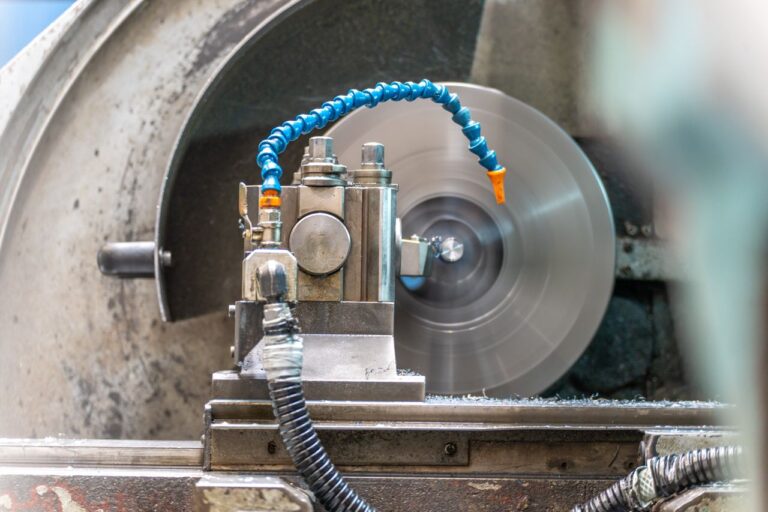
Discrete manufacturing is the production of distinct, countable items assembled from individual parts and components. In Entity-Attribute-Value terms, the entity is the finished product, the attribute is its structural composition, and the value is its reversibility, the ability to be disassembled back into its original components. This reversibility is the defining characteristic that separates discrete manufacturing from all other production methodologies.
Facilities utilizing discrete manufacturing operate on an asynchronous production model. Products move sequentially through defined routing stages, but each stage can often be started, stopped, or paused independently. The primary planning document in discrete manufacturing is the Bill of Materials (BOM), a structured, hierarchical list specifying every part, sub-assembly, and raw material required to build a finished product, along with exact quantities and assembly sequences.
The industries that rely on discrete manufacturing span a wide range of complexity and volume. High-volume, repetitive discrete manufacturing includes automotive assembly plants producing thousands of identical vehicles per day. High-mix, low-volume discrete manufacturing includes aerospace manufacturers producing custom components in small batches. Other common examples include consumer electronics, industrial machinery, medical devices, and defense equipment.
In discrete environments, the hidden factory — the unmeasured inefficiencies embedded in micro-stops, changeover delays, and unplanned downtime — is a persistent source of lost capacity. Intelycx CORE addresses this by connecting directly to PLCs and legacy equipment to capture real-time cycle data, delivering up to a 20% reduction in unplanned downtime and providing the operational visibility needed to eliminate hidden losses.
What Is Process Manufacturing?
Process manufacturing is the production of goods by combining raw materials, ingredients, or chemical compounds using a specific formula or recipe, resulting in an irreversible transformation. In semantic terms, the entity is the finished batch, the attribute is its chemical or physical state, and the value is its non-reversibility — once the raw materials are blended, synthesized, or reacted, they cannot be extracted and returned to their original forms.
Unlike discrete manufacturing, which counts products in individual units, process manufacturing measures output in bulk quantities: gallons, liters, pounds, kilograms, or metric tons. Facilities utilizing process manufacturing operate on a sequential production model, where the end of one step immediately triggers the start of the next, often involving chemical, thermal, or biological transformations. The primary planning document in process manufacturing is the formula or recipe, a specification that defines the exact ingredients, proportions, processing conditions (temperature, pressure, duration), and expected yield for each production run.
Process manufacturing is the backbone of several critical industries. Food and beverage manufacturers blend ingredients into sauces, beverages, and packaged goods. Pharmaceutical manufacturers synthesize active compounds into tablets, capsules, and injectable solutions. Chemical manufacturers produce paints, adhesives, solvents, and polymers. Cosmetics manufacturers formulate creams, shampoos, and perfumes. In all these environments, batch consistency, lot traceability, and regulatory compliance are non-negotiable.
Quality control in process manufacturing requires detecting deviations at the batch level and at the individual unit level during packaging and filling. Intelycx NEXACTO provides AI-driven visual inspection capable of processing up to 75,000 units per day with 99%+ accuracy, detecting fill-level anomalies, seal integrity issues, and packaging defects as small as 250 microns in 4.5 seconds per cycle.
What Are the Key Differences Between Discrete vs Process Manufacturing?
The fundamental difference between discrete manufacturing vs process manufacturing lies in how products are constructed, whether that construction can be reversed, and how production is measured. The table below outlines the primary distinctions across all critical operational dimensions.
| Feature | Discrete Manufacturing | Process Manufacturing |
|---|---|---|
| Core Definition | Assembling distinct, countable items from individual parts. | Blending raw materials into bulk goods using formulas. |
| Blueprint Type | Bill of Materials (BOM). | Recipe or Formula. |
| Reversibility | Reversible; products can be disassembled into original parts. | Irreversible; ingredients cannot be separated after mixing. |
| Measurement Unit | Countable units (eaches, dozens, pieces). | Volume, weight, or mass (gallons, pounds, liters). |
| Production Model | Asynchronous; assembly lines, work cells, job shops. | Sequential; batch processing, continuous flow, reactors. |
| Inventory Tracking | Component-level SKU tracking, BOM explosion. | Lot/batch tracking, shelf-life management, yield variance. |
| Quality Control | Dimensional inspection, functional testing, assembly verification. | Chemical analysis, microbial testing, fill-level inspection. |
| Waste Type | Scrap parts, rework, defective assemblies. | Batch yield loss, evaporation, chemical waste. |
| Key Industries | Automotive, electronics, aerospace, machinery, medical devices. | Food and beverage, pharmaceuticals, chemicals, plastics, cosmetics. |
| ERP Focus | BOM management, routing, component tracking. | Recipe management, UOM conversions, batch scalability. |
How Do Production Costs and Complexity Differ?
The financial structures and operational complexities of process manufacturing vs discrete manufacturing diverge significantly, dictating how facilities allocate capital and manage overhead.
Discrete manufacturing is characterized by high initial setup costs and lower unit production costs. The complexity lies in the assembly process and in managing tens of thousands of individual components or parts. A single automotive assembly plant may manage tens of thousands of unique part numbers, each with its own supplier, lead time, and minimum order quantity. Because discrete products are often highly customizable, these environments frequently utilize make-to-order (MTO) or assemble-to-order (ATO) production strategies, which requires sophisticated supply chain orchestration to prevent component shortages from halting the assembly line.
Process manufacturing is characterized by high ongoing production costs due to the need for specialized equipment, raw material sourcing, and stringent quality control. The complexity lies in managing the chemical or formulaic transformations and ensuring consistent output despite variations in raw material quality. Because process manufacturing typically produces high volumes of standardized goods, these environments predominantly utilize make-to-stock (MTS) production strategies. Furthermore, process manufacturing often generates co-products (secondary goods with market value) and by-products (waste materials), requiring complex process costing methodologies to accurately allocate expenses across the entire yield.
How Do Inventory and Supply Chain Needs Differ?
Inventory management strategies diverge significantly when comparing process vs discrete manufacturing, and these differences cascade throughout the entire supply chain.
Discrete manufacturers must track individual components at the SKU level. The BOM explosion process, which converts a finished goods demand forecast into component-level purchase requirements, is the central planning mechanism. Inventory is typically stored in component bins, racking systems, and kitting areas. A shortage of a single low-cost fastener can halt an entire assembly line, making component availability the primary inventory risk.
Process manufacturers face a fundamentally different set of inventory challenges. Raw materials are often commodities with variable quality and yield. A batch of wheat flour may have a different moisture content than the previous batch, requiring formula adjustments to maintain product consistency. Inventory is typically stored in bulk formats: tanks, silos, and vats. Shelf life and expiration date management are critical, as raw materials and finished goods have defined usability windows.
Traceability and recall management are mandatory in regulated process industries. If a contaminated ingredient is identified, the facility must be able to trace every batch produced using that lot and execute a targeted recall. This requires robust lot tracking software capable of tracing ingredients forward to finished goods and tracing finished goods backward to their raw material origins.
What Is the Role of ERP and Smart Manufacturing in Both?
Enterprise Resource Planning (ERP) systems and smart manufacturing platforms must be specifically configured for the requirements of either process vs discrete manufacturing. A one-size-fits-all ERP approach consistently underperforms in both environments.
A discrete manufacturing ERP must support BOM management with multi-level structures, work order routing with defined operation sequences, component-level lot and serial number tracking, and Product Lifecycle Management (PLM) integration for engineering change management. It must also integrate with MES (Manufacturing Execution Systems) to capture real-time production data at the work cell level.
A process manufacturing ERP must support recipe and formula management with version control, unit of measure (UOM) conversions (e.g., converting raw material weight to finished product volume), batch scalability (scaling a recipe up or down based on available raw materials), co-product and by-product accounting, and regulatory compliance reporting for industries governed by the FDA, EPA, or USDA. When comparing process manufacturing vs discrete manufacturing ERP requirements, the key differentiator is that process systems must handle yield variance and lot genealogy, while discrete systems must handle routing sequences and engineering change orders.
Regardless of the specific manufacturing type, both environments suffer from the silver tsunami: the mass retirement of experienced operators who carry decades of undocumented tribal knowledge. When a 30-year veteran of a pharmaceutical blending operation retires, the informal adjustments they made to the process, the equipment quirks they knew to watch for, and the quality indicators they recognized by sight all leave with them. Intelycx ARIS directly addresses this challenge by digitizing tribal knowledge into interactive, step-by-step digital work instructions with embedded visual guidance. ARIS enables facilities to onboard new operators 40% faster and ensures standardized execution across both discrete assembly operations and process manufacturing workflows.
Can a Facility Use Both Discrete and Process Manufacturing?
Many modern manufacturing facilities operate in a hybrid or mixed-mode environment, combining both process and discrete manufacturing within a single production system. This hybrid reality is where the theoretical distinction between discrete vs process manufacturing meets operational complexity.
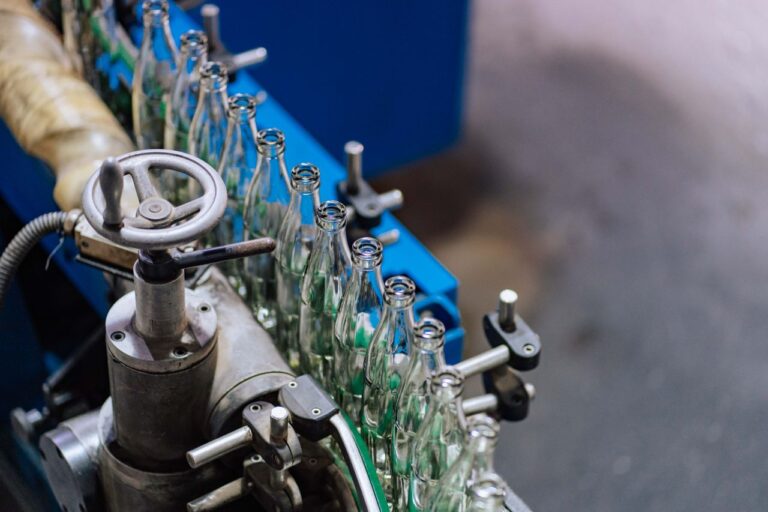
The beverage industry provides the clearest illustration. The creation of the liquid itself (blending water, concentrate, sweetener, and carbonation in precise proportions) is a textbook process manufacturing operation governed by a formula. However, the bottling phase (filling the container, applying the cap, affixing the label, and packaging the bottles into cases for shipment) is a discrete manufacturing operation governed by assembly sequences and component counts.
Other hybrid examples are equally common. A tire manufacturer uses process manufacturing to produce rubber compounds but discrete manufacturing to assemble the tire from the compound, steel belts, and fabric plies. A pharmaceutical company uses process manufacturing to synthesize the active compound but discrete manufacturing to fill, cap, and label individual blister packs or bottles.
Managing a hybrid environment requires production software capable of handling both recipes and BOMs simultaneously, with seamless transitions between bulk tracking and unit-level tracking. This complexity amplifies the risk of data silos and hidden factory inefficiencies, making unified machine connectivity and real-time data analytics essential for maintaining operational visibility across the entire production system.
How Do Industry 4.0 and Future Trends Impact Both?
The manufacturing landscape is evolving rapidly, driven by Industry 4.0 technologies that are reshaping both discrete and process manufacturing operations. Automation, Industrial IoT (IIoT), and advanced analytics are at the forefront, helping companies reduce manual labor, improve consistency, and increase throughput.
In discrete manufacturing, robotics and assembly line automation streamline the production of countable items. Advanced analytics optimize production planning and scheduling by considering machine availability, labor capacity, and material availability, leading to improved resource utilization and reduced lead times.
In process manufacturing, automated mixing, batching, and continuous monitoring enhance efficiency and quality control. Advanced analytics monitor real-time data from sensors to optimize process variables such as temperature, pressure, and flow rates — leading to increased process efficiency, yield, and product quality. This is also where the distinction between discrete vs continuous manufacturing becomes operationally significant: continuous flow environments generate high-frequency sensor data requiring real-time analytics platforms, while batch environments require event-driven data capture tied to specific batch IDs.
For both environments, predictive maintenance is becoming a critical capability. By analyzing real-time data from sensors embedded in manufacturing equipment, advanced analytics can detect anomalies and predict potential equipment failures before they occur, allowing for proactive maintenance and reducing unplanned downtime.
How Does Intelycx Optimize Discrete and Process Manufacturing?
Intelycx provides a purpose-built suite of smart manufacturing solutions that address the core operational challenges in both discrete and process manufacturing environments. Rather than offering generic software, Intelycx targets the specific failure modes of each production type.
Intelycx CORE is the machine connectivity platform that eliminates the hidden factory by capturing real-time production data directly from PLCs, SCADA systems, and legacy equipment. CORE connects 2,000+ machines across 12 industries, providing real-time OEE monitoring and predictive maintenance alerts. In discrete environments, CORE tracks cycle times and micro-stops at the work cell level. In process environments, CORE monitors continuous flow metrics and batch cycle durations, delivering up to a 20% reduction in unplanned downtime across both methodologies.
Intelycx ARIS is the AI-powered knowledge management platform that mitigates the silver tsunami by capturing tribal knowledge and converting it into digital work instructions. ARIS provides real-time operator guidance through chat-based, voice-enabled, and mobile interfaces. In discrete manufacturing, ARIS guides technicians through complex assembly sequences. In process manufacturing, ARIS ensures operators follow precise cleaning validation and batch changeover protocols, accelerating employee onboarding by 40%.
Intelycx NEXACTO is the AI-powered visual inspection platform that automates quality control. NEXACTO processes up to 75,000 units daily with 99%+ accuracy, detecting defects as small as 250 microns in 4.5 seconds per cycle. In discrete manufacturing, NEXACTO verifies dimensional accuracy and assembly completeness. In process manufacturing, NEXACTO inspects fill levels, seal integrity, and packaging compliance, ensuring FDA compliance in pharmaceutical and food production.
Conclusion
The distinction between discrete vs process manufacturing — and more broadly, manufacturing discrete vs process — is not merely an academic classification; it is the foundational architecture that dictates how a facility operates, scales, and competes. Discrete manufacturing requires precision in assembly, component tracking, and BOM management. Process manufacturing requires precision in formulation, batch consistency, and regulatory traceability.
As both environments face the escalating challenges of the silver tsunami and the hidden factory, digital transformation is no longer optional. Facilities must deploy smart manufacturing solutions that align with their specific production methodologies. By implementing Intelycx CORE, ARIS, and NEXACTO, manufacturers can eliminate data silos, automate quality control, and digitize tribal knowledge, ensuring operational excellence whether they are assembling discrete components, blending process batches, or managing complex hybrid environments.
Glossary of Terms
- Bill of Materials (BOM): A comprehensive, hierarchical list of all raw materials, components, and sub-assemblies required to manufacture a discrete product.
- Formula / Recipe: A specification detailing the exact ingredients, proportions, and processing conditions required to manufacture a process product.
- Hidden Factory: The unmeasured, undocumented inefficiencies in a manufacturing process, such as micro-stops, slow cycles, and changeover delays, that reduce overall capacity.
- Make-to-Order (MTO): A production strategy where manufacturing begins only after a customer order is received, common in discrete manufacturing.
- Make-to-Stock (MTS): A production strategy where goods are manufactured based on demand forecasts and stored in inventory, common in process manufacturing.
- Silver Tsunami: The demographic trend of experienced, older manufacturing workers retiring en masse, taking undocumented tribal knowledge with them.
- Tribal Knowledge: The unwritten, informal knowledge and skills acquired by experienced operators over years of working with specific machines and processes.
- Unit of Measure (UOM) Conversion: The mathematical conversion required in process manufacturing to translate raw material quantities (e.g., pounds) into finished goods quantities (e.g., gallons).
How Intelycx Helps Turn Manufacturing KPIs into Daily Guidance
Manufacturing KPIs only create value when they are accurate, real-time, and connected to action. That is the gap Intelycx is built to close.
The Intelycx platform connects legacy and modern machines into a single data foundation, normalizes and enriches signals so KPIs are calculated consistently across lines and sites, and provides real-time dashboards for operators, engineers, and leaders. On top of this connected data, Intelycx layers AI-driven insights so teams understand not just what changed in a KPI, but why, and what to do about it.
If you are working to move beyond spreadsheets and lagging reports, a unified manufacturing AI platform like Intelycx can help you turn KPIs from static charts into a living system for maximizing production efficiency every day. You can learn more about our solutions and approach at Intelycx.com.