
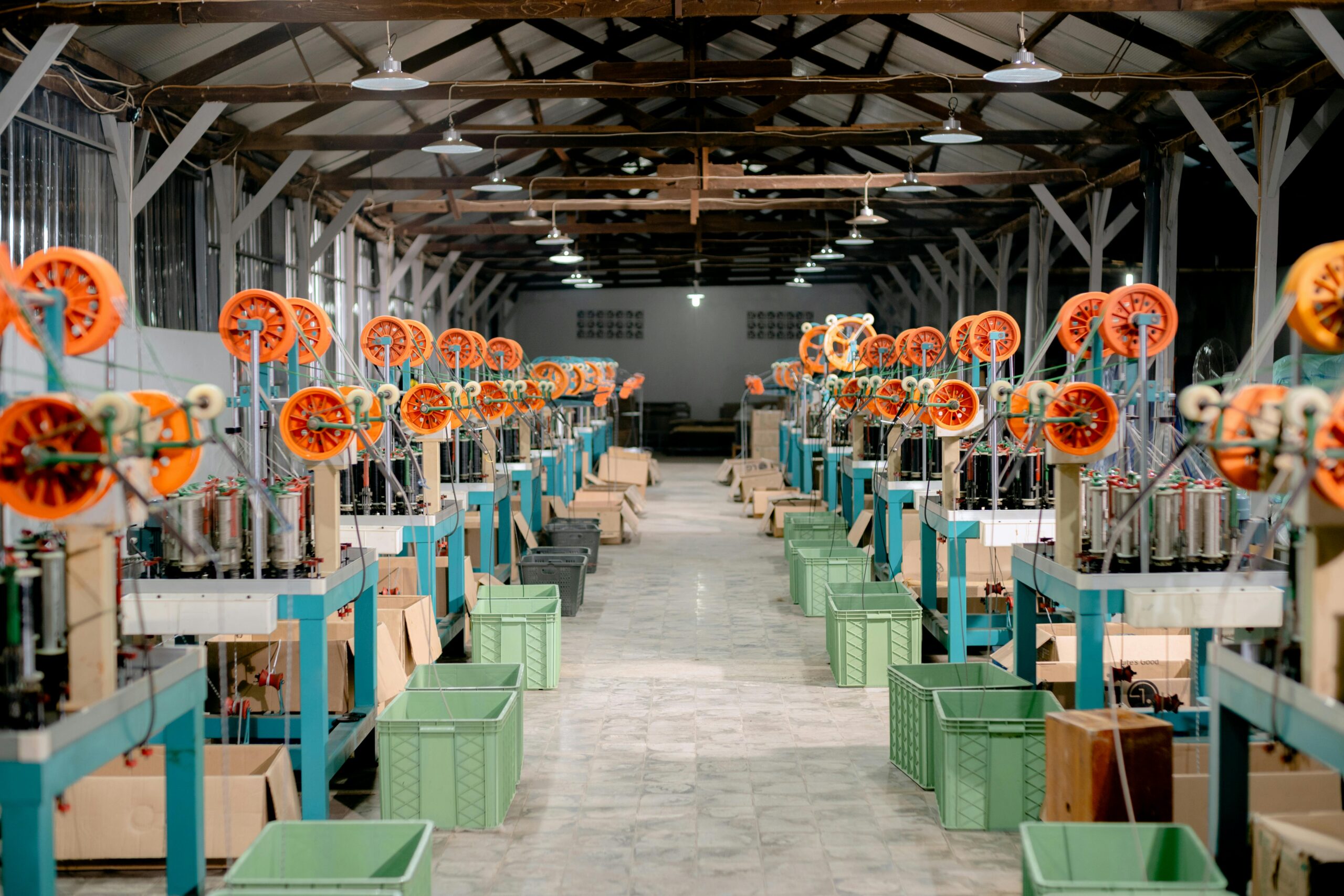
In manufacturing, a persistent and costly paradox undermines even the most sophisticated operations. Plant managers invest heavily in state-of-the-art equipment and digital systems, yet still find that a significant portion of their production capacity is consumed by non-value-adding activities. This is the Lean Waste Paradox: the coexistence of advanced technology and systemic inefficiency. The root of this paradox lies in the failure to see and measure all types of waste in lean manufacturing, particularly the invisible wastes that silently erode profitability.
Most manufacturers are adept at tracking visible waste such as scrap and defects. However, the far more expensive wastes, waiting, excess motion, and non-utilized talent, often go unmeasured and unmanaged. These hidden inefficiencies create a cascade effect, where one form of waste triggers another, compounding the financial impact. This article provides a comprehensive framework for understanding all 8 types of waste in lean, organized by the acronym DOWNTIME. We will define each of the 8 wastes of lean manufacturing, explain how they amplify one another, and provide a clear roadmap for their identification and elimination. More importantly, we will demonstrate how real-time data transforms lean from a passive philosophy into an active, continuous system for reclaiming lost capacity and driving measurable operational excellence.
What Is Waste in Lean Manufacturing?
In the context of lean manufacturing, waste, or muda, the Japanese term for futility, is defined as any action, process, or resource that consumes time, materials, or money without adding value to the final product from the customer’s perspective. If a customer is not willing to pay for it, it is waste. The core principle of lean is the relentless identification and elimination of these non-value-adding activities to streamline processes, reduce costs, and improve quality. This is distinct from “trash” or types of trash in the physical sense, which refers to material refuse that must be disposed of; lean waste encompasses the intangible inefficiencies embedded in production workflows, idle time, unnecessary movement, and untapped human potential.
Value-adding activities are those that directly transform raw materials into the finished product the customer desires. Necessary non-value-adding activities are tasks that do not add direct value but are required by regulations, safety protocols, or current process limitations, such as compliance checks or machine setup. The ultimate goal of lean is to minimize or eliminate all non-value-adding activities while optimizing value-adding ones. Understanding this distinction is the foundation of every lean initiative.
The Origins of Lean Waste: From Toyota to the Factory Floor
The concept of systematically identifying and eliminating waste was formalized by Taiichi Ohno, a chief engineer at Toyota, as a cornerstone of the Toyota Production System (TPS) in the mid-20th century. Ohno originally identified 7 wastes that interfered with the ideal state of single-piece flow. These 7 types of waste were later organized into the acronym TIMWOOD: Transportation, Inventory, Motion, Waiting, Overproduction, Over-processing, and Defects. When the TPS was adopted and adapted by Western companies in the 1990s, an eighth waste, Non-Utilized Talent, was added to address the critical role of human potential in continuous improvement. This expanded framework is now commonly remembered by the acronym DOWNTIME, which provides a more intuitive structure for modern manufacturing environments and serves as the organizing principle for this guide.
DOWNTIME: The Framework That Organizes the 8 Lean Wastes
The DOWNTIME acronym is the most widely used framework for remembering and categorizing the 8 lean wastes. Understanding the different types of lean waste is essential before any improvement initiative can be designed, as each waste requires a distinct countermeasure. Each letter corresponds to a specific type of inefficiency: Defects, Overproduction, Waiting, Non-Utilized Talent, Transportation, Inventory, Motion, and Extra Processing. Together, these 8 wastes downtime categories create a comprehensive checklist for any team engaged in process improvement. It is important to note that DOWNTIME is a modern, widely adopted mnemonic that evolved within the Western lean community as practitioners adapted the Toyota Production System for broader industrial contexts. It does not originate from a single publication but represents the collective codification of lean thinking that emerged as the eighth waste, Non-Utilized Talent, was formally incorporated into the framework. Understanding this framework is the first step toward training your eyes to see the hidden costs embedded in your operations. The DOWNTIME acronym is particularly useful for frontline teams, as it provides a memorable, actionable reference that can be applied during gemba walks, process reviews, and kaizen events.
What Are the 8 Types of Waste in Lean Manufacturing?
The 8 types of waste in lean represent a complete spectrum of operational inefficiency, from the tangible cost of scrapped parts to the intangible loss of human potential. While each of the 8 wastes is a distinct problem, they are deeply interconnected, often creating a domino effect that magnifies their collective impact. The following sections examine each of the 8 forms of waste in detail, covering their definition, root causes, real-world examples, and the specific countermeasures that eliminate them.
Defects (D) , The Most Visible Waste
Defects are products or components that fail to meet quality standards, requiring either rework or disposal. This is the most obvious of the 8 wastes of lean manufacturing, as its costs are directly visible in scrap reports and warranty claims. Defects disrupt production schedules, consume additional materials and labor, and damage customer trust. The root causes of defect waste are typically poor quality control procedures, inadequate operator training, incorrect machine settings, substandard materials, or flawed product design. A CNC machine that is incorrectly calibrated, for example, produces a batch of parts with dimensions outside the specified tolerance, resulting in the entire batch being scrapped and wasting materials, machine time, and labor.
Intelycx CORE provides real-time process monitoring to detect deviations from standard operating parameters, alerting operators before defects occur rather than after. Intelycx ARIS delivers standardized digital work instructions to ensure every operator follows the correct procedure every time, error-proofing the process and eliminating the variability that causes human error.
Overproduction (O) , The Root of All Waste
Taiichi Ohno considered overproduction the most dangerous of all wastes because it is the primary driver of the other seven. Overproduction is manufacturing an item before it is actually required by the next downstream process or the end customer. It is often the result of producing in large batches to minimize setup times or to meet forecasted demand that never materializes, a “just in case” mentality that creates a chain reaction of other wastes. The most common overproduction examples include a factory producing 5,000 units based on a sales forecast when the actual customer order is for only 3,000 units, leaving 2,000 units as excess inventory that consumes space and capital.
Inaccurate forecasting, long setup times, unstable production schedules, and a “push” production system are the primary causes of overproduction. Intelycx CORE provides real-time OEE and production tracking data, enabling managers to align production schedules with actual demand and takt time. This data empowers a shift from a “push” to a “pull” system, where production is triggered by real consumption rather than forecasts.
Waiting (W) , The Silent Productivity Killer
Waiting is any idle time that occurs when a process is stopped because a required input is not available. This includes operators waiting for materials, machines waiting for operators, or equipment sitting idle due to unplanned downtime or a lengthy changeover. Waiting is one of the most insidious lean wastes because it often goes unmeasured, yet it directly translates to lost production capacity. An assembly line operator who waits 15 minutes for a batch of components to arrive from the previous workstation is generating pure waste, no value is being added during that time, but the cost of labor and overhead continues to accumulate.
The root causes of waiting include unplanned machine downtime, material shortages, bottlenecks in the production line, and long setup times. Intelycx CORE automatically captures all downtime events, categorizing them by reason, material shortage, machine fault, operator unavailable, and providing a clear Pareto chart of downtime causes. This allows teams to focus their improvement efforts on the biggest sources of waiting with precision and speed.
Non-Utilized Talent (N) , The 8th Waste and the Most Underestimated
Non-Utilized Talent is the failure to leverage the full intellectual and creative potential of the workforce. This occurs when employees are treated as mere executors of tasks rather than as active participants in problem-solving and continuous improvement. It is the most strategically damaging of the 8 wastes because it stifles innovation and perpetuates every other inefficiency. An experienced machine operator who knows a way to reduce setup time by 20% but has no formal channel to submit or implement that suggestion is a direct example of this waste, the knowledge exists but is trapped.
The root causes include lack of training, poor communication, a top-down management culture that discourages employee input, and narrowly defined job roles. Intelycx ARIS directly combats this waste by capturing tribal knowledge from expert operators and converting it into best-practice digital work instructions. This empowers every employee with the collective intelligence of the entire team. By providing a feedback mechanism within the work instructions, ARIS creates a continuous loop of improvement, ensuring that valuable insights from the frontline are captured, standardized, and deployed across the organization.
Transportation (T) , When Movement Destroys Margin
Transportation waste is any unnecessary movement of materials, tools, or finished goods. Every time a product is moved, it incurs a cost and increases the risk of damage, loss, or delay, without adding any value to the product itself. This waste is often the result of a poorly designed facility layout. A factory where raw materials are unloaded at one end, moved to a central warehouse, and then transported to the production line at the other end of the facility generates hundreds of meters of unnecessary forklift travel per shift, none of which contributes to the finished product.
Inefficient factory layout, large distances between workstations, multiple storage locations, and large batch sizes that require extensive material handling are the primary causes of transportation waste. While Intelycx does not directly reconfigure factory layouts, the production flow data from CORE provides the objective evidence needed to justify and design more efficient cellular manufacturing layouts, reducing the distance materials travel and the cost of moving them.
Inventory (I) , The Waste That Looks Like an Asset
Inventory waste refers to any supply in excess of what is required to meet immediate customer demand. This includes raw materials, work-in-process (WIP), and finished goods. While accounting may view inventory as an asset, in the lean paradigm, it is a liability. Excess inventory ties up working capital, consumes valuable storage space, and, critically, hides other problems such as defects, production imbalances, and supplier issues. A company that holds three months of “safety stock” for a particular component to buffer against supply chain disruptions is tying up cash and space while risking parts becoming obsolete if a design change occurs.
Overproduction, unreliable suppliers, inaccurate demand forecasting, and large batch production are the root causes of inventory waste. By providing reliable, real-time data on production rates and machine availability, Intelycx CORE enables a shift toward a Just-in-Time (JIT) inventory strategy. When production is predictable and downtime is minimized, the need for large safety stocks diminishes, freeing up capital and reducing holding costs.
Motion (M) , The Ergonomic and Efficiency Drain
Motion waste is any movement of people or equipment that does not add value to the product. This is distinct from transportation, which involves moving the product itself. Motion waste includes operators reaching for tools, walking to a terminal, bending to pick up parts, or performing any repetitive movement that could be eliminated through better workplace design. An operator who walks 10 meters to a shared computer terminal to log production data after every cycle generates thousands of unnecessary steps per shift, a direct drain on productivity and a long-term ergonomic risk.
Poor workstation layout, disorganized storage of tools and parts, and the absence of standardized work procedures are the primary causes of motion waste. Intelycx ARIS delivers work instructions and data entry prompts directly to a tablet at the workstation, eliminating the need for operators to walk to a central terminal. By integrating all necessary information at the point of work, ARIS minimizes non-value-adding motion and keeps operators focused on their primary tasks.
Extra Processing (E) , The Waste of Doing Too Much
Extra Processing, also known as over-processing, is performing more work on a product than is required by the customer. This includes using higher-precision equipment than necessary, adding features the customer does not value, or performing excessive quality checks. It is often the result of not fully understanding customer requirements or a belief that more is always better. A component polished to a mirror finish when the customer’s specification requires only a standard machine finish is a textbook example: the extra polishing step consumes time and resources without adding any value for the customer.
Unclear customer specifications, lack of standardized processes, and a “just in case” approach to quality assurance are the root causes of extra processing. Intelycx ARIS ensures that every operator works to the exact standard defined by customer requirements. By standardizing the process and eliminating ambiguity, ARIS prevents the ad-hoc addition of unnecessary steps, ensuring that every action taken adds real value.
How Do the 8 Wastes Compound Each Other?
The true danger of the 8 wastes lies in their interconnectedness. They are not isolated problems but a web of inefficiencies where one waste feeds another, creating a cascade effect that can quickly amplify what seems like a minor issue into a major drain on profitability. Overproduction is the primary catalyst: producing more than needed immediately creates excess Inventory. That excess Inventory requires more Transportation to move and store it. The act of managing this inventory creates wasted Motion for employees. Storing excess inventory hides Defects, which are only discovered much later, leading to larger batches of scrap. The pressure to produce large batches creates Waiting at downstream workstations, which are alternately starved and flooded. This entire chaotic system is managed through Extra Processing in the form of complex scheduling, tracking, and reporting. And finally, the constant firefighting required to manage this system prevents the Non-Utilized Talent of the workforce from being applied to root cause problem-solving.
Understanding this compounding effect is critical. Tackling a single waste in isolation is often a temporary fix. A holistic approach that addresses the entire system, supported by real-time data, is required for sustainable improvement.
What Is the Difference Between the 7 Wastes and the 8 Wastes of Lean?
The primary difference is the inclusion of Non-Utilized Talent. The original 7 wastes of lean (TIMWOOD) identified by Taiichi Ohno were focused exclusively on the production process itself: Transportation, Inventory, Motion, Waiting, Overproduction, Over-processing, and Defects. The addition of the eighth waste acknowledged that the most valuable resource in any organization is its people. By failing to engage employees in the continuous improvement process, companies leave a vast reservoir of knowledge, creativity, and problem-solving ability untapped. In the modern manufacturing environment, where adaptability and innovation are paramount, addressing the eighth waste is no longer optional, it is a strategic imperative. This is why the DOWNTIME framework, which explicitly includes Non-Utilized Talent, has become the preferred model for lean practitioners in manufacturing today.
How Do You Identify Lean Waste in Manufacturing?
Identifying waste requires a commitment to making the invisible visible. Value Stream Mapping (VSM) is the most powerful tool for this purpose: a high-level flowchart that visualizes every step in the production process, from raw material to finished product, differentiating value-adding steps from non-value-adding ones. A VSM provides a clear roadmap for improvement efforts by revealing where time is being consumed without value being created.
Gemba walks complement VSM by taking managers to the actual place where work is done to observe processes firsthand, ask questions, and engage with frontline employees. This direct observation uncovers inefficiencies that are invisible in reports or spreadsheets. Process mapping provides a more granular view, breaking down a specific workflow into its individual tasks to identify specific instances of motion, waiting, and extra processing. The most powerful tool for identifying waste at scale, however, is real-time production data. By automatically tracking metrics like OEE, downtime, and cycle time, a platform like Intelycx CORE pinpoints exactly where and when waste is occurring without relying on manual observation, transforming waste identification from a periodic project into a continuous, automated process.
What Tools Eliminate Lean Manufacturing Waste?
Once waste is identified, a suite of proven lean tools can be deployed to eliminate it. Takt time defines the rate at which a product needs to be completed to meet customer demand, and it is used to balance production lines and prevent both overproduction and waiting. Kanban is a signaling system that triggers the production or movement of an item only when it is needed by a downstream process, forming the backbone of a “pull” system. Just-in-Time (JIT) production ensures that materials and components are delivered to the production line exactly when they are needed, directly attacking inventory waste.
Standardized Work is a documented set of best practices for performing a task, ensuring consistency, reducing variability, and preventing defects and extra processing. 5S (Sort, Set in Order, Shine, Standardize, Sustain) is a methodology for workplace organization that directly reduces motion waste and improves safety and efficiency. Poka-Yoke, or mistake-proofing, involves designing mechanisms that prevent errors from occurring, for example, a fixture that only allows a part to be inserted in the correct orientation, eliminating the possibility of a defect at that step.
How Does Real-Time Data Transform Lean Waste Elimination?
Traditional lean implementation relies heavily on manual observation and periodic analysis. While effective, this approach is slow, resource-intensive, and often based on incomplete information. Real-time data from a manufacturing operations platform acts as a powerful accelerant for lean initiatives. Instead of waiting for a monthly report to identify a downtime trend, managers see it happening live on a dashboard. Instead of manually timing cycles to identify a bottleneck, the system automatically flags any process running slower than standard. This immediate, accurate, and unbiased data provides the objective truth about what is happening on the factory floor, allowing teams to move from reactive firefighting to proactive, data-driven problem-solving. It transforms lean from a special project into a daily operational discipline embedded in every shift.
Intelycx CORE + ARIS: The Closed-Loop Waste Elimination System
Intelycx provides a unique, closed-loop system for systematically identifying and eliminating all 8 types of waste in lean manufacturing. The system operates on two complementary layers.
Intelycx CORE identifies waste by connecting directly to any machine, across 2,000+ machines in 12 industries, and automatically capturing real-time data on production, downtime, and quality. It makes the 8 lean wastes visible as they occur: Waiting is revealed through categorized downtime analysis, Overproduction is identified by comparing production counts to scheduled demand, and Defects are tracked through scrap and rework reason codes. CORE provides the objective, real-time data needed to see the full scope of manufacturing waste in the operation, eliminating the guesswork that undermines traditional lean programs.
Intelycx ARIS eliminates waste by delivering standardized digital work instructions at the point of work. ARIS directly attacks Defects and Extra Processing by ensuring every operator works to the same verified standard. It addresses Non-Utilized Talent by capturing tribal knowledge from expert operators and making it available to every employee. It reduces Motion by delivering all necessary information to a tablet at the workstation. Together, CORE and ARIS create a virtuous cycle: CORE makes waste visible, and ARIS provides the system to eliminate it and sustain the gains.
High-Fidelity Use Case: Automotive Supplier Eliminates Waiting and Defects
A Tier-1 automotive supplier was struggling with chronic unplanned downtime on its CNC machining lines, leading to significant Waiting waste and delayed shipments. The root cause was a combination of frequent tool breakages and inconsistent setup procedures, which also produced a high rate of Defects. The company deployed Intelycx CORE across its 50 most critical machines and Intelycx ARIS for all CNC setup and operation procedures.
Intelycx CORE immediately began tracking every downtime event, revealing that 60% of all downtime was due to tool-related issues, a fact that had been obscured by manual, paper-based reporting. The engineering team used Intelycx ARIS to create standardized digital work instructions for tool changes and machine setups, incorporating best practices from their most experienced technicians. New operators were trained using ARIS, ensuring consistency from day one. By using CORE’s predictive capabilities to schedule tool changes before failure and ARIS to ensure every setup was performed correctly, the company achieved a 22% reduction in unplanned downtime, a 15% increase in OEE, and a 60% reduction in setup-related defects. The combined impact translated to $1.2 million in recovered EBITDA in the first year of deployment.
What Are the Benefits of Eliminating the 8 Wastes?
The benefits of a successful lean waste elimination program extend across the entire organization. Increased efficiency is the most immediate outcome: by removing non-value-adding activities, processes become faster and more streamlined, leading to higher OEE and increased output from existing assets without capital investment. Lower costs follow directly: reduced scrap, rework, inventory, and labor costs improve profit margins in a way that is visible on the income statement within months of implementation.
Improved quality is a systemic benefit: standardized processes and a focus on defect prevention lead to higher first-time-right rates, fewer warranty claims, and greater customer satisfaction. Finally, an engaged workforce is the most durable benefit: involving employees in the identification and elimination of waste fosters a culture of ownership and continuous improvement, leading to higher morale, lower turnover, and a self-sustaining improvement engine that does not depend on external consultants or periodic kaizen events.
What KPIs Measure Lean Waste Elimination Progress?
| KPI Category | Metric | Intelycx CORE + ARIS Impact |
|---|---|---|
| Productivity | Overall Equipment Effectiveness (OEE) | Increased by up to 15% |
| Productivity | Unplanned Downtime | Reduced by up to 22% |
| Productivity | Cycle Time vs. Takt Time | Aligned through real-time production tracking |
| Quality | First-Time-Right Rate | Increased through standardized work instructions |
| Quality | Scrap and Rework Rate | Reduced through error-proofing and process control |
| Quality | Cost of Poor Quality (COPQ) | Reduced through proactive defect prevention |
| Inventory | Inventory Turns | Increased by enabling JIT production |
| Inventory | Days of Inventory on Hand | Reduced by minimizing safety stock requirements |
| Workforce | Employee Onboarding Time | Reduced by 40% with Intelycx ARIS |
| Workforce | Training Time | Reduced by 35% with Intelycx ARIS |
Conclusion
The principles of lean manufacturing are timeless, but the tools used to implement them are undergoing a profound transformation. The future of waste elimination is not in manual spreadsheets and periodic kaizen events, but in a continuous, data-driven system that makes waste impossible to ignore and impossible to hide. By embedding real-time data collection and intelligent guidance directly into the production process, platforms like Intelycx are moving lean from a philosophy to a daily operational reality. Every machine becomes a data source. Every operator becomes a contributor to the knowledge base. Every shift becomes an opportunity to identify and eliminate the next layer of waste.
This fusion of lean principles and digital technology empowers manufacturers to achieve what was previously impossible: a self-sustaining, continuously improving operation where waste is identified the moment it occurs and eliminated before it compounds. The manufacturers who will lead their industries in 2026 and beyond are not those with the most advanced equipment, but those who have built a system that sees everything, learns from everything, and improves every day.
Glossary of Lean Waste Terms
Muda is the Japanese term for waste; any activity that consumes resources without creating value for the customer.
Toyota Production System (TPS) is the manufacturing philosophy developed by Toyota that forms the basis of modern lean manufacturing.
Value Stream Mapping (VSM) is a lean management tool used to analyze and design the flow of materials and information required to bring a product to a customer.
Takt Time is the required pace of production to meet customer demand, calculated by dividing available production time by customer demand.
Kanban is a scheduling system for lean manufacturing that signals when to produce or move items, enabling a pull system.
Just-in-Time (JIT) is a production strategy designed to increase efficiency and decrease waste by receiving goods only as they are needed in the production process.
5S is a system for organizing workspaces so work can be performed efficiently, effectively, and safely, consisting of Sort, Set in Order, Shine, Standardize, and Sustain.
Poka-Yoke is a Japanese term meaning “mistake-proofing”, any mechanism in a lean manufacturing process that helps an operator avoid errors.
Gemba is the Japanese term for “the actual place,” referring to the shop floor or wherever value is created.
Kaizen is the Japanese philosophy of continuous improvement, involving all employees in the ongoing identification and elimination of waste.
FAQ
What are the 7 wastes vs. the 8 wastes of lean?
The original 7 wastes (TIMWOOD) were identified by Taiichi Ohno as part of the Toyota Production System: Transportation, Inventory, Motion, Waiting, Overproduction, Over-processing, and Defects. The 8 wastes of lean add Non-Utilized Talent, which was incorporated when TPS was adapted for Western manufacturing in the 1990s. The DOWNTIME acronym organizes all eight.
What is the most dangerous type of waste in lean manufacturing?
Taiichi Ohno identified overproduction as the most dangerous waste because it directly causes most of the other seven. Overproduction creates excess inventory, which in turn generates transportation, motion, and waiting waste, while simultaneously hiding defects.
What is the difference between lean waste and trash?
Trash refers to physical refuse that must be disposed of. Lean waste (or types of waste lean practitioners address) refers to systemic inefficiencies in a process, such as waiting time, excess inventory, or untapped employee knowledge, that consume resources without adding value.
What is the DOWNTIME acronym in lean manufacturing?
DOWNTIME stands for Defects, Overproduction, Waiting, Non-Utilized Talent, Transportation, Inventory, Motion, and Extra Processing. It is the most commonly used framework for identifying and categorizing the 8 wastes downtime model in modern lean manufacturing.
How Intelycx Helps Turn Manufacturing KPIs into Daily Guidance
Manufacturing KPIs only create value when they are accurate, real-time, and connected to action. That is the gap Intelycx is built to close.
The Intelycx platform connects legacy and modern machines into a single data foundation, normalizes and enriches signals so KPIs are calculated consistently across lines and sites, and provides real-time dashboards for operators, engineers, and leaders. On top of this connected data, Intelycx layers AI-driven insights so teams understand not just what changed in a KPI, but why, and what to do about it.
If you are working to move beyond spreadsheets and lagging reports, a unified manufacturing AI platform like Intelycx can help you turn KPIs from static charts into a living system for maximizing production efficiency every day. You can learn more about our solutions and approach at intelycx.com.