
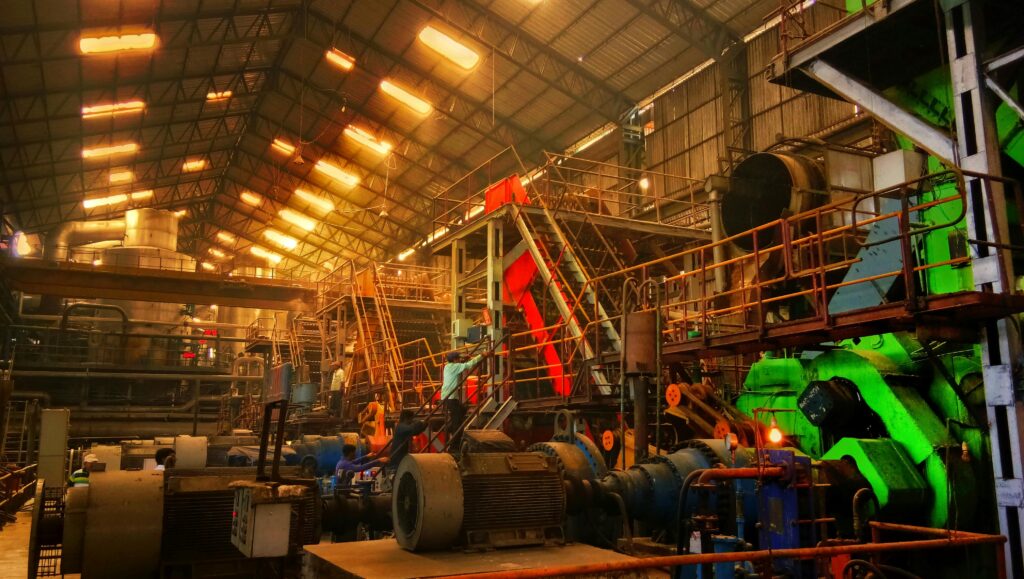
Manufacturing runs on data. Every bill of materials, every supplier certification, every machine specification, and every customer order exists as a data record somewhere in the enterprise. The problem is that in most manufacturing organizations, that data lives in multiple places, in conflicting formats, with different values for the same field depending on which system you open. That is not a data problem. That is a production problem.
In 2026, manufacturers operate simultaneously across ERP, MES, PLM, CRM, and IIoT platforms. A study across enterprise environments reports that companies manage data across an average of 17 different enterprise systems, with 72% struggling to integrate legacy data — contributing to quality issues and long delays in transformation efforts. Each system creates, modifies, and stores its own version of the same core business entities. A supplier record in the ERP does not match the one in the procurement portal. A product specification in the PLM system has not been updated in the MES. A machine asset in the CMMS carries a different ID than the one feeding sensor data to the analytics layer. The result is what data professionals call Data Debt: an accumulated backlog of inconsistencies, duplicates, and gaps that compounds with every new system, acquisition, and product line.
Manufacturing master data management (MDM) is the discipline that eliminates Data Debt at its source. It is not a software purchase. It is not a one-time data cleanup. It is a structured, ongoing business practice that governs the most critical data entities in the enterprise and ensures every system, every team, and every algorithm operates from a single, authoritative version of the truth.
What Is Master Data Management?
Master data management (MDM) is a technology-enabled business discipline in which business and IT work together to ensure the uniformity, accuracy, stewardship, governance, semantic consistency, and accountability of an enterprise’s official shared master data assets.
The master data management definition, as formalized by Gartner, positions MDM not as an IT initiative but as a cross-functional governance practice. The MDM definition makes clear that the discipline spans organizational boundaries: it is owned by the business, enabled by technology, and measured by operational outcomes.
At the operational level, MDM creates a golden record for each critical business entity: a single, deduplicated, enriched, and validated master record that serves as the authoritative source for all downstream systems and processes. When a supplier’s certification expires, the golden record reflects that change, and every connected system — from procurement to quality to compliance — responds accordingly.
Understanding what is master data in data management requires distinguishing it from adjacent data types. Transactional data describes events: a purchase order, a production run, a quality inspection. Metadata describes other data: a report definition, a schema, a data dictionary. Master data describes the core entities that participate in those transactions: the product being ordered, the supplier fulfilling it, the machine producing it, the customer receiving it. Master data is less volatile than transactional data, but it is not static. It changes, and when it changes incorrectly or inconsistently, every transaction that references it is compromised.
| Data Type | Description | Manufacturing Example |
|---|---|---|
| Master Data | Core business entities | Product SKU, Supplier record, Machine asset |
| Transactional Data | Business events and operations | Production order, Quality inspection, Purchase order |
| Metadata | Data about data | Schema definitions, Report configurations |
| Reference Data | Classification and categorization codes | ISO country codes, UOM standards, Material types |
| Hierarchical Data | Structural relationships | Product family hierarchy, Organizational structure |
What Is Master Data in Manufacturing?
The master data meaning in a manufacturing context is specific and consequential. It encompasses every data entity that defines what a manufacturer makes, who makes it possible, what it is made from, who buys it, and what equipment produces it. These entities do not change with every transaction, but they govern every transaction.
Manufacturing master data organizes into five core domains, each with distinct attributes, consuming systems, and governance requirements.
| Domain | Core Entities | Primary Consuming Systems | Key Attributes |
|---|---|---|---|
| Product | SKUs, BOMs, specifications, revisions | ERP, PLM, MES | Part number, revision level, material composition, compliance status |
| Material | Raw materials, components, MRO spares | ERP, PLM, WMS, Quality | Material ID, approved suppliers, REACH/RoHS status, UOM, UNSPSC codes |
| Supplier | Vendors, contractors, logistics partners | ERP, Procurement, Quality | Certifications, SLAs, lead times, risk scores, COI documents |
| Customer | Direct buyers, distributors, end users | CRM, ERP, Order Management | Account hierarchy, contract terms, regulatory requirements, ship-to locations |
| Asset/Equipment | Machines, tools, production lines | CMMS, MES, IIoT platforms | Asset ID, maintenance history, calibration records, sensor linkage |
A sixth domain is rapidly becoming non-negotiable in smart manufacturing environments: machine-generated operational data. As IIoT sensors proliferate across production floors, the real-time data streams they generate (cycle times, temperature readings, vibration signatures, throughput rates) must be anchored to a governed master asset record to be analytically useful. Without that anchor, sensor data is noise. With it, sensor data becomes the foundation for predictive maintenance, OEE optimization, and AI-driven quality control.
It is also important to distinguish between direct and indirect customers in manufacturing MDM. A manufacturer’s direct customers are typically distributors and retailers. But in many business scenarios, end-user customers become direct customers as well, and sharing end-user data with business partners creates additional governance requirements. A complete MDM solution must provide a true 360-degree view of both direct and indirect customer relationships.
Operational MDM vs. Analytical MDM: What Is the Difference?
TechTarget and IBM both identify two distinct forms of master data management that can be implemented separately or in combination.
Operational MDM focuses on the master data that drives core business systems: ERP transactions, production orders, procurement workflows, and quality inspections. Its goal is to ensure that the data used in day-to-day operations is accurate, consistent, and current. In manufacturing, operational MDM governs the item master, the supplier master, and the asset master that production, procurement, and maintenance teams rely on every shift.
Analytical MDM focuses on feeding consistent master data to data warehouses, BI platforms, and analytics applications. Its goal is to ensure that the data used in reporting, forecasting, and strategic decision-making is unified and trustworthy. In manufacturing, analytical MDM ensures that OEE dashboards, supplier scorecards, and financial reports all draw from the same governed master records.
Most manufacturers require both. Operational MDM without analytical MDM produces clean transactions but unreliable reports. Analytical MDM without operational MDM produces accurate dashboards built on dirty operational data. The two are complementary, and a mature MDM framework addresses both simultaneously.
Why Does Manufacturing Master Data Management Fail?
Most manufacturers have attempted some form of MDM. Most have not succeeded. The failure is rarely technical. It is structural.
The first root cause is system proliferation without data governance. Manufacturers manage data across an average of 17 different enterprise systems. Each application was implemented to solve a specific operational problem, and each brought its own data model. When a product specification is created in the PLM system, it does not automatically synchronize with the ERP item master, the MES routing, or the quality management system. Each system develops its own version of the same product record, and divergence begins immediately.
The second root cause is manual data entry at scale. Manual entry introduces transposition errors, naming inconsistencies, and incomplete records. A supplier named “Acme Corp” in one system and “ACME Corporation” in another is not a cosmetic issue. It is a duplicate record that generates duplicate purchase orders, splits supplier performance metrics, and creates compliance exposure when certifications are tracked against only one of the two records.
The third root cause is merger and acquisition data sprawl. When a manufacturer acquires another company, it inherits that company’s data architecture, naming conventions, part numbering schemes, and system landscape. Without a structured MDM program, the integration of acquired data can take years and still produce persistent inconsistencies.
The fourth root cause is legacy system incompatibility. Manufacturing environments frequently run ERP systems that are 15 to 20 years old alongside modern IIoT platforms and cloud-based analytics tools. These systems were not designed to share data, and the custom integrations built to connect them are brittle, undocumented, and impossible to scale.
The cumulative effect is what Stibo Systems describes as the inability to create a defensible chain of custody for product data. When a regulator asks for the material composition of a product that shipped 18 months ago, the answer lives in four different systems, none of which agree.
What Is a Master Data Management Framework?
A master data management framework is the structured combination of people, processes, and technologies that operationalizes MDM across the enterprise. The framework is not the software. The software is one component of the framework. The framework defines how master data is created, validated, stored, governed, and distributed — and who is responsible for each of those activities at every stage of the data lifecycle.
The Three Pillars of an MDM Framework
People are the most underestimated pillar. Every master data domain requires a designated data steward: a business-side owner who is accountable for the accuracy and completeness of records within that domain. Data stewards are not IT staff. They are procurement managers who own supplier master data, product engineers who own the item master, and plant managers who own asset records. Beyond data stewards, a complete MDM governance structure includes an MDM manager who oversees the program, master data specialists who handle technical data quality tasks, and an executive sponsor who secures funding and resolves cross-functional conflicts. Without business ownership at every level, MDM becomes an IT project that no one in operations trusts or uses.
Process defines the MDM lifecycle: how data is collected from source systems, how it is matched and deduplicated, how conflicts are resolved, how golden records are created and maintained, and how updates are propagated back to consuming systems. The process layer also defines data quality standards, audit cycles, and escalation paths for data disputes.
Technology provides the MDM hub, the integration layer, and the data quality tooling that automates the process layer and makes it scalable. The technology choice is a consequence of the framework design, not a prerequisite for it.
MDM Implementation Styles
The purpose of master data management is served through four distinct architectural approaches, each with different levels of centralization and operational impact.
| Implementation Style | Description | Best Suited For | Complexity |
|---|---|---|---|
| Registry | Creates a unified index of master data without moving or changing source system data | Organizations with strong source systems and limited integration budget | Low |
| Consolidation | Pulls master data from source systems into a central hub for analytics and reporting | Manufacturers prioritizing BI and reporting consistency | Medium |
| Coexistence | Consolidates master data in a hub and propagates changes back to source systems | Organizations needing bidirectional synchronization across multiple systems | High |
| Centralized (Transaction) | All master data creation and management occurs in the MDM hub, which publishes to source systems | Manufacturers with full executive commitment to MDM as the system of record | Very High |
Most manufacturers begin with a consolidation or coexistence style and evolve toward centralization as MDM maturity increases. Gartner’s MDM Maturity Model defines five levels of progression: Initial, Developing, Defined, Managed, and Optimizing. Most large organizations operate at Level 2 (Developing) and are working toward Level 3 (Defined), with the highest level representing master data managed as a vital strategic asset with continuous improvement.
Balancing Global and Local MDM Governance
One dimension that most MDM frameworks underestimate is the tension between global standardization and local operational requirements. Manufacturing master data management cannot be fully centralized. A global approach ensures unified processes and consistency across multiple locations and business units, but solely focusing on a global perspective overlooks local operations’ unique nuances: regional regulations, country-specific labeling requirements, local supplier relationships, and facility-specific asset configurations.
The practical answer is a hybrid governance model: global standards for core attributes (part numbering, supplier IDs, asset classification), with local flexibility for region-specific compliance content, language variants, and market-specific product attributes. This is not a compromise. It is the architecture that makes MDM sustainable across a multi-site, multi-region manufacturing enterprise.
How Does MDM Drive Operational Performance in Manufacturing?
The purpose of master data management extends well beyond data hygiene. In a manufacturing context, clean, governed master data is a direct input to operational performance across five critical dimensions.
OEE and Downtime Attribution. Overall Equipment Effectiveness (OEE) is calculated from three components: Availability, Performance, and Quality. Each component depends on accurate master data. Availability calculations require a precise asset master with correct shift schedules and planned downtime codes. Performance calculations require accurate ideal cycle times from the product and routing master. Quality calculations require validated defect codes from the quality master. When any of these master records are inaccurate or inconsistent, OEE scores are unreliable, and the decisions made from them are wrong.
Predictive Maintenance. Predictive maintenance algorithms consume historical failure data, sensor readings, and maintenance records. All three data streams must be anchored to the same asset master record to produce valid failure predictions. An asset that carries two different IDs in the CMMS and the IIoT platform generates split maintenance histories and sensor streams that no algorithm can reconcile. Closing that split is a CMMS-side responsibility: platforms like MaintainX enforce it by requiring technicians to log failure codes, parts consumption, and labor hours against a single governed asset ID, so every completed work order extends the same maintenance history the IIoT layer’s sensor streams are anchored to. Manufacturers implementing attribute-driven asset master governance have averted high-cost stockouts and ensured correct part selection, safeguarding production continuity. MDM programs targeting maintenance performance achieve MTTR reductions of 15–20% through enhanced asset and spare parts data.
AI-Driven Quality Control. Visual inspection systems and AI defect detection models require a governed product and material master to function at production-grade accuracy. The model must know what it is inspecting: the correct part number, the current revision level, the approved material specification, and the dimensional tolerances for that specific product variant. When product master data is inconsistent across the MES and the quality system, AI inspection models are trained and deployed against conflicting specifications, producing false positives, false negatives, and ultimately, loss of operator trust in the system.
Supply Chain Resilience. Supplier master data governs procurement lead times, approved vendor lists, certification statuses, and risk scores. When supplier records are duplicated or outdated, procurement teams cannot accurately assess supply chain exposure. A single supplier appearing under three different names in the ERP system generates three separate performance scorecards, none of which reflects the true relationship. Supplier rationalization through governed master data reduces vendor count by 10–15% and unlocks volume discounts, while aligning vendor and invoice data lowers mismatch rates by 30%, reducing delays in payment processing.
Regulatory Compliance and Digital Product Passport Readiness. REACH, RoHS, ISO 9001, IATF 16949, and the emerging Digital Product Passport framework all require manufacturers to demonstrate traceability from raw material to finished product. That traceability chain is built entirely on master data: material records linked to approved suppliers, product records linked to BOMs, BOMs linked to production orders, production orders linked to quality inspections. MDM centralizes and connects these relationships, reducing compliance exposure by up to 80% through a single, validated supplier record that ensures certifications, insurance, COIs, SDS files, REACH and RoHS declarations, and quality scores are always current. When any link in that chain is broken by inconsistent master data, compliance becomes reactive, expensive, and legally exposed.
What Is the Purpose of Master Data Management in a Smart Factory?
The purpose of master data management in a smart factory environment is to serve as the semantic backbone that connects machine-generated data to business-level intelligence. This is the dimension that most MDM frameworks — designed for enterprise data management rather than manufacturing operations — do not address.
In a traditional enterprise, master data governs customers, products, and suppliers. In a smart factory, master data must also govern machines. Every connected asset on the production floor generates data: cycle counts, temperature readings, vibration signatures, energy consumption, and fault codes. That data is only analytically useful when it is linked to a governed asset master record that carries the machine’s identity, its production context, its maintenance history, and its operational parameters. Without that anchor, sensor data is noise. With it, sensor data becomes the foundation for digital twins, predictive maintenance, and AI-driven quality control.
Only 39% of manufacturing leaders have successfully scaled data-driven use cases beyond individual product lines. The reason is not a lack of AI capability or IIoT investment. It is a lack of governed master data to anchor those capabilities to.
This is the architecture that Intelycx CORE establishes. CORE functions as the IIoT-native connectivity and data layer that links machine-generated operational data to a governed master data structure. Every data point collected by CORE is tagged to a specific asset identity, a specific production context, and a specific product being manufactured. This creates the semantic foundation that downstream analytical systems require.
Intelycx ARIS consumes that governed data stream to deliver real-time OEE monitoring, downtime classification, and production performance analytics. Because ARIS operates on data that is anchored to a clean asset and product master, its OEE calculations are accurate, its downtime attributions are correct, and its performance benchmarks are comparable across shifts, lines, and facilities.
Intelycx NEXACTO uses the same governed product and material master data to power AI-driven visual quality inspection. NEXACTO detects defects at 250 microns and smaller with 99%+ accuracy, but that accuracy is contingent on the inspection model operating against a current, validated product specification. When the product master is clean, NEXACTO performs. When it is not, no AI model can compensate for the ambiguity.
The relationship between MDM and smart manufacturing is not aspirational. It is architectural. A manufacturer cannot build a reliable AI layer on top of unreliable master data. The sequence is fixed: govern the data first, then build the intelligence on top of it.
Master Data Management Best Practices for Manufacturers
The gap between MDM programs that deliver operational value and those that stall in the IT department is almost always a function of how the program was designed, not which technology was selected.
Start with one domain, not all of them. The most common MDM failure pattern is attempting to govern all master data domains simultaneously. The organizational change required to establish data ownership, cleansing workflows, and governance policies across product, supplier, customer, material, and asset domains at once is prohibitive. Begin with the domain that creates the most operational pain — typically the material or product master — and build governance maturity before expanding.
Assign data ownership at the business level. Data stewardship must be a business function, not an IT function. The product engineer who creates BOMs owns the product master. The procurement manager who qualifies suppliers owns the supplier master. The plant manager who commissions equipment owns the asset master. IT provides the tooling and the integration. The business provides the accountability.
Define the golden record before selecting technology. The golden record is a business decision, not a technical one. Before evaluating MDM platforms, define what a complete, accurate supplier record looks like: which attributes are mandatory, what validation rules apply, which source system is authoritative for each attribute. Technology selection follows from that definition.
Integrate MDM with ERP, MES, and PLM from day one. An MDM hub that does not feed operational systems is a reporting database, not a governance program. The value of MDM is realized when the golden record is the source of truth for every transaction in every system. Integration architecture must be designed as part of the MDM framework, not added later.
Treat machine identity as a first-class master data entity. In IIoT-enabled manufacturing environments, every connected asset must have a governed master record linked to its sensor data streams, its maintenance history, and its production context. This is not a CMMS function. It is an MDM function. Manufacturers who govern machine identity as master data unlock predictive maintenance, accurate OEE, and AI-driven quality control. Those who do not are collecting sensor data they cannot use.
Measure data quality continuously. MDM is not a project with a completion date. Data quality degrades continuously as new records are created, systems are updated, and business processes evolve. Establish ongoing data quality metrics for each domain: completeness rates, duplicate ratios, validation pass rates, and time-to-update for critical attributes. Treat data quality as an operational KPI, not an IT metric.
MDM Is Not a Project. It Is a Discipline.
Manufacturers who treat master data management as a one-time data cleanup will find themselves repeating that cleanup every 18 months, each time with more systems, more domains, and more accumulated inconsistencies than the last.
The manufacturers who gain competitive advantage from MDM are those who treat it as a continuous operational discipline: governed, measured, and embedded into the processes by which data is created and maintained. Organizations with robust MDM programs report up to 40% lower operational costs and 67% faster decision-making cycles. They move faster because their procurement decisions are based on accurate supplier data. They comply more easily because their product records carry a complete audit trail. They scale AI sooner because their machine and product master data is clean enough to train on.
In 2026, the manufacturers building smart factories are not starting with AI. They are starting with data governance. They are establishing the master data foundation that makes AI reliable, IIoT data meaningful, and operational analytics trustworthy. That foundation is manufacturing master data management.
Intelycx CORE, ARIS, and NEXACTO are built on that foundation. They are not tools that work despite bad data. They are systems designed to operate on governed master data — and to deliver the OEE improvements, defect reduction rates, and compliance traceability that smart manufacturing requires.
Master Data Management: Entity-Attribute-Value Reference
| Entity | Attribute | Value |
|---|---|---|
| Manufacturing MDM | Definition | Technology-enabled discipline ensuring uniformity, accuracy, and governance of shared master data assets |
| Master Data | Characteristic | Less volatile than transactional data; mission-critical; non-transactional; shared enterprise-wide |
| Golden Record | Function | Single authoritative master record created by deduplicating, enriching, and validating data from all source systems |
| MDM Framework | Components | People (data stewards, MDM manager, executive sponsor), Process (lifecycle governance), Technology (MDM hub and integration layer) |
| MDM Maturity | Levels | Initial, Developing, Defined, Managed, Optimizing (Gartner model) |
| Operational MDM | Focus | Master data in core business systems: ERP, MES, procurement, quality |
| Analytical MDM | Focus | Master data feeding data warehouses, BI platforms, and analytics applications |
| Product Master Data | Scope | SKUs, BOMs, specifications, revision levels, compliance status |
| Supplier Master Data | Scope | Certifications, SLAs, lead times, risk scores, approved materials |
| Asset Master Data | Scope | Machine identity, maintenance history, calibration records, IIoT sensor linkage |
| Intelycx CORE | Function | IIoT-native connectivity layer linking machine data to governed master data structure |
| Intelycx ARIS | Dependency | Governed asset and product master data for accurate OEE and downtime attribution |
| Intelycx NEXACTO | Dependency | Current product and material master data for AI visual inspection at 99%+ accuracy |
How Intelycx Helps Turn Manufacturing KPIs into Daily Guidance
Manufacturing KPIs only create value when they are accurate, real-time, and connected to action. That is the gap Intelycx is built to close.
The Intelycx platform connects legacy and modern machines into a single data foundation, normalizes and enriches signals so KPIs are calculated consistently across lines and sites, and provides real-time dashboards for operators, engineers, and leaders. On top of this connected data, Intelycx layers AI-driven insights so teams understand not just what changed in a KPI, but why, and what to do about it.
If you are working to move beyond spreadsheets and lagging reports, a unified manufacturing AI platform like Intelycx can help you turn KPIs from static charts into a living system for maximizing production efficiency every day. You can learn more about our solutions and approach at intelycx.com.