
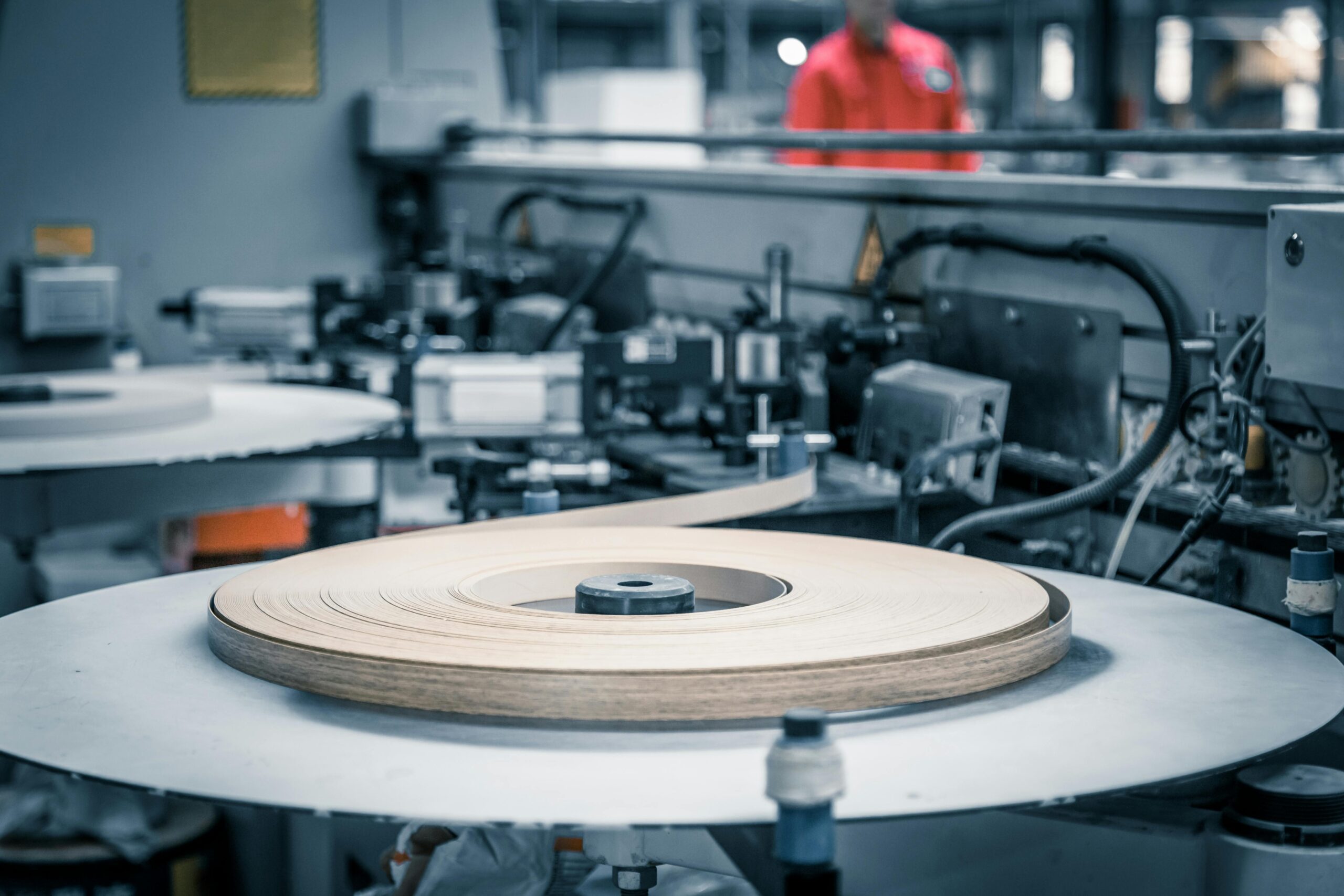
In manufacturing, a paradox is hiding in plain sight. Factories invest millions in advanced equipment, hire skilled engineers, and run sophisticated planning systems, yet a significant portion of every production hour is consumed by activities that add zero value to the finished product. This is the Lean Manufacturing Paradox: the coexistence of industrial sophistication and systemic, invisible waste. The answer to this paradox is not more technology or more labor, it is a fundamentally different way of thinking about how value is created. That way of thinking is lean manufacturing.
Lean manufacturing is the most widely adopted production philosophy in the world, yet it is also the most widely misunderstood. Most manufacturers know it as a set of tools, 5S, Kanban, Value Stream Mapping. Fewer understand that those tools are the expression of a deeper philosophy built on two immovable pillars: the relentless elimination of waste and the unconditional respect for people. This article provides a complete, authoritative guide to lean manufacturing: its precise definition, its verified historical origins, its two foundational pillars, the 5 principles of lean manufacturing as codified by Womack and Jones, its key tools and techniques, and the role of real-time manufacturing technology in transforming lean from a periodic project into a continuous operational discipline.
Lean Manufacturing Explained
Lean manufacturing is a production philosophy and management system that maximizes customer value by systematically identifying and eliminating all forms of waste from every step of the production process. The definition lean manufacturing practitioners use most frequently comes from the American Society for Quality (ASQ), which defines lean as “a set of management practices to improve efficiency and effectiveness by eliminating waste,” where the core principle is “to reduce and eliminate non-value-adding activities.” The Lean Enterprise Institute (LEI) extends this definition: lean is “a way of thinking about creating needed value with fewer resources and less waste” and “a practice consisting of continuous experimentation to achieve perfect value with zero waste.”
The definition of lean manufacturing rests on a single, powerful idea: value is defined entirely by the customer. If a customer is not willing to pay for an activity, that activity is waste. This shifts the entire frame of reference in a manufacturing operation from internal efficiency metrics to the external question of what the customer actually needs. A lean manufacturer does not ask “how fast can we run this machine?” It asks “what does the customer value, and how do we deliver it with the fewest possible resources?”
Lean manufacturing is distinct from lean enterprise, though the two terms are related. Lean manufacturing applies the principles of waste elimination to the production process itself. Lean enterprise extends these principles across the entire value stream and supply chain, from raw material suppliers to end-customer delivery. The leanest factory cannot achieve its full potential if it operates within a non-lean supply chain.
What Are the Origins of Lean Manufacturing?
Lean manufacturing has its roots in over a century of industrial innovation, with its formal principles codified in 1996. The Lean Enterprise Institute traces the first integrated production process to Henry Ford, who in 1913 at Highland Park, Michigan, married consistently interchangeable parts with standard work and moving conveyance to create what he called “flow production.” Ford lined up fabrication steps in process sequence, delivering perfectly fitting components directly to the line, and was able to turn the inventories of the entire company every few days. However, Ford’s system had a critical limitation: it could only produce one product, the Model T, in one specification. When the market demanded variety, the system broke down.
It was Kiichiro Toyoda, Taiichi Ohno, and their colleagues at Toyota who solved this problem. Beginning in the 1930s and intensifying after World War II, they revisited Ford’s original thinking and invented the Toyota Production System (TPS), a system that shifted the focus of the manufacturing engineer from individual machines and their utilization to the flow of the product through the total process. TPS was formally practiced between 1948 and 1975. The key innovations of TPS included right-sizing machines for actual volume needed, introducing self-monitoring machines to ensure quality, pioneering quick setups to enable small-batch production of many part numbers, and creating a pull system where each process step notifies the previous step of its current needs.
The thought process of lean was first comprehensively described in “The Machine That Changed the World” (1990) by James P. Womack, Daniel Roos, and Daniel T. Jones, which introduced the term “lean production” to the world. In a subsequent volume, “Lean Thinking” (1996), James P. Womack and Daniel T. Jones distilled the lean principles into five, providing the framework that every lean practitioner uses today. The term “lean manufacturing” entered widespread use in the 1990s as Western companies adopted and adapted TPS for their own operations.
What is the Core Philosophy of Lean Manufacturing?
The core philosophy of lean manufacturing is the belief that every organization can continuously improve by eliminating waste and respecting the people who do the work. This philosophy is not a project with a start and end date, it is a permanent operating mindset. The Lean Enterprise Institute describes it as a practice of “continuous experimentation to achieve perfect value with zero waste,” where lean thinking and lean practice always occur together.
What is the core philosophy of lean manufacturing at its most fundamental level? It is the recognition that waste is the enemy of value, and that the people closest to the work are the most capable of identifying and eliminating it. This is why lean is not a top-down management directive but a bottom-up, people-powered system. Managers create the conditions for improvement; frontline employees drive it. This is why lean organizations invest heavily in training, visual management, and structured problem-solving processes, they are building the organizational capability to see waste and eliminate it, every day, at every level.
What Are the Pillars of Lean Manufacturing?
The two pillars of lean manufacturing are Continuous Improvement (Kaizen) and Respect for People. These lean manufacturing pillars are not independent concepts but deeply interdependent principles that reinforce each other. Together, they form the philosophical foundation upon which all lean tools and the 5 principles of lean manufacturing are built.
Continuous Improvement (Kaizen) is the commitment to making incremental, ongoing improvements to every process, every day, without end. The Japanese term kaizen means “change for the better,” and it describes a culture where every employee, from the CEO to the frontline operator, is actively engaged in identifying and eliminating waste. Kaizen rejects the idea of a single, dramatic transformation in favor of thousands of small, sustained improvements that compound over time into a profound competitive advantage.
Respect for People is the recognition that employees are not interchangeable resources but the primary source of knowledge, creativity, and problem-solving capability in the organization. Lean organizations invest in developing their people, listen to their ideas, and create systems that allow them to do their best work. This pillar is what distinguishes lean from pure cost-cutting: lean does not eliminate people to reduce costs, it develops people to eliminate waste. These lean manufacturing pillars explain why lean transformations that focus only on tools, without building the underlying culture of respect and continuous improvement, consistently fail to sustain their gains.
What Are the 5 Principles of Lean Manufacturing?
The 5 principles of lean manufacturing were codified by James P. Womack and Daniel T. Jones in Lean Thinking (1996) and are derived directly from the Toyota Production System. What are the 5 principles of lean manufacturing? They are: Identify Value, Map the Value Stream, Create Flow, Establish Pull, and Seek Perfection. These five principles provide a sequential, actionable framework for implementing lean in any manufacturing operation. What are lean manufacturing principles in practice? They are the five questions that every lean initiative must answer, in order, before any tool is deployed.
| Principle | Core Question | Primary Action |
|---|---|---|
| 1. Value | What does the customer value? | Define value from the customer’s perspective |
| 2. Value Stream | Where is waste in the process? | Map and eliminate non-value-adding steps |
| 3. Flow | Does value move without interruption? | Remove obstacles to continuous flow |
| 4. Pull | Is production triggered by demand? | Produce only what is needed, when needed |
| 5. Perfection | Is improvement continuous? | Pursue zero waste relentlessly |
Principle 1: Identify Value, What Does the Customer Actually Pay For?
Value, in lean manufacturing, is defined exclusively by the end customer: it is the specific capability delivered to the customer at the right time and at an appropriate price. This first principle of lean manufacturing requires manufacturers to stop defining value from their own perspective, what is easy to produce, what maximizes machine utilization, and start defining it from the customer’s perspective. What problem does the customer need to solve? What specification does the product need to meet? What delivery time is acceptable?
This principle is more disruptive than it appears. Many activities that manufacturers consider essential, complex approval workflows, redundant quality checks, large production batches, are not valued by the customer at all. They are internal conveniences that add cost without adding value. Intelycx CORE provides real-time production data that connects actual output to customer demand, enabling manufacturers to measure whether their processes are delivering value at the rate the customer requires, a metric known as takt time adherence.
Principle 2: Map the Value Stream, Where Does Waste Hide?
The value stream is the complete sequence of activities required to bring a product from raw material to the customer’s hands. The second principle of lean manufacturing requires manufacturers to identify the entire value stream for each product and challenge every step that does not add value. According to Womack and Jones, generally nine out of ten steps in a typical production process are non-value-adding waste. This is the most confronting insight in all of lean: the vast majority of what a factory does every day is waste.
Value Stream Mapping (VSM) is the primary tool for this principle. A VSM is a visual diagram that maps every step in the production process, from raw material receipt to finished goods shipment, differentiating value-adding steps from non-value-adding ones and quantifying the time and resources consumed at each step. The result is a “current state” map that makes waste visible and a “future state” map that defines the target condition. Intelycx CORE accelerates the VSM process by automatically capturing real-time data on cycle times, downtime, and production rates across all machines, providing the objective data that makes the current state map accurate and the future state map achievable.
Principle 3: Create Flow, Does Value Move Without Interruption?
Once waste has been identified and removed from the value stream, the third principle of lean manufacturing requires that the remaining value-adding steps flow continuously, without interruption, batching, or waiting. Flow is the antithesis of the traditional batch-and-queue production system, where large batches of parts are produced at each workstation and then wait in a queue for the next process. In a flow system, each unit moves directly from one value-adding step to the next, minimizing work-in-process inventory and lead time.
Creating flow requires eliminating the barriers that interrupt it: machine downtime, long setup times, production imbalances, and poor factory layout. Intelycx CORE monitors every machine in real time, automatically detecting and categorizing every downtime event, whether caused by a machine fault, a material shortage, or an operator absence. This real-time visibility allows production managers to respond to flow interruptions immediately, before they cascade into larger disruptions, and to identify the systemic root causes that must be addressed to achieve sustainable flow.
Principle 4: Establish Pull, Is Production Triggered by Real Demand?
The fourth principle of lean manufacturing requires that production be triggered by actual customer demand rather than by forecasts or schedules. In a pull system, nothing is produced until a downstream process or the end customer signals a need. This is the direct opposite of a push system, where production is scheduled based on forecasts and products are pushed through the system regardless of whether downstream demand exists. The pull principle is the foundation of Just-in-Time (JIT) manufacturing: producing the right product, in the right quantity, at the right time.
Kanban is the most widely used tool for implementing pull. A Kanban card or signal authorizes the production or movement of a specific quantity of a specific item, and it is only triggered when the downstream process has consumed the previous batch. This creates a self-regulating system where production automatically adjusts to actual demand without the need for complex scheduling. Intelycx CORE provides the real-time production data that makes a pull system reliable: when actual cycle times and downtime are accurately known, the Kanban quantities can be precisely calibrated to maintain flow without creating excess inventory.
Principle 5: Seek Perfection, Is Improvement Continuous?
The fifth principle of lean manufacturing is the pursuit of perfection: the continuous, relentless improvement of every process toward the ideal state of zero waste, zero defects, and perfect flow. Perfection is not a destination, it is a direction. As Womack and Jones wrote, lean organizations “manage toward perfection so that the number of steps and the amount of time and information needed to serve the customer continually falls.” This principle is what transforms lean from a one-time improvement project into a permanent operating discipline.
The pursuit of perfection is sustained by Kaizen, the culture of continuous improvement that is one of the two foundational pillars of lean. Every improvement reveals the next layer of waste. Every problem solved creates the clarity to see the next problem. This virtuous cycle of improvement is what gives lean organizations their compounding competitive advantage over time. Intelycx ARIS supports this principle by capturing the tribal knowledge of experienced operators and converting it into standardized digital work instructions, ensuring that every improvement is codified, shared, and sustained across the entire workforce rather than residing in the memory of a single individual.
What Are the Key Tools and Techniques of Lean Manufacturing?
The lean manufacturing techniques described below are the practical instruments through which the 5 principles are implemented on the factory floor. Each tool addresses a specific category of waste and is most effective when deployed as part of a coherent lean strategy rather than in isolation.
5S is the foundational lean manufacturing technique for workplace organization. The five S’s, Sort (Seiri), Set in Order (Seiton), Shine (Seiso), Standardize (Seiketsu), and Sustain (Shitsuke), create a clean, organized, and visually managed workspace where abnormalities are immediately visible. 5S is typically the first lean tool deployed in any organization because it creates the physical and cultural foundation for all subsequent improvements. Some organizations add a sixth S for Safety, creating a 6S system.
Value Stream Mapping (VSM) is a lean management tool used to visualize, analyze, and improve the flow of materials and information required to bring a product to the customer. A VSM distinguishes value-adding steps from non-value-adding steps and quantifies the time and resources consumed at each, providing a clear picture of where waste exists and a roadmap for eliminating it.
Kanban is a visual scheduling system that controls the production and movement of materials through a pull system. Kanban signals, traditionally cards, now often digital, authorize the production of a specific quantity of a specific item only when downstream demand exists, preventing overproduction and excess inventory.
Just-in-Time (JIT) is a production strategy that ensures materials and components are delivered to the production line exactly when they are needed, in the exact quantity needed. JIT minimizes inventory waste and requires a highly reliable supply chain and production process to function effectively.
Standardized Work is a documented, agreed-upon set of procedures for performing a task in the most efficient and safe manner currently known. Standardized work is the baseline against which all improvements are measured and the mechanism by which improvements are sustained.
Poka-Yoke (mistake-proofing) involves designing mechanisms into the production process that prevent errors from occurring or make them immediately detectable. A fixture that only accepts a part in the correct orientation is a classic example: it makes a defect physically impossible, eliminating the waste of defects at that step without relying on operator vigilance.
Heijunka (production leveling) is the practice of smoothing production volume and mix over a given period to create a stable, predictable production schedule. By leveling production, Heijunka reduces the peaks and valleys in demand that create overproduction, waiting, and inventory waste.
Gemba Walks are structured visits by managers and engineers to the actual place where work is done, the shop floor, to observe processes, engage with employees, and identify waste firsthand. The Japanese term gemba means “the actual place,” and the practice reflects the lean principle that real understanding comes from direct observation, not from reports.
Kaizen Events (also called Kaizen Blitzes or Rapid Improvement Events) are focused, short-duration improvement workshops, typically three to five days, in which a cross-functional team analyzes a specific process, identifies waste, and implements improvements. Kaizen events are a powerful mechanism for accelerating improvement in a targeted area while building the problem-solving capability of the team.
What Are Real-World Examples of Lean Manufacturing Principles?
Lean manufacturing principles examples span every industry, demonstrating that the philosophy is not limited to automotive production. The most instructive example of lean manufacturing is Toyota Motor Corporation itself, the originator of TPS and, as the Lean Enterprise Institute notes, the leading lean exemplar in the world, which has used lean principles to become one of the largest automakers in the world in terms of overall sales. Toyota’s production system achieves extraordinary levels of quality and efficiency by applying all five lean principles simultaneously: defining value from the customer’s perspective, mapping and continuously improving the value stream, maintaining continuous flow through its assembly lines, operating a pull system through Kanban, and relentlessly pursuing perfection through Kaizen.
In healthcare, Virginia Mason Medical Center in Seattle, Washington, is one of the most documented examples of lean manufacturing principles applied outside of manufacturing. Beginning in 2002, Virginia Mason applied TPS to its hospital operations, redesigning patient care pathways to eliminate waste, reduce waiting times, and improve quality. The results included significant reductions in inventory costs, faster patient throughput, and measurable improvements in patient safety, demonstrating that the principles of lean manufacturing are universal.
In aerospace, Boeing has applied lean principles to its commercial aircraft production, including the implementation of moving assembly lines for its 737 and 777 programs. By applying flow and pull principles to aircraft assembly, a process of extraordinary complexity, Boeing reduced production lead times and improved quality, demonstrating that lean manufacturing principles examples are not limited to high-volume, repetitive production.
In food and beverage manufacturing, lean principles are applied to reduce changeover times between product runs, minimize ingredient waste, and ensure that production is aligned with actual retailer orders rather than forecasts. The perishable nature of food products makes the pull principle and JIT inventory management particularly critical in this sector.
What is the Difference Between Lean Manufacturing and Six Sigma?
Lean manufacturing and Six Sigma are both methodologies aimed at process improvement, but they address different problems and use different tools. Lean manufacturing focuses on eliminating waste and improving flow, its primary question is “where is the waste in this process?” Six Sigma focuses on reducing variation and defects, its primary question is “why does this process produce inconsistent results?” Lean improves the speed and efficiency of a process; Six Sigma improves the accuracy and consistency of a process.
| Dimension | Lean Manufacturing | Six Sigma |
|---|---|---|
| Primary Focus | Waste elimination and flow | Defect reduction and variation control |
| Core Question | Where is the waste? | Why does variation occur? |
| Primary Tools | VSM, Kanban, 5S, JIT, Kaizen | DMAIC, control charts, regression analysis |
| Origin | Toyota Production System (1940s–1950s) | Motorola (1986) |
| Measurement | Lead time, OEE, inventory turns | Defects per million opportunities (DPMO), Sigma level |
Lean Six Sigma combines both methodologies, applying lean’s waste elimination tools to improve flow and speed while using Six Sigma’s statistical tools to reduce variation and defects. The combined approach is particularly powerful because many defects are caused by process variation that lean tools alone cannot address, while many efficiency losses are caused by waste that Six Sigma’s statistical methods are not designed to eliminate. Motorola introduced Lean Six Sigma in 1986, and it has since become one of the most widely adopted process improvement frameworks in manufacturing.
What Are the Benefits of Lean Manufacturing?
Lean manufacturing delivers measurable, compounding benefits across four dimensions of operational performance. MachineMetrics, citing lean manufacturing literature, notes that lean manufacturing reduces lead times by an average of 99% in organizations that fully implement pull and flow principles. This is the most dramatic benefit of lean: when waste is eliminated and flow is established, the time from raw material to finished product collapses, enabling manufacturers to respond to customer demand with speed that is impossible in a batch-and-queue system.
Cost reduction is the most immediately visible financial benefit. By eliminating overproduction, excess inventory, rework, and scrap, lean directly reduces the cost of goods sold. Reduced inventory frees up working capital. Reduced scrap and rework reduces material and labor costs. Reduced downtime increases output from existing assets without capital investment.
Quality improvement is a systemic benefit of lean. Standardized work eliminates the variability that causes defects. Poka-Yoke prevents errors at the source. Smaller batch sizes mean that defects are detected sooner, reducing the quantity of defective product produced before the problem is identified. The result is higher first-time-right rates, fewer warranty claims, and greater customer satisfaction.
Workforce engagement is the most durable and strategically important benefit of lean. When employees are involved in identifying and eliminating waste, they develop a sense of ownership over their processes and a commitment to continuous improvement. This creates a self-sustaining improvement engine that does not depend on external consultants or periodic management initiatives, it is embedded in the daily work of every employee.
How is Lean Manufacturing Implemented?
Lean manufacturing implementation follows a logical sequence that mirrors the 5 principles: begin with value, then map the value stream, then create flow, then establish pull, then pursue perfection. The following implementation roadmap provides a practical framework for manufacturers beginning their lean journey.
The first step is to define value from the customer’s perspective by conducting customer interviews, analyzing order data, and identifying the specific attributes of the product that customers are willing to pay for. This step establishes the foundation for all subsequent improvement efforts.
The second step is to conduct a Value Stream Mapping exercise for each major product family. This involves walking the production floor, documenting every step in the process, and measuring the time and resources consumed at each step. The result is a current-state VSM that makes waste visible and a future-state VSM that defines the improvement target.
The third step is to implement 5S across the production area. Before flow can be created, the workplace must be organized, clean, and visually managed. 5S creates the physical foundation for lean by eliminating the clutter and disorganization that hide waste and create motion and waiting.
The fourth step is to stabilize equipment reliability through Total Productive Maintenance (TPM) and predictive maintenance. Flow cannot be sustained if machines are unreliable. Reducing unplanned downtime is a prerequisite for creating continuous flow. Intelycx CORE connects to any machine, across 2,000+ models in industries including automotive, pharmaceuticals, food and beverage, aerospace, and electronics, to automatically capture real-time data on machine status, downtime, and OEE, providing the visibility needed to prioritize maintenance efforts and prevent unplanned stoppages.
The fifth step is to implement standardized work for all key processes. Standardized work documents the best-known method for performing each task, creating a stable baseline from which further improvements can be made. Intelycx ARIS delivers standardized digital work instructions directly to operators at the point of work, accelerating onboarding by 40% and ensuring that every operator follows the same verified procedure every time.
The sixth step is to implement pull and Kanban to replace the push production system. Once flow is established and equipment is reliable, Kanban signals can be introduced to trigger production based on actual demand rather than forecasts, eliminating overproduction and reducing inventory.
The seventh step is to establish a Kaizen culture through regular Gemba Walks, structured problem-solving processes, and formal Kaizen events. This step transforms lean from a project into a permanent operating discipline, ensuring that the gains achieved in previous steps are sustained and that improvement continues indefinitely.
What Software Supports Lean Manufacturing?
Software for lean manufacturing has evolved significantly with the rise of Industry 4.0 and the Industrial Internet of Things (IIoT). Traditional lean relied on manual observation, paper-based Kanban cards, and periodic VSM workshops. Modern software lean manufacturing platforms provide the real-time data infrastructure that makes lean faster, more accurate, and more sustainable.
The critical question for any software lean manufacturing platform is whether it makes waste visible in real time. A lean initiative that relies on monthly production reports to identify waste is fighting with one hand tied behind its back. By the time the report is generated, the waste has already occurred, often thousands of times. Real-time data transforms lean from a reactive analysis exercise into a proactive, continuous improvement system.
Intelycx CORE is a machine connectivity platform that provides real-time production visibility for lean manufacturing. CORE connects to legacy manufacturing equipment and modern IoT devices using REST APIs, MQTT, and OPC-UA protocols, automatically capturing real-time data on machine status, OEE, downtime, and production counts without requiring manual data entry. CORE reduces unplanned downtime by up to 20%, providing the equipment reliability that is a prerequisite for creating continuous flow. By making the current state of the production floor visible in real time, CORE accelerates Value Stream Mapping, enables takt time monitoring, and provides the objective data needed to identify and eliminate the wastes of Waiting, Overproduction, and Defects.
Intelycx ARIS is an AI-powered knowledge management platform that directly supports the lean principles of Standardized Work and Continuous Improvement. ARIS captures tribal knowledge from expert operators and converts it into standardized digital work instructions, delivered via a chat-based, voice-enabled, mobile interface at the point of work. ARIS accelerates employee onboarding by 40% and eliminates the variability in operator performance that is a primary cause of defects and extra processing. By providing a feedback mechanism within the work instructions, ARIS creates a continuous loop of improvement, ensuring that insights from the frontline are captured, standardized, and deployed across the organization.
Intelycx NEXACTO is an AI-powered visual inspection platform that automates quality control in lean manufacturing operations. NEXACTO detects manufacturing defects as small as 250 microns with a 99%+ detection rate, processing up to 75,000 units daily at 4.5 seconds per cycle. By automating defect detection, NEXACTO eliminates the waste of manual inspection, prevents defective products from reaching downstream processes, and provides the quality data needed to identify and eliminate the root causes of defects. NEXACTO maintains FDA compliance, making it particularly valuable in pharmaceutical and medical device manufacturing.
Together, Intelycx CORE, ARIS, and NEXACTO create a closed-loop lean manufacturing system: CORE makes waste visible, ARIS standardizes the work that eliminates it, and NEXACTO ensures that quality is maintained throughout. CORE provides data to both ARIS and NEXACTO, creating a unified real-time data stream across the factory floor.
High-Fidelity Use Case: Lean Transformation at a Tier-1 Automotive Supplier
A Tier-1 automotive supplier was experiencing chronic unplanned downtime on its CNC machining lines, generating significant Waiting waste and causing repeated late deliveries to its OEM customers. The root cause was a combination of frequent tool breakages and inconsistent setup procedures, which also produced a high rate of dimensional defects. The company deployed Intelycx CORE across its 50 most critical machines and Intelycx ARIS for all CNC setup and operation procedures.
Intelycx CORE immediately began tracking every downtime event, revealing that 60% of all downtime was attributable to tool-related issues, a fact that had been obscured by manual, paper-based reporting. The engineering team used Intelycx ARIS to create standardized digital work instructions for tool changes and machine setups, incorporating best practices from their most experienced technicians. New operators were trained using ARIS, ensuring consistency from day one. By using CORE’s real-time monitoring to schedule tool changes before failure and ARIS to ensure every setup was performed correctly, the company achieved a 22% reduction in unplanned downtime, a 15% increase in OEE, and a 60% reduction in setup-related defects. The combined impact translated to $1.2 million in recovered EBITDA in the first year of deployment.
What KPIs Measure Lean Manufacturing Progress?
| KPI Category | Metric | Intelycx Impact |
|---|---|---|
| Productivity | Overall Equipment Effectiveness (OEE) | Increased by up to 15% with Intelycx CORE |
| Productivity | Unplanned Downtime | Reduced by up to 20% with Intelycx CORE |
| Productivity | Takt Time Adherence | Monitored in real time with Intelycx CORE |
| Quality | First-Time-Right Rate | Increased through standardized work with Intelycx ARIS |
| Quality | Defect Detection Rate | 99%+ accuracy with Intelycx NEXACTO |
| Quality | Defect Detection Threshold | 250 microns and smaller with Intelycx NEXACTO |
| Inventory | Inventory Turns | Increased by enabling JIT production |
| Inventory | Days of Inventory on Hand | Reduced by minimizing safety stock requirements |
| Workforce | Employee Onboarding Time | Reduced by 40% with Intelycx ARIS |
| Throughput | Daily Inspection Capacity | Up to 75,000 units per day with Intelycx NEXACTO |
Lean Manufacturing and the Future of Manufacturing
The principles of lean manufacturing are timeless, but the tools used to implement them are undergoing a profound transformation. The future of lean is not in manual spreadsheets, paper-based Kanban cards, and periodic VSM workshops, it is in a continuous, data-driven system that makes waste impossible to ignore and impossible to hide. By embedding real-time data collection and intelligent guidance directly into the production process, platforms like Intelycx are moving lean from a philosophy to a daily operational reality. Every machine becomes a data source. Every operator becomes a contributor to the knowledge base. Every shift becomes an opportunity to identify and eliminate the next layer of waste.
This fusion of lean principles and real-time manufacturing technology represents the most significant advancement in lean since Womack and Jones codified the five principles in 1996. The manufacturers who will lead their industries in the next decade are those who combine the timeless wisdom of lean thinking with the precision and speed of real-time data, building organizations that are simultaneously more efficient, more responsive, and more human than anything the Toyota Production System’s founders could have imagined.
Glossary of Lean Manufacturing Terms
Lean manufacturing is a production philosophy that maximizes customer value by systematically eliminating waste from every step of the production process, derived from the Toyota Production System. Toyota Production System (TPS) is the manufacturing philosophy developed by Kiichiro Toyoda, Taiichi Ohno, and their colleagues at Toyota between the 1930s and 1950s, which forms the basis of modern lean manufacturing. Muda is the Japanese term for waste; any activity that consumes resources without creating value for the customer. Value Stream is the complete sequence of activities required to bring a product from raw material to the customer, including both value-adding and non-value-adding steps. Value Stream Mapping (VSM) is a lean management tool used to visualize, analyze, and improve the flow of materials and information required to bring a product to the customer. Kaizen is the Japanese philosophy of continuous improvement, involving all employees in the ongoing identification and elimination of waste. Kanban is a visual scheduling system that controls the production and movement of materials through a pull system, authorizing production only when downstream demand exists. Just-in-Time (JIT) is a production strategy that ensures materials and components are delivered to the production line exactly when they are needed, in the exact quantity needed. Poka-Yoke is a Japanese term meaning “mistake-proofing”, any mechanism in a lean manufacturing process that prevents errors from occurring or makes them immediately detectable. Takt Time is the required pace of production to meet customer demand, calculated by dividing available production time by the customer demand rate.
FAQ
What is lean manufacturing in simple terms?
Lean manufacturing is a production philosophy that focuses on delivering maximum value to the customer by eliminating all activities that consume time, materials, or money without adding value to the finished product. What is a lean manufacturing operation in practice? It is a factory where every process, every workstation, and every employee is oriented toward delivering customer value with zero waste. It originated at Toyota and is built on two pillars: continuous improvement and respect for people.
What are the principles of lean manufacturing?
The principles of lean manufacturing are the five principles codified by Womack and Jones in Lean Thinking (1996): (1) Identify Value, (2) Map the Value Stream, (3) Create Flow, (4) Establish Pull, and (5) Seek Perfection. What are the principles of lean manufacturing in practice? They are the five sequential questions that every lean initiative must answer before any tool is deployed. What is lean manufacturing principles in its most actionable form? It is the discipline of asking, at every step of every process, whether the activity creates value for the customer, and eliminating it if it does not.
What are lean manufacturing examples in real industries?
Lean manufacturing examples span every sector of the global economy. Toyota (automotive), Virginia Mason Medical Center (healthcare), Boeing (aerospace), and food and beverage manufacturers worldwide have all applied lean principles to achieve measurable improvements in efficiency, quality, and customer responsiveness.
What are lean manufacturing principles examples in real industries?
Lean manufacturing principles examples include Toyota’s pull-based assembly system (automotive), Virginia Mason Medical Center’s redesigned patient care pathways (healthcare), Boeing’s moving assembly line for commercial aircraft (aerospace), and food and beverage manufacturers that apply JIT to minimize ingredient waste and align production with retailer orders.
What is the difference between lean manufacturing and Six Sigma?
Lean manufacturing eliminates waste and improves flow; Six Sigma reduces variation and defects. Lean asks “where is the waste?” while Six Sigma asks “why does variation occur?” Lean Six Sigma combines both methodologies, applying lean’s speed and flow tools alongside Six Sigma’s statistical precision.
What are the pillars of lean manufacturing?
The pillars of lean manufacturing are Continuous Improvement (Kaizen) and Respect for People. These lean manufacturing pillars are the philosophical foundation of the Toyota Production System and underpin all five lean principles and all lean tools. Organizations that implement lean tools without building these two pillars consistently fail to sustain their improvements.
What software is used for lean manufacturing?
Software for lean manufacturing includes machine connectivity platforms (such as Intelycx CORE for real-time OEE and downtime monitoring), knowledge management platforms (such as Intelycx ARIS for standardized digital work instructions), and visual inspection platforms (such as Intelycx NEXACTO for automated defect detection). Modern software lean manufacturing platforms provide the real-time data infrastructure that makes waste visible as it occurs, transforming lean from a periodic project into a continuous operational discipline.
What is the most important of the 5 principles of lean manufacturing?
All five principles are interdependent and must be applied in sequence. However, the first principle, Identify Value, is the foundation upon which all others rest. Without a precise, customer-defined understanding of value, it is impossible to distinguish waste from value-adding activity, making the remaining four principles impossible to apply correctly.
How long does lean manufacturing implementation take?
Lean manufacturing implementation is a continuous journey with no defined endpoint, as the fifth principle, Seek Perfection, requires ongoing improvement indefinitely. However, initial results from the first lean initiatives, such as 5S implementation, VSM exercises, and targeted Kaizen events, are typically visible within 90 days. Significant, measurable improvements in OEE, lead time, and quality are typically achieved within 12 months of a structured lean deployment supported by real-time manufacturing data.
How Intelycx Helps Turn Manufacturing KPIs into Daily Guidance
Manufacturing KPIs only create value when they are accurate, real-time, and connected to action. That is the gap Intelycx is built to close.
The Intelycx platform connects legacy and modern machines into a single data foundation, normalizes and enriches signals so KPIs are calculated consistently across lines and sites, and provides real-time dashboards for operators, engineers, and leaders. On top of this connected data, Intelycx layers AI-driven insights so teams understand not just what changed in a KPI, but why, and what to do about it.
If you are working to move beyond spreadsheets and lagging reports, a unified manufacturing AI platform like Intelycx can help you turn KPIs from static charts into a living system for maximizing production efficiency every day. You can learn more about our solutions and approach at intelycx.com.