
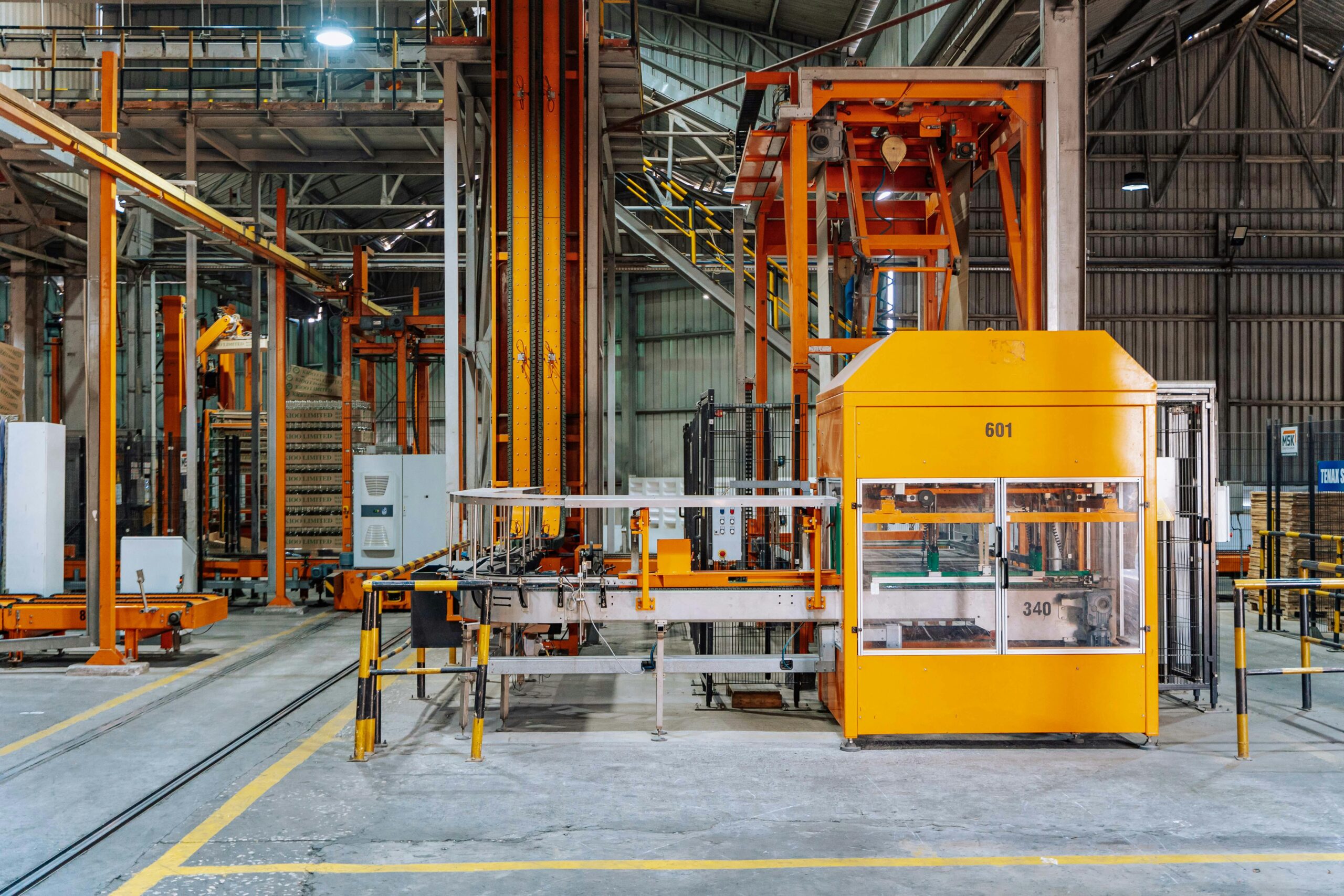
In 2026, the manufacturers who are losing market share are not the ones with outdated equipment. They are the ones with rigid systems. Across automotive, electronics, pharmaceuticals, and consumer goods, the same paradox is playing out: companies have invested heavily in automation, ERP platforms, and production capacity, yet they remain unable to respond to demand shifts in time to protect margin. A customer changes a specification. A supplier fails. A competitor launches a new variant. And the factory, despite all its investment, cannot pivot fast enough.
This is the Agility Paradox: the more a manufacturer invests in fixed-process optimization, the more brittle it becomes in the face of change. The answer is not to stop optimizing. The answer is to build a manufacturing system that is simultaneously efficient and responsive. That system is agile manufacturing.
This article provides a definitive answer to what agile manufacturing is, where it originated, how the agile manufacturing process works across all three phases, and what a manufacturer must have in place to make agility a structural capability rather than a reactive scramble.
Agile Manufacturing – Definition
Agile manufacturing is a production methodology in which a manufacturer’s systems, processes, workforce, and supply chain are designed to respond rapidly and cost-effectively to changes in customer demand, market conditions, product specifications, and external disruptions, without sacrificing quality or increasing unit cost.
In Entity-Attribute-Value terms:
| Entity | Attribute | Value |
|---|---|---|
| Agile Manufacturing | Primary Driver | Customer demand responsiveness |
| Agile Manufacturing | Core Mechanism | Short production cycles with continuous feedback |
| Agile Manufacturing | Structural Requirement | Modular processes, real-time data, cross-functional workforce |
| Agile Manufacturing | Strategic Outcome | Faster time-to-market, lower inventory risk, higher customer retention |
| Agile Manufacturing | Origin | Iacocca Institute, Lehigh University, 1991 |
The agile manufacturing definition, as established by the Iacocca Institute’s foundational research, describes agility in terms of outcomes: “dynamic, context-specific, aggressively change-embracing, and growth-oriented, succeeding in winning profits, market share, and customers.” This is not a process improvement framework. It is a competitive strategy.
Where Did Agile Manufacturing Originate?
Agile manufacturing originated at the Iacocca Institute of Lehigh University in 1991. The research, led by Roger N. Nagel and published in the 21st Century Manufacturing Enterprise Strategy Report (1992), was commissioned in response to a fundamental threat: the United States was losing industrial competitiveness to foreign manufacturers who could respond faster to market changes. The report concluded that the next era of manufacturing would not be won by the company with the lowest cost structure, but by the company with the highest capacity for change.
The four core concepts established by that research, Core Competence Management, the Virtual Enterprise, Capability for Reconfiguration, and the Knowledge-Driven Enterprise, remain the structural pillars of agile manufacturing today. These are not theoretical constructs. They are operational requirements that determine whether a manufacturer can capitalize on a market opportunity before the window closes.
It is worth noting that the principles of agile manufacturing later served as the conceptual foundation for Agile Software Development. The Agile Manifesto, published in 2001 by a group of software engineers meeting in Snowbird, Utah, explicitly borrowed the language of responsiveness, iteration, and customer collaboration from the manufacturing world. The factory floor gave the software industry its most influential methodology, not the other way around.
Why Is Agile Manufacturing a Strategic Imperative in 2026?
Four structural forces have converged to make agile manufacturing not a competitive advantage but a survival requirement.
The first is demand volatility. Consumer behavior has fragmented. The era of stable, predictable demand curves is over. Product lifecycles have compressed from years to months in sectors including consumer electronics, apparel, and personal care. A manufacturer that cannot reconfigure its production schedule within days, not weeks, will consistently miss the demand peak and be left with obsolete inventory.
The second is supply chain fragility. The disruptions of 2020 through 2024 exposed a structural vulnerability in global manufacturing: deep, single-source supply chains optimized for cost are catastrophically brittle under stress. Agile production requires a supply network that can be reconfigured rapidly, multiple qualified suppliers, modular procurement agreements, and real-time visibility into supplier capacity.
The third is mass customization. The expectation of product personalization has moved from premium segments to mainstream markets. Nike’s Build Your Own platform, automotive configure-to-order systems, and pharmaceutical patient-specific dosing all represent the same underlying shift: customers no longer accept the product the manufacturer decides to make. They expect the product they specify. An agile manufacturing system is the only production architecture capable of delivering mass customization without destroying unit economics.
The fourth is workforce transition. The demographic shift known as the “Silver Tsunami”, the retirement of experienced operators and maintenance technicians, is accelerating. As veteran knowledge leaves the workforce, the institutional expertise that enabled rapid problem-solving and fast changeovers goes with it. Agile production requires that this knowledge be systematized and made accessible to every operator on the floor, not locked inside the heads of individuals who may not be there tomorrow.
What Are the 4 Core Concepts of an Agile Manufacturing System?
The Iacocca Institute’s foundational research established four concepts that define the architecture of a true agile manufacturing system. These are not principles to aspire to. They are structural requirements to build toward.
Core Competence Management is the recognition that a manufacturer’s competitive advantage resides in its people. Individual core competencies, skills, knowledge, attitude, and expertise, are the primary assets of an agile organization. These competencies must be actively developed through training, systematically captured so they are not lost when individuals leave, and made accessible across the organization so that any operator can perform at an expert level. An agile manufacturer treats its workforce knowledge as a strategic asset, not an operational overhead.
The Virtual Enterprise is the ability to form rapid, operational-level partnerships with suppliers, partners, and even competitors when a market opportunity demands capabilities the manufacturer does not currently possess. Traditional corporate alliances operate at the executive level with little operational integration. A virtual enterprise operates at both levels simultaneously, corporate strategy and shop floor execution are aligned across company boundaries. This enables a manufacturer to scale capabilities faster than any single organization could achieve alone.
Capability for Reconfiguration is the operational ability to shift focus, diversify production, and realign assets to serve a new purpose rapidly, because windows of opportunity do not stay open. Reconfiguration requires a strategic architecture: a corporate-wide map of core skills, modular production equipment, and flexible scheduling systems. It also requires discipline: reconfiguration must not become an excuse for investing in technology for its own sake. Every reconfiguration decision must be tied to a specific market opportunity with a measurable return.
The Knowledge-Driven Enterprise is the recognition that agility is ultimately a function of information quality and speed. A manufacturer that cannot access accurate, real-time data about its own production, cycle times, equipment health, quality rates, inventory levels, cannot make the fast, confident decisions that agile production demands. Knowledge includes not only structured data from machines and systems but also the experiential knowledge of the workforce: the operator who knows which adjustment resolves a specific fault, the maintenance technician who recognizes a vibration pattern before it becomes a failure.
How Does the Agile Manufacturing Process Work?
The agile manufacturing process operates across three sequential phases, each of which must be designed for flexibility rather than fixed optimization. This framework, drawn from the foundational Agile Manufacturing: The 21st Century Competitive Strategy research, provides the operational structure for implementing agility at scale.
Phase 1: Agile Design, Iterative Specifications
Agile manufacturing begins in product design. Rather than completing a full specification before production begins, agile design uses short, time-boxed iterations. After each iteration, feedback is gathered from pilot customers, production data, and cross-functional teams. This feedback is incorporated into the next design cycle, ensuring that the product being built reflects what customers actually want, not what was assumed months earlier when the specification was locked.
The critical discipline of agile design is cross-functional collaboration. Engineering, production, quality, and commercial teams must share data and perspectives throughout the design phase, not sequentially hand off documents. This takes longer in the early stages but dramatically reduces the cost of change later in the production cycle, because problems are identified and resolved before tooling is committed.
Phase 2: Agile Planning, Reconfiguration as the Standard
Agile planning replaces the fixed, long-horizon production schedule with a dynamic system that can be reconfigured as conditions change. When a customer modifies an order, when a supplier reports a delay, or when a quality issue emerges on the line, the production plan must update in real time, not in the next weekly planning meeting.
This requires manufacturing software that connects customer orders to bills of materials, routings, inventory levels, workforce availability, and procurement requirements in a single, live system. When any input changes, the system must immediately show what can be produced now, what must wait, and how the change affects delivery commitments. Without this capability, agile planning degenerates into reactive firefighting.
Phase 3: Agile Production, Flexibility Above All
Agile production is the execution phase, and its defining characteristic is the ability to switch materials, teams, and routings without shutting down operations. This requires modular production equipment that can be reconfigured without extended downtime, cross-trained operators who can move between workstations as demand shifts, and real-time communication systems that ensure every team member has the current production status at all times.
Responding to disruptions quickly is a central capability of agile production. If a machine goes down, the agile production system adjusts the schedule immediately, rerouting work, reallocating labor, and notifying the supply chain, rather than waiting for a supervisor to manually intervene. This speed of response is the difference between a disruption that costs one hour and one that costs one shift.
How Does Agile Manufacturing Differ from Lean Manufacturing, and What Is Leagile?
The distinction between lean and agile manufacturing is one of the most consistently misunderstood concepts in operations strategy. They are not competing methodologies. They are complementary strategies that address different competitive priorities.
| Dimension | Lean Manufacturing | Agile Manufacturing | Leagile (Hybrid) |
|---|---|---|---|
| Primary Driver | Waste elimination | Demand responsiveness | Both simultaneously |
| Production Model | Stable, predictable demand | Variable, unpredictable demand | Decoupling point separates both |
| Inventory Strategy | Just-in-Time (minimal stock) | Buffer stock for rapid response | Lean upstream, agile downstream |
| Planning Horizon | Long-term, fixed schedules | Short-term, dynamic schedules | Hybrid scheduling |
| Customer Order Cycle | Long (customer waits) | Short (customer expects speed) | Segmented by product line |
| Key Metric | OEE, waste reduction | Time-to-market, fill rate | Both sets of KPIs |
| Origin | Toyota Production System | Iacocca Institute, 1991 | Martin Christopher, supply chain theory |
Lean manufacturing, as codified by Taiichi Ohno in the Toyota Production System, focuses on eliminating the seven forms of waste (muda) from a production process. Its power lies in creating stable, efficient flows that maximize value delivery at minimum cost. Its limitation is that it assumes a relatively stable demand environment. When demand becomes volatile, the rigidity that lean optimization creates becomes a liability.
Agile manufacturing does not reject lean principles. It adds a dimension that lean alone cannot provide: the structural capacity to change direction quickly. An agile manufacturer can be lean in its stable production lines and agile in its response to demand variation. This is the essence of the leagile strategy, developed by supply chain theorist Martin Christopher, which hybridizes the cost efficiency of lean with the responsiveness of agile across a single supply network.
The decision framework for choosing between lean, agile, and leagile is straightforward. If a supplier has a short lead time, lean production is viable. If the customer order cycle is short, meaning customers expect rapid delivery, agile production is required. If both conditions exist simultaneously across different product lines, leagile is the answer.
What Are the Key Benefits of Agile in Manufacturing?
The benefits of agile in manufacturing are measurable, not aspirational. Each benefit maps directly to a financial outcome that leadership can quantify and defend in a capital allocation decision.
Faster Time-to-Market is the most immediate competitive benefit. An agile manufacturing system reduces the time between a product design decision and the first unit shipped. In industries where product lifecycles are measured in months, this speed determines whether a manufacturer captures the demand peak or arrives after a competitor has already established customer loyalty. Dell Computer’s implementation of an agile enterprise resourcing system, which integrated seven manufacturing facilities and replaced 75 separate IT applications, achieved a 75% reduction in factory downtime and $150 million in IT cost savings, directly because the system enabled faster, more coordinated response to customer orders.
Increased Customer Satisfaction is a structural outcome of agile production’s ability to deliver customized products without extended lead times. When a manufacturer can accommodate a design change, a rush order, or a product variant without disrupting the broader production schedule, customers experience reliability and responsiveness that competitors with rigid systems cannot match. This translates directly into contract renewals, preferred supplier status, and reduced price sensitivity.
Superior Risk Management is the risk mitigation benefit that became impossible to ignore after the supply chain disruptions of 2020 to 2024. Agile manufacturers weathered those disruptions better than their lean-only counterparts because their systems were designed to reconfigure, not just optimize. Flexible supplier networks, modular production lines, and real-time inventory visibility allowed agile producers to reroute materials, shift production priorities, and maintain delivery commitments while competitors were shutting down lines.
Continuous Product Improvement is the innovation benefit. Because agile design uses iterative feedback loops, products are continuously refined based on real customer data rather than assumptions made at the start of a development cycle. This produces products that are more closely aligned with actual market demand and reduces the cost of post-launch corrections.
Optimized Resource Utilization is the efficiency benefit. Agile production’s commitment to producing only what is needed, when it is needed, reduces excess inventory, lowers carrying costs, and frees working capital. This is not in conflict with lean principles, it is the application of lean logic to a dynamic demand environment.
Stronger Workforce Engagement is the organizational benefit that is most frequently underestimated. Agile manufacturing requires cross-functional teams with real decision-making authority. When operators and technicians are empowered to identify problems, suggest improvements, and act on real-time data, they develop a sense of ownership over production outcomes that drives both productivity and retention.
What Are Real-World Agile Manufacturing Examples?
Agile manufacturing is not a theoretical framework. It is a set of operational capabilities that specific companies have implemented to achieve measurable competitive advantages.
Dell Technologies is the canonical agile manufacturing example in electronics. Dell’s build-to-order model eliminated the traditional inventory-heavy production model entirely. Customers configured products to their exact specifications through direct sales channels. Orders were transmitted immediately to factories, where production began within hours. Components were delivered from suppliers on an hourly or daily basis, aligned precisely with confirmed orders. The result was a 34% increase in product quality, a 20% boost in productivity, and cycle time reductions of 10 to 20%. Dell’s agile manufacturing system became the benchmark for demand-driven production in the electronics sector.
Toyota is the foundational agile manufacturing example in automotive. Toyota’s Production System, while most often cited as the origin of lean manufacturing, is equally an agile system. Toyota’s ability to respond to supply chain disruptions, adjust production mixes across its assembly lines, and maintain delivery commitments during periods of demand volatility is a direct function of its agile production architecture, modular assembly processes, a deeply integrated supplier network, and a workforce trained to solve problems at the point of occurrence.
Pfizer-BioNTech and Moderna represent the most dramatic recent agile manufacturing example in pharmaceuticals. During the COVID-19 pandemic, both companies leveraged agile manufacturing methodologies to compress vaccine development and production timelines from years to months. The ability to rapidly reconfigure manufacturing processes, establish new supplier relationships, and scale production in response to an unprecedented demand surge demonstrated agile production at its most consequential. This first-mover advantage elevated both companies to global leadership positions in their sector.
The UK’s 3-Day Car Project and the EU’s 5-Day Car Project represent the frontier of agile manufacturing in automotive. These initiatives aim to create a build-to-order system in which a vehicle is ordered, manufactured to the customer’s exact specification, and delivered within three to five days. With average automotive manufacturing time currently sitting at approximately 1.5 days for the physical build, the agile challenge is not the production itself, it is the supply chain coordination, scheduling flexibility, and real-time data integration required to make the entire system respond at that speed.
Kenvue (Tylenol) is the agile manufacturing example in consumer health. During the COVID-19 pandemic, Kenvue experienced a twelve-fold surge in demand for Tylenol. Using agile manufacturing principles, data-driven demand forecasting, balanced production lines, and flexible raw material management, the company navigated the surge, stabilized at approximately three times pre-pandemic demand, and maintained supply continuity throughout.
What Are the Challenges of Implementing Agile Manufacturing?
Agile manufacturing is not a plug-and-play solution. The transition from a traditional, fixed-process manufacturing model to a genuinely agile one encounters four structural challenges that must be addressed directly.
Cultural Resistance is the most significant barrier. Traditional manufacturing organizations are built on command-and-control hierarchies in which decisions flow from management downward and operators execute instructions without deviation. Agile manufacturing requires the opposite: a culture in which operators have the authority and the information to make real-time decisions, cross-functional teams share ownership of outcomes, and management acts as a facilitator rather than a director. This cultural shift is not achieved through a training program. It requires sustained leadership commitment, transparent communication about why the change is necessary, and visible evidence that the new model produces better results.
Increased Planning Complexity is the operational challenge. Agile planning is fundamentally more demanding than traditional fixed scheduling. Instead of setting a production plan once and executing it for weeks, agile planning requires continuous reassessment of priorities as conditions change. In engineer-to-order environments, where customers may request design changes after production has begun, this means updating bills of materials, adjusting routings, rescheduling work orders, and communicating changes to the supply chain, all in real time. Without robust manufacturing software and accurate, timely data, this complexity becomes unmanageable.
Balancing Flexibility with Control is the discipline challenge. Agile manufacturing does not mean responding to every disruption or customer request without evaluation. A manufacturer that constantly shifts its production schedule to accommodate last-minute changes will create instability that destroys the efficiency gains agility is supposed to deliver. Effective agile production requires clear rules for when and how to accept changes, defined thresholds for schedule modifications, and systematic tracking of the impact that agile decisions have on overall operational performance.
Supply Chain Alignment is the external challenge. A manufacturer’s agility is only as strong as its supply network’s agility. If a manufacturer can reconfigure its production schedule in hours but its suppliers require weeks to respond, the agile capability is neutralized at the boundary of the factory. Building a genuinely agile supply chain requires qualified alternative suppliers for critical components, collaborative data-sharing agreements that give suppliers real-time visibility into production plans, and contractual flexibility that allows rapid scaling up or down without penalty.
What Does a Truly Agile Manufacturing System Require?
The gap between a manufacturer that calls itself agile and one that actually is agile comes down to three simultaneous operational capabilities. Without all three, agility remains a reactive posture rather than a structural advantage.
Real-Time Production Visibility is the foundational requirement. An agile manufacturer cannot respond to what it cannot see. Every machine, every production line, and every work order must be visible in real time, not in a report generated at the end of the shift. This means connecting legacy equipment and modern IoT devices to a unified data platform that provides live OEE metrics, equipment health status, and production schedule adherence. Intelycx CORE is a machine connectivity platform that bridges the industrial data gap by connecting directly to manufacturing assets, via REST APIs, MQTT, and OPC-UA protocols, and providing real-time production visibility across legacy machines and modern IoT devices simultaneously. When a production schedule must change, CORE provides the data foundation that makes the decision fast and confident rather than slow and speculative.
Workforce Knowledge Accessibility is the human requirement. Agile production demands that every operator can perform at an expert level, regardless of their tenure. When a machine fault occurs during a changeover, the operator who resolves it in two minutes is not more talented than the one who takes two hours, they simply have access to the right knowledge at the right moment. As the Silver Tsunami accelerates the departure of veteran expertise from the shop floor, the manufacturers who systematize that knowledge will maintain agility. Those who do not will find that their production flexibility is constrained by the knowledge gaps of their newest employees. Intelycx ARIS is an AI-powered knowledge management platform that captures tribal knowledge from veteran operators, structures it into step-by-step digital guidance, and delivers it to any operator’s mobile device or workstation in real time. ARIS accelerates employee onboarding by 40% and ensures that the knowledge required for rapid changeovers, fault resolution, and process adjustments is never locked inside a single person.
Quality Assurance at Production Speed is the quality requirement. Agile production’s ability to switch between products, accommodate design changes, and run short production runs creates a quality risk that traditional batch manufacturing does not face: defects introduced during transitions. If a manufacturer can reconfigure its production line in hours but requires days to verify that the reconfigured line is producing to specification, the agility gain is consumed by the quality verification delay. Intelycx NEXACTO is an AI-powered visual inspection platform that detects manufacturing defects at 99%+ accuracy, processes up to 75,000 units daily at 4.5 seconds per cycle, and identifies defects as small as 250 microns, at the speed of production, not the speed of manual inspection. NEXACTO ensures that agile production transitions do not introduce quality escapes that reach the customer.
Together, CORE, ARIS, and NEXACTO create the data infrastructure, knowledge infrastructure, and quality infrastructure that a genuinely agile manufacturing system requires. Each addresses a distinct constraint on production flexibility. Together, they enable the shift from reactive agility, responding to disruptions after they occur, to proactive agility: anticipating changes and positioning the production system to capitalize on them before competitors can react.
How Do You Implement Agile Manufacturing?
Implementing agile for manufacturing is a phased organizational transformation, not a technology installation. The following steps reflect the sequence in which agile capabilities must be built to produce sustainable results.
Step 1: Assess Your Current Agility Baseline. Before implementing any change, establish a quantitative baseline. Measure your current time-to-market for a new product variant, your average time to respond to a demand change, your changeover times, your schedule adherence rate, and your cost of quality. These metrics define the gap between your current state and a genuinely agile operation. Without this baseline, you cannot measure progress or build a credible business case for investment.
Step 2: Establish Real-Time Data Visibility. Agile decision-making requires real-time data. If your production visibility is based on manual logs, end-of-shift reports, or weekly ERP extracts, you cannot make the fast, confident decisions that agile production demands. Implement a machine connectivity platform that provides live OEE, equipment health, and production schedule data across your entire facility. This is the data foundation on which every subsequent agile capability is built.
Step 3: Redesign Production Processes for Modularity. Audit your production lines for flexibility constraints. Identify which changeover steps require the machine to stop (internal setup) and which can be performed while the machine is running (external setup). Apply SMED (Single-Minute Exchange of Die) principles to convert internal setup steps to external wherever possible. Invest in modular equipment configurations that can be reconfigured without specialized tooling. The goal is to reduce your minimum changeover time to the point where switching between product variants is a routine operational decision, not a major production event.
Step 4: Systematize Workforce Knowledge. Identify the ten most critical operational knowledge areas in your facility, the fault resolutions, changeover procedures, and quality checks that currently depend on specific individuals. Capture that knowledge in structured, digital format and make it accessible to every operator through a knowledge management platform. This is not a documentation project. It is an agility investment: every piece of knowledge that is systematized removes a human-dependency bottleneck from your production flexibility.
Step 5: Build Supply Chain Agility. Map your critical component dependencies and identify single-source risks. Qualify alternative suppliers for your highest-risk inputs. Establish data-sharing agreements that give your suppliers real-time visibility into your production plans. Negotiate contractual flexibility that allows you to scale orders up or down without extended lead times. Your production agility cannot exceed your supply chain agility.
Step 6: Implement Agile Planning Processes. Replace fixed, long-horizon production schedules with dynamic planning cycles. Establish a daily production review process that uses real-time data to assess schedule adherence, identify emerging constraints, and make proactive adjustments. Define clear decision rules for when and how to accept schedule changes, including the thresholds at which a customer request triggers a formal change process versus an immediate production adjustment.
Step 7: Measure, Improve, and Institutionalize. Agile manufacturing is not a destination. It is a continuous improvement process. Track your agility metrics, time-to-market, changeover time, schedule adherence, demand response time, on a regular cadence. Conduct structured retrospectives after every major production change to identify what worked, what failed, and what must be improved. Over time, the discipline of continuous improvement becomes the cultural foundation of a genuinely agile organization.
Is Agile Manufacturing Right for Your Business?
Agile manufacturing is not a universal prescription. It is most valuable in specific operational contexts, and understanding those contexts is essential before committing to the transformation.
Agile manufacturing is the right strategy if your business operates in fast-moving or highly competitive markets, offers customizable products, faces regular changes in customer requirements or design specifications, relies on short lead times to win customers, or needs to continuously improve its products based on market feedback.
Agile manufacturing may be difficult or counterproductive if your business produces high-volume, low-variation products with stable demand, relies on long fixed production cycles, operates under strict regulatory requirements that limit process flexibility, or uses highly specialized machinery that cannot be reconfigured without extended downtime. In these cases, lean manufacturing or a leagile hybrid, lean for stable product lines, agile for variable ones, is the more appropriate strategy.
The decision framework established by Martin Christopher provides a practical test: assess your customer order cycle (the time customers are willing to wait) against your supplier lead time. If both are short, agile production is required. If supplier lead times are short but customers are willing to wait, lean is sufficient. If both are long, the business model itself may need to be reconsidered.
The Competitive Stakes of Agility
The manufacturers who will define the competitive landscape of the next decade are not those who have optimized the hardest. They are those who have built the deepest capacity for change. Optimization creates efficiency within a fixed set of constraints. Agility removes the constraints.
In a market environment defined by demand volatility, supply chain fragility, mass customization, and accelerating workforce transition, the ability to respond faster than a competitor is not a tactical advantage. It is the primary determinant of whether a manufacturer grows, stagnates, or loses relevance entirely. The Iacocca Institute’s researchers understood this in 1991. The manufacturers who built agile systems in the years that followed captured market share that their rigid competitors never recovered.
The question for every plant manager, operations director, and manufacturing executive reading this in 2026 is not whether agile manufacturing is relevant to their business. It is whether their current production system, their data infrastructure, their workforce knowledge architecture, their quality assurance capability, can support the speed of response that their customers and their market now demand. If the answer is no, the transformation starts with visibility: knowing, in real time, exactly what your production system is doing and why.
Glossary of Agile Manufacturing Terms
Agile Manufacturing: A production methodology designed to respond rapidly and cost-effectively to changes in customer demand, market conditions, and external disruptions.
Agile Production: The execution phase of agile manufacturing, characterized by the ability to switch materials, teams, and routings without shutting down operations.
Agile Manufacturing System: The integrated combination of modular processes, real-time data infrastructure, cross-trained workforce, and flexible supply chain that enables agile production.
Agile Manufacturing Process: The three-phase operational framework, agile design, agile planning, and agile production, through which agile principles are applied to manufacturing operations.
Lean Manufacturing: A production strategy focused on eliminating waste and maximizing efficiency, originating in the Toyota Production System.
Leagile: A hybrid supply chain strategy that combines lean principles upstream (where demand is predictable) with agile principles downstream (where demand is variable), developed by Martin Christopher.
Virtual Enterprise: An operational-level partnership between manufacturers, suppliers, and partners that enables rapid capability formation in response to market opportunities.
Core Competence Management: The systematic identification, development, and deployment of workforce skills and organizational knowledge as a strategic competitive asset.
Capability for Reconfiguration: The operational ability to shift production focus, diversify output, and realign assets rapidly in response to changing market conditions.
Knowledge-Driven Enterprise: An organization in which competitive advantage is derived from the quality, accessibility, and application of workforce and institutional knowledge.
SMED (Single-Minute Exchange of Die): A lean technique for reducing changeover time to under ten minutes by converting internal setup steps (requiring machine stoppage) to external steps (performed while the machine runs).
Mass Customization: The production of personalized products at the scale and cost efficiency of mass production, enabled by agile manufacturing systems.
OEE (Overall Equipment Effectiveness): The gold standard metric for measuring manufacturing productivity, calculated as Availability × Performance × Quality.
Time-to-Market: The elapsed time between a product design decision and the first unit delivered to a customer.
Customer Order Cycle (COC): The time a customer is willing to wait between placing an order and receiving delivery, used in the lean-agile decision framework developed by Martin Christopher.
How Intelycx Helps Turn Manufacturing KPIs into Daily Guidance
Manufacturing KPIs only create value when they are accurate, real-time, and connected to action. That is the gap Intelycx is built to close.
The Intelycx platform connects legacy and modern machines into a single data foundation, normalizes and enriches signals so KPIs are calculated consistently across lines and sites, and provides real-time dashboards for operators, engineers, and leaders. On top of this connected data, Intelycx layers AI-driven insights so teams understand not just what changed in a KPI, but why, and what to do about it.
If you are working to move beyond spreadsheets and lagging reports, a unified manufacturing AI platform like Intelycx can help you turn KPIs from static charts into a living system for maximizing production efficiency every day. You can learn more about our solutions and approach at intelycx.com.