
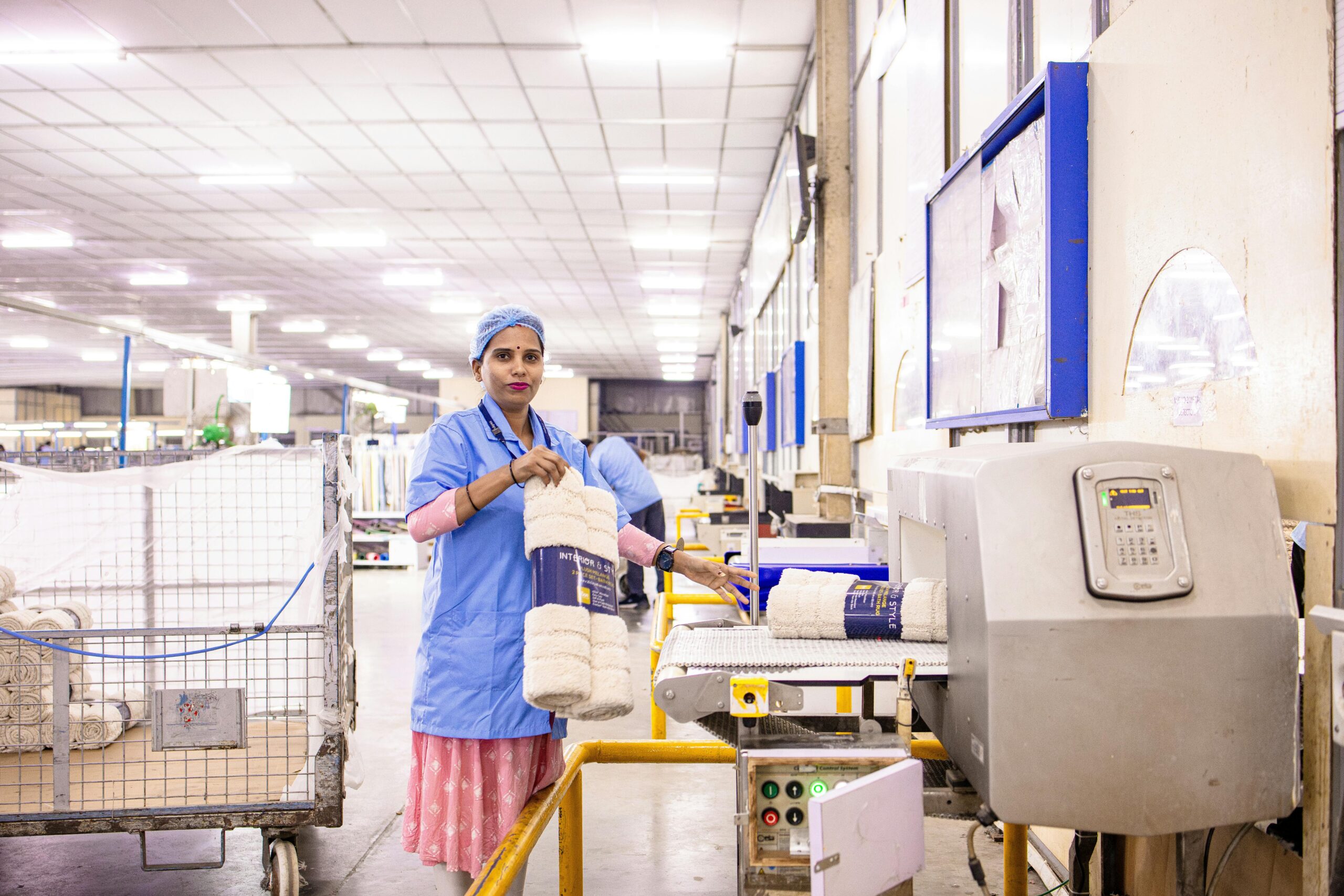
For the past decade, the manufacturing sector has been driven by the relentless pursuit of efficiency, a vision encapsulated by Industry 4.0. The goal was clear: automate everything, connect every asset, and leverage data to build a perfectly optimized, self-correcting factory. Yet, the global supply chain disruptions of the early 2020s exposed a critical flaw in this model. In the quest for ultimate efficiency, we engineered unprecedented fragility. The very systems designed to eliminate waste also eliminated the slack, resilience, and human adaptability required to navigate real-world volatility. Factories that had optimized every buffer out of their supply chains found themselves unable to respond when a single supplier failed, a shipping route closed, or a workforce was quarantined overnight. This is the Efficiency Paradox, and it is the strategic crisis that gives rise to Industry 5.0.
Industry 5.0 is not a rejection of Industry 4.0’s technological advancements; it is a necessary correction of its blind spots. It reframes the purpose of industrial transformation from a singular focus on machine efficiency to a balanced, tripartite mission: creating a manufacturing ecosystem that is human-centric, resilient, and sustainable. It is the recognition that the most advanced factories are not those that replace humans with automation, but those that augment human ingenuity with collaborative technology. This article provides a definitive answer to “What is Industry 5.0?” by exploring its origins, its core pillars, its enabling technologies, and its profound implications for the future of manufacturing.
Industry 5.0 Definition
Industry 5.0 is a manufacturing paradigm that places human well-being, environmental stewardship, and operational resilience on equal footing with economic efficiency. It is a strategic evolution that leverages advanced technology to serve people and the planet, not just the bottom line. The Industry 5.0 meaning is best understood in contrast to what came before: while Industry 4.0 asked “how can technology make our factories more efficient?”, Industry 5.0 asks “how can technology make our factories more human, more resilient, and more sustainable?”
| Entity | Attribute | Value |
|---|---|---|
| Industry 5.0 | Definition | A manufacturing paradigm where technology is deployed in service of human well-being, societal resilience, and environmental sustainability, not efficiency alone. |
| Industry 5.0 | Formal Origin | European Commission, 2021 |
| Industry 5.0 | Core Objective | To complement Industry 4.0 by putting research and innovation at the service of a sustainable, human-centric, and resilient industry. |
| Industry 5.0 | Three Pillars | Human-Centric, Resilient, Sustainable |
| Industry 5.0 | Relationship to Industry 4.0 | A value-layer built on top of Industry 4.0’s technological foundation, not a replacement. |
The Industry 5.0 definition provided by the European Commission in its landmark 2021 publication states that Industry 5.0 “complements the existing Industry 4.0 approach by specifically putting research and innovation at the service of the transition to a sustainable, human-centric and resilient European industry.” This framing is critical: Industry 5.0 is not a technology standard or a product specification. It is a value framework, a set of principles that guide how technology is selected, deployed, and governed within the industrial enterprise.
Where Did Industry 5.0 Come From?
To understand the Industry 5.0 meaning in its full historical context, it is necessary to trace the arc of all five industrial revolutions. Each revolution was defined by a specific enabling technology that fundamentally restructured the relationship between labor, capital, and production.
Industry 1.0 (circa 1760–1840) was the First Industrial Revolution, driven by the invention of the steam engine. It marked the transition from agrarian, hand-production economies to mechanized manufacturing, concentrated in factories for the first time.
Industry 2.0 (circa 1870–1914) was the Second Industrial Revolution, enabled by electricity, the internal combustion engine, and the rise of mass production. Henry Ford’s moving assembly line is its defining symbol, a system that maximized output by standardizing and segmenting labor.
Industry 3.0 (circa 1960–1990) was the Third Industrial Revolution, driven by electronics, computers, and programmable logic controllers (PLCs). It introduced automation to the factory floor, allowing machines to perform repetitive tasks with greater precision and consistency than human workers.
Industry 4.0 (circa 2011–present) is the Fourth Industrial Revolution, defined by the convergence of cyber-physical systems, the Industrial Internet of Things (IIoT), cloud computing, and artificial intelligence. The term was coined at the Hannover Messe in 2011 and popularized by Klaus Schwab of the World Economic Forum. Its defining vision is the “smart factory“, a fully connected, self-optimizing production environment where machines communicate with each other and with enterprise systems in real time.
Industry 5.0 (emerging from 2021) is the Fifth Industrial Revolution, formally introduced by the European Commission in 2021. Unlike its predecessors, Industry 5.0 is not defined by a single enabling technology. It is defined by a shift in values. It emerged in direct response to three converging global crises: the COVID-19 pandemic, which exposed the fragility of hyper-efficient global supply chains; the accelerating climate crisis, which demanded a fundamental rethinking of industrial resource consumption; and a deepening workforce crisis, characterized by an aging skilled labor force, a growing skills gap, and a rising demand for more meaningful and safe work.
How Does Industry 5.0 Differ from Industry 4.0?
Industry 5.0 does not replace Industry 4.0; it builds upon it. The technologies of Industry 4.0, IIoT, AI, digital twins, cloud computing, remain essential in Industry 5.0. What changes is the purpose to which those technologies are directed. Industry 4.0 was technology-first: it asked what is possible with new technology and then found applications for it. Industry 5.0 is value-first: it starts with the outcomes it wants to achieve for people and the planet, and then selects the technologies that best serve those outcomes.
| Feature | Industry 4.0 | Industry 5.0 |
|---|---|---|
| Primary Goal | Efficiency, automation, and cost reduction | Human well-being, resilience, and sustainability |
| View of Workers | A cost to be minimized through automation | An asset to be augmented and invested in |
| Technology Role | Technology as the primary driver of value | Technology as a tool in service of human and societal goals |
| Factory Model | Smart factory, self-optimizing, data-driven | Collaborative factory, human-machine synergy |
| Supply Chain Model | Lean, just-in-time, globally optimized for cost | Resilient, distributed, designed for adaptability |
| Environmental Stance | Efficiency reduces waste as a byproduct | Sustainability is a primary design objective |
| Success Metrics | OEE, throughput, cost per unit, uptime | OEE + worker well-being, carbon footprint, supply chain resilience |
A common misconception is that Industry 5.0 is “Industry 4.0 with robots working alongside humans.” This is an oversimplification. The human-machine collaboration aspect is important, but it is only one dimension of a much broader strategic reorientation. A manufacturer that deploys cobots but continues to optimize exclusively for cost efficiency, ignores its carbon footprint, and treats workers as interchangeable units is practicing Industry 4.0, not Industry 5.0.
What Are the Three Pillars of Industry 5.0?
The European Commission’s 2021 framework defines Industry 5.0 around three core pillars that represent a fundamental reorientation of industrial values. These pillars are not independent initiatives; they are interdependent dimensions of a single, integrated strategy.
Human-Centricity: From Automation to Augmentation
The human-centric pillar shifts the fundamental question of industrial design from “how can we automate this task?” to “how can we make this task better for the human who performs it?” It moves the worker from the periphery of the production system, a variable to be managed, to its center, as the primary source of adaptability, creativity, and judgment.
In practice, human-centricity means designing workplaces and workflows around human ergonomics, cognitive capacity, and well-being. It means using collaborative robots to eliminate physically demanding or repetitive tasks that cause injury or fatigue, freeing human workers to focus on complex problem-solving, quality judgment, and innovation. It means providing workers with real-time, context-aware digital guidance that reduces cognitive load and accelerates skill development. And it means creating more inclusive workplaces that can accommodate a broader range of physical and cognitive abilities.
The human-centric pillar also has a direct economic rationale. A workforce that is safer, more skilled, and more engaged is a workforce that is more productive, more adaptable, and less costly to maintain. The “Silver Tsunami”, the mass retirement of experienced manufacturing workers, represents an enormous risk to industrial productivity. Human-centric technologies that capture and transfer tribal knowledge are not just a quality-of-life improvement; they are a strategic imperative for operational continuity.
Resilience: From Efficiency to Anti-Fragility
The resilience pillar demands a fundamental rethinking of how industrial systems are designed. Industry 4.0’s relentless optimization for efficiency created systems that were highly efficient under normal conditions but catastrophically fragile under stress. The COVID-19 pandemic provided the most dramatic demonstration of this fragility in modern industrial history: just-in-time supply chains that had been optimized over decades collapsed within weeks.
Resilience in the context of Industry 5.0 goes beyond the ability to simply withstand a crisis and return to the previous state. It is about building systems that are “anti-fragile”, systems that can adapt to disruptions, learn from them, and emerge stronger. This requires a shift from centralized, globally optimized supply chains toward more distributed, regionally diversified production networks. It requires investing in flexible manufacturing systems that can be rapidly reconfigured to produce different products in response to changing demand. And it requires using digital twins and predictive analytics to anticipate potential disruptions and develop proactive response strategies before a crisis occurs.
Sustainability: From Less-Negative to Net-Positive
The sustainability pillar demands that industry moves beyond the goal of simply reducing its negative environmental impact to actively creating positive environmental outcomes. This “Net Positive” approach is a fundamental departure from the traditional industrial model, which treated environmental compliance as a cost center and sustainability as a constraint on profitability.
Industry 5.0’s sustainability vision is grounded in the principles of the circular economy, an economic model that is restorative and regenerative by design, eliminating waste by keeping materials in use for as long as possible. It also aligns with the United Nations’ 17 Sustainable Development Goals (SDGs), which provide a global framework for addressing the most pressing environmental and social challenges of our time. In practice, this means designing products for longevity, repairability, and recyclability; using AI and IoT to optimize energy and resource consumption throughout the value chain; and transitioning to renewable energy sources for manufacturing operations.
What Technologies Enable Industry 5.0?
Industry 5.0 leverages many of the same technologies as Industry 4.0, but applies them with a fundamentally different intent. The focus shifts from using technology to replace human labor to using technology to augment human capability and create more resilient, sustainable production systems.
Collaborative Robots (Cobots) are the most visible symbol of Industry 5.0’s human-machine collaboration model. Unlike traditional industrial robots, which operate in caged-off areas and are programmed to perform a single, fixed task, cobots are designed to work safely alongside humans in a shared workspace. They are equipped with sensors and force-limiting technology that allows them to detect and respond to human presence, making them safe to operate without physical barriers. Cobots handle the physically demanding, repetitive, or ergonomically hazardous tasks that cause injury and fatigue, while human workers focus on the complex, adaptive, and creative tasks that machines cannot perform.
Artificial Intelligence (AI) and Machine Learning (ML) serve a dual role in Industry 5.0. On the machine side, AI enables predictive maintenance, automated quality inspection, and supply chain optimization. On the human side, AI powers the knowledge management and decision-support systems that augment worker capability, providing real-time guidance, surfacing relevant information at the point of need, and learning from the expertise of veteran operators to support less experienced workers.
Digital Twins are virtual replicas of physical assets, processes, or entire factories that are continuously updated with real-time data from their physical counterparts. In the context of Industry 5.0, digital twins serve a critical resilience function: they allow manufacturers to simulate disruption scenarios, test new production configurations, and optimize processes in a risk-free virtual environment before implementing changes on the physical factory floor. Process digital twins, in particular, are emerging as the backbone of resilient manufacturing systems, enabling manufacturers to model the full complexity of their production processes and identify vulnerabilities before they become crises.
The Industrial Internet of Things (IIoT) and Cyber-Physical Systems provide the data infrastructure on which all other Industry 5.0 technologies depend. A network of connected sensors, actuators, and devices creates a continuous stream of real-time data from every point in the production process, providing the raw material for AI analysis, digital twin synchronization, and human decision support. Cyber-physical systems, integrated computational and physical components that interact with each other and with the physical world, are the fundamental building blocks of the Industry 5.0 factory.
Augmented Reality (AR) and Virtual Reality (VR) are the primary interface technologies of the Industry 5.0 workforce. AR overlays digital information, work instructions, quality specifications, maintenance guides, real-time machine data, directly onto the worker’s field of view, providing context-aware guidance at the point of need without requiring the worker to divert their attention to a separate screen. VR enables immersive, risk-free training environments where new workers can practice complex procedures and develop skills without the risk of injury or production disruption.
Edge Computing and 5G provide the high-speed, low-latency connectivity required for real-time data processing and decision-making at the factory floor. Edge computing processes data directly on or near the machine, enabling sub-millisecond response times for automated interventions that cannot tolerate the latency of a round-trip to the cloud. 5G networks provide the wireless bandwidth required to connect the large number of devices and sensors that characterize the Industry 5.0 factory, while also enabling new mobile applications for connected workers.
Nanotechnology and Biotechnology represent the emerging frontier of Industry 5.0 technology. Nanotechnology enables the creation of new materials with properties that are impossible to achieve at the macro scale, opening new possibilities for sustainable, high-performance manufacturing. Biotechnology is enabling the development of bio-based materials and bio-manufacturing processes that can replace petrochemical-based materials and reduce the environmental footprint of industrial production.
What Does Industry 5.0 Mean for Manufacturing?
The rise of Industry 5.0 manufacturing, or manufacturing 5.0, represents a profound shift in the factory’s role, function, and relationship to the broader society. It moves beyond the four walls of the plant to encompass the entire value chain and its impact on workers, communities, and the environment.
The most fundamental shift is from the “automated factory” model of Industry 4.0 to the “collaborative factory” model of Industry 5.0. The vision of the “lights-out” factory, fully run by robots, with no human presence required, is being replaced by the vision of a factory where human creativity and machine precision work in continuous, dynamic synergy. This model recognizes that while machines excel at repetitive, high-volume, and physically demanding tasks, humans are irreplaceable for adaptability, critical thinking, ethical judgment, and innovation. The collaborative factory does not choose between humans and machines; it designs for the optimal combination of both.
Industry 5.0 manufacturing also enables a fundamental shift in the product model: from mass production of standardized goods to mass customization of personalized products. Industry 4.0’s automation was optimized for high-volume, low-variety production. Industry 5.0’s combination of flexible automation and skilled human craftsmanship enables manufacturers to produce highly customized products at scale, meeting the growing consumer demand for personalization without sacrificing efficiency.
The workforce implications of manufacturing 5.0 are profound. The transition requires a significant investment in workforce reskilling and upskilling, as workers move from performing manual, repetitive tasks to supervising, collaborating with, and programming automated systems. This is not a displacement story; it is a job enrichment story. The roles that emerge in the Industry 5.0 factory, cobot operator, digital twin analyst, AI quality specialist, connected worker platform administrator, are higher-skilled, higher-paid, and more cognitively engaging than the roles they replace.
A critical and often underestimated challenge in Industry 5.0 manufacturing is the tribal knowledge problem. As experienced workers retire in large numbers, the “Silver Tsunami”, they take with them decades of accumulated expertise: the subtle feel for how a machine runs, the intuitive understanding of which process parameters produce the best quality, the institutional memory of how past problems were solved. This knowledge is not documented anywhere; it exists only in the minds of the workers who hold it. Industry 5.0’s human-centric technologies, particularly AI-powered knowledge management systems and AR-based work instruction platforms, provide the mechanism for capturing, digitizing, and transferring this expertise before it is lost, ensuring operational continuity across generational workforce transitions.
What Are Real-World Industry 5.0 Examples?
While Industry 5.0 is still an emerging paradigm, leading manufacturers across multiple industries are already implementing its principles with measurable results.
BMW has integrated cobots into its assembly lines at multiple facilities to handle physically strenuous tasks, such as lifting heavy components, installing overhead parts, and performing ergonomically challenging assembly steps. The cobots work directly alongside human assemblers, handling the tasks that cause musculoskeletal injury, while human workers focus on the precision assembly and quality verification steps that require human judgment.
Siemens has implemented a comprehensive digital twin strategy at its Amberg Electronics Plant, one of the world’s most digitalized factories. The plant uses a digital twin of its entire production process to simulate and optimize production schedules, test new product configurations, and troubleshoot quality issues in a virtual environment before implementing changes on the physical factory floor. This approach has enabled the plant to achieve a defect rate of 11 defects per million, a quality rate of 99.99885%, an order of magnitude better than the industry average.
Unilever has committed to a comprehensive sustainability strategy that exemplifies the Industry 5.0 sustainability pillar. The company uses AI and IoT to track and optimize resource usage across its entire supply chain, with specific commitments to achieve net-zero emissions from all its products by 2039, halve the use of virgin plastic packaging, and ensure that 100% of its plastic packaging is designed to be reusable, recyclable, or compostable.
Fanuc, the Japanese robotics manufacturer, has developed a range of collaborative robots specifically designed for Industry 5.0 applications. Its CR series cobots are equipped with a soft, rounded exterior and force-sensing technology that allows them to stop immediately upon contact with a human, enabling them to work safely in close proximity to human workers without physical barriers.
What Are the Benefits of Industry 5.0?
The benefits of Industry 5.0 extend across three dimensions: the individual worker, the manufacturing enterprise, and the broader society.
For the individual worker, Industry 5.0 delivers safer working conditions through the deployment of cobots and exoskeletons that eliminate the most physically hazardous tasks. It delivers more meaningful and engaging work, as automation handles the repetitive and cognitively numbing tasks, freeing workers to focus on problem-solving, creativity, and collaboration. It delivers faster skill development through AR-based guidance and AI-powered training systems. And it delivers greater job security, as workers who are continuously upskilled and whose expertise is valued and captured are far more resilient to displacement than workers who perform purely manual, easily automated tasks.
For the manufacturing enterprise, Industry 5.0 delivers operational resilience through distributed, anti-fragile supply chains and flexible production systems. It delivers competitive differentiation through mass customization capabilities that allow manufacturers to serve premium, personalized market segments that are inaccessible to purely automated competitors. It delivers talent attraction and retention advantages, as the human-centric workplace is more appealing to the next generation of manufacturing workers. And it delivers long-term cost reduction through sustainability initiatives that reduce energy and material consumption, decrease waste, and minimize regulatory and reputational risk.
For society, Industry 5.0 delivers progress toward the UN’s Sustainable Development Goals through reduced industrial carbon emissions, circular economy practices, and more equitable distribution of the benefits of industrial productivity. It delivers more resilient national and regional economies through the re-shoring and diversification of critical manufacturing capabilities. And it delivers a more skilled and engaged manufacturing workforce that contributes to broader social prosperity.
What Are the Challenges of Adopting Industry 5.0?
The transition to Industry 5.0 is not without significant challenges. Manufacturers who approach it without a clear strategy and a realistic assessment of the barriers will find the journey far more difficult than the vision suggests.
Legacy infrastructure compatibility is the most immediate practical challenge. The vast majority of the world’s manufacturing assets were designed and built before the era of Industry 4.0, let alone Industry 5.0. Connecting legacy PLCs, proprietary machine controllers, and aging production equipment to modern IIoT platforms requires specialized integration technology and significant engineering effort. Without this connectivity, the data foundation required for human-machine collaboration, digital twins, and AI-powered decision support simply does not exist.
Workforce reskilling at scale is arguably the most complex challenge. The transition from Industry 4.0 to Industry 5.0 requires workers to develop entirely new skill sets, cobot programming, digital twin management, AI system supervision, data analysis, while simultaneously maintaining the operational expertise required to keep production running. This reskilling challenge is compounded by the urgency of the Silver Tsunami: the most experienced workers, who hold the most critical tribal knowledge, are precisely the ones most likely to retire before the reskilling transition is complete.
Data security in human-machine environments introduces new cybersecurity risks. As more devices, systems, and human interfaces are connected to the factory network, the attack surface for cyber threats expands dramatically. The convergence of IT and OT systems in the Industry 5.0 factory creates new vulnerabilities that require specialized cybersecurity strategies and continuous monitoring.
Investment and ROI uncertainty presents a significant barrier for smaller manufacturers. The technologies required for Industry 5.0, cobots, digital twin platforms, AI systems, AR infrastructure, represent substantial capital investments. The ROI on these investments is often difficult to quantify in advance, particularly for the resilience and sustainability dimensions, which deliver value through avoided costs and long-term risk reduction rather than immediate productivity gains.
Cultural resistance is the most underestimated barrier. For many veteran workers and managers, the shift to a human-centric, collaborative model requires a fundamental change in mindset, from viewing automation as a threat to viewing it as an ally. Overcoming this resistance requires sustained leadership commitment, transparent communication, and a genuine commitment to involving workers in the design and deployment of new technologies.
How Does Industry 5.0 Apply to Smart Manufacturing?
Industry 5.0 provides the strategic “why” for the technological “how” of smart manufacturing. The three pillars of Industry 5.0, human-centricity, resilience, and sustainability, map directly onto the three core capabilities that a modern smart manufacturing platform must deliver.
Intelycx CORE is a machine connectivity platform that provides the universal data infrastructure on which every Industry 5.0 initiative depends. It connects legacy manufacturing equipment and modern IoT devices alike, extracting real-time OEE data and streaming it to the unified data layer that enables human-machine collaboration, digital twin synchronization, and AI-powered decision support. Intelycx CORE reduces unplanned downtime by up to 20% by providing the real-time visibility required for predictive maintenance, a foundational capability for the resilient, anti-fragile factory that Industry 5.0 demands.
Intelycx ARIS is an AI-powered knowledge management platform that directly addresses the human-centric pillar’s most critical challenge: the tribal knowledge problem. Intelycx ARIS captures the expertise of veteran operators, digitizes it into a structured, searchable knowledge base, and delivers it to new workers as real-time, context-aware guidance through a chat-based, voice-enabled, mobile interface. The result is a 40% acceleration in employee onboarding, a direct, quantifiable contribution to the human-centric manufacturing workforce that Industry 5.0 envisions.
Intelycx NEXACTO is an AI-powered visual inspection platform that embodies the Industry 5.0 model of human-machine synergy at the quality control level. The system processes up to 75,000 units daily, detecting defects as small as 250 microns with over 99% accuracy, in 4.5 seconds per cycle. This level of inspection throughput and precision is impossible for human inspectors to achieve manually. By automating the detection task, Intelycx NEXACTO frees human quality engineers to focus on root cause analysis, process improvement, and the complex judgment calls that require human expertise, a perfect embodiment of the Industry 5.0 principle of augmenting human capability rather than replacing it.
How Do You Prepare for Industry 5.0?
Preparing for Industry 5.0 is not a single project; it is a continuous strategic journey. The following steps provide a structured framework for manufacturers at any stage of their Industry 4.0 maturity.
Assess your current Industry 4.0 maturity. Before you can build toward Industry 5.0, you need an honest assessment of where you stand in your Industry 4.0 journey. This means evaluating your current level of machine connectivity, data integration, and digital capability. Manufacturers who have not yet achieved the foundational data infrastructure of Industry 4.0 should prioritize that foundation before attempting to layer Industry 5.0 initiatives on top of it.
Identify your human-machine collaboration gaps. Map your current production processes to identify where human workers are performing tasks that are physically hazardous, ergonomically damaging, or cognitively numbing, and where machines are performing tasks that would benefit from human judgment and adaptability. These gaps represent the highest-value opportunities for cobot deployment and human-machine collaboration redesign.
Capture tribal knowledge before it walks out the door. Conduct a workforce age analysis to identify the knowledge holders who are closest to retirement. Prioritize the capture and digitization of their expertise using AI-powered knowledge management systems. This is not a “nice to have” initiative; it is an urgent operational continuity imperative.
Invest in connected worker infrastructure. The connected worker platform, the combination of AR guidance systems, mobile work instruction tools, and real-time data access, is the primary interface between the human worker and the Industry 5.0 factory. Investing in this infrastructure is the single most direct way to advance the human-centric pillar.
Embed sustainability metrics alongside efficiency KPIs. Extend your operational performance measurement framework to include carbon emissions per unit, energy consumption per unit, waste generation, and circular economy metrics. You cannot manage what you do not measure, and the sustainability pillar of Industry 5.0 requires the same data-driven discipline that Industry 4.0 applied to efficiency.
Build supply chain resilience through diversification and digital visibility. Map your supply chain dependencies, identify single points of failure, and develop contingency strategies for your most critical inputs. Use digital twin technology to model supply chain disruption scenarios and test your response strategies before a real crisis occurs.
The Competitive Stakes of Industry 5.0
The transition to Industry 5.0 is not merely a technological upgrade; it is a fundamental strategic realignment. The manufacturers who thrive in the coming decade will not be those with the most automation, but those with the most effective human-machine collaboration. They will not compete solely on cost and efficiency, but on resilience, sustainability, and their ability to attract and retain the skilled, engaged workforce that the Industry 5.0 factory requires. The question is no longer whether to adopt the principles of Industry 5.0, but how quickly you can make them the core of your competitive strategy. The manufacturers who treat Industry 5.0 as a compliance exercise, checking the boxes of human-centricity and sustainability without genuinely embedding them into their operating model, will find themselves outcompeted by those who embrace the full strategic transformation that Industry 5.0 demands.
Glossary of Industry 5.0 Terms
| Term | Definition |
|---|---|
| Anti-Fragility | A property of systems that increase in capability, resilience, or robustness as a result of stressors, shocks, or disruptions, coined by Nassim Nicholas Taleb. |
| Circular Economy | An economic model that is restorative and regenerative by design, aiming to keep products, components, and materials at their highest utility and value at all times. |
| Cobot (Collaborative Robot) | A robot designed for direct human-robot interaction within a shared workspace, equipped with sensors and force-limiting technology to ensure safe operation alongside human workers. |
| Cyber-Physical System (CPS) | An integrated system of computational and physical components that interact with each other and with the physical world in real time. |
| Digital Twin | A virtual replica of a physical asset, process, or system that is continuously updated with real-time data from its physical counterpart, enabling simulation and optimization. |
| Human-Centric Manufacturing | A manufacturing philosophy that prioritizes the well-being, safety, and empowerment of human workers in the design of production systems and technologies. |
| Net Positive | An approach to sustainability that aims to create a net positive impact on the environment or society, generating more value than it consumes. |
| Silver Tsunami | The mass retirement of experienced manufacturing workers, representing a significant risk of tribal knowledge loss and operational continuity disruption. |
| Tribal Knowledge | The accumulated, undocumented expertise held by experienced workers, the subtle understanding of how processes, machines, and systems actually behave in practice. |
How Intelycx Helps Turn Manufacturing KPIs into Daily Guidance
Manufacturing KPIs only create value when they are accurate, real-time, and connected to action. That is the gap Intelycx is built to close.
The Intelycx platform connects legacy and modern machines into a single data foundation, normalizes and enriches signals so KPIs are calculated consistently across lines and sites, and provides real-time dashboards for operators, engineers, and leaders. On top of this connected data, Intelycx layers AI-driven insights so teams understand not just what changed in a KPI, but why, and what to do about it.
If you are working to move beyond spreadsheets and lagging reports, a unified manufacturing AI platform like Intelycx can help you turn KPIs from static charts into a living system for maximizing production efficiency every day. You can learn more about our solutions and approach at intelycx.com.