The Production Paradox: Why the Definition of Manufacturing Has Never Mattered More
For most of the 20th century, the definition of manufacturing was simple enough: make things efficiently. The logic was linear. Raw materials go in, finished goods come out, and the measure of success was how cheaply and quickly you could close that loop. The assembly line, lean manufacturing, and ultimately the hyper-connected global supply chains of Industry 4.0 were all expressions of this singular obsession with efficiency. The system worked brilliantly, until it didn’t. The global supply chain crises of the early 2020s did not create a new vulnerability; they exposed one that had been engineered into the system by decades of optimization. The most efficient supply chains in history turned out to be the most fragile. This is the Production Paradox, and it is the strategic crisis that forces us to revisit the most fundamental question in industrial economics: what is manufacturing?
This article provides a comprehensive answer to that question. It begins with the manufacturing definition in its most precise and authoritative form, traces the history of how that definition has evolved, and then dissects the full taxonomy of types of manufacturing, processes, systems, and techniques. It examines concrete manufacturing examples across industries, quantifies the economic importance of the sector with verified data, and provides an honest assessment of the risks that every manufacturer must navigate. Most importantly, it frames manufacturing not as a legacy industrial function, but as the strategic capability that will determine which companies and economies lead in the 21st century.
What Is the Definition of Manufacturing?
The manufacturing definition most widely accepted by regulatory and academic authorities comes from the North American Industry Classification System (NAICS), which defines the manufacturing sector as comprising “establishments engaged in the mechanical, physical, or chemical transformation of materials, substances, or components into new products.” This is the formal, legal definition of manufacturing that determines which businesses are classified as manufacturers for purposes of taxation, regulation, and economic measurement.
A more operational manufacturing simple definition is this: manufacturing is the process of converting raw materials into finished goods through the use of labor, machinery, tools, and chemical or biological processing. The manufacturing meaning is not confined to large factories. According to the NAICS definition, establishments that transform materials by hand, in a worker’s home, or in small workshops, such as bakeries, custom tailors, and artisan craftspeople, are also classified as manufacturers. This is a critical point: what manufacturing means in practice is far broader than the image of a vast industrial plant.
| Entity | Attribute | Value |
|---|---|---|
| Manufacturing | Core Definition | The mechanical, physical, or chemical transformation of raw materials into new products. |
| Manufacturing | Formal Classification | NAICS Sector 31-33 |
| Manufacturing | Economic Contribution (US) | $2.95 trillion, or 9.5% of GDP (Q3 2025) |
| Manufacturing | US Employment | 12.6 million people across 239,000+ firms |
| Manufacturing | R&D Contribution | 52% of all private-sector R&D in the US |
| Manufacturing | Average Annual Earnings | $106,691 per employee |
To truly define manufacturing in the 21st century, one must also distinguish it from adjacent concepts. Manufacturing vs. production is one of the most common points of confusion. Production is a broader term that encompasses the creation of any output, tangible or intangible, including services. Manufacturing is a specific subset of production that results in a physical, tangible product. A software company produces output, but it does not manufacture. A car factory both produces and manufactures. Similarly, manufacturing vs. wholesaling is an important distinction: a wholesaler buys finished goods from manufacturers and resells them in smaller quantities to retailers, but does not transform raw materials. The wholesaler adds distribution value; the manufacturer adds production value.
What Does Manufacturing Mean for the Economy?
Understanding what manufacturing means for the broader economy requires moving beyond the factory floor. Manufacturing is not merely a sector; it is the engine of industrial civilization. In the United States alone, manufacturing adds $2.95 trillion to the economy, representing 9.5% of total GDP as of Q3 2025. The sector employs 12.6 million people across more than 239,000 firms, with 74% of those firms employing fewer than 20 people, a statistic that challenges the popular image of manufacturing as exclusively the domain of large corporations.
The economic footprint of manufacturing extends well beyond its direct contribution to GDP. The sector accounts for 52% of all private-sector research and development in the United States, making it the primary engine of technological innovation in the economy. Manufactured goods account for nearly 60% of total global merchandise exports, with a total value of $18 trillion in 2023, according to the United Nations Conference on Trade and Development. The average annual earnings for a manufacturing employee in the US stand at $106,691, significantly above the national median, a reflection of the high skill premium that modern manufacturing commands.
The global significance of manufacturing is captured by the concept of Manufacturing Value Added (MVA), which measures the contribution of manufacturing to a country’s overall economic output. The MVA is a key indicator used by economists and financial analysts to assess the health of an industrial economy. The Institute for Supply Management (ISM) Manufacturing Report is another closely watched indicator, providing monthly data on production, new orders, employment, and supplier deliveries that serves as an early signal of broader economic trends.
A Brief History of Manufacturing: From the Forge to the Smart Factory
The history of manufacturing is the history of human ingenuity applied to the challenge of production. For centuries, manufacturing was the province of skilled artisans, blacksmiths, weavers, potters, and carpenters, whose craft knowledge was passed down through apprenticeships. Production was slow, expensive, and highly variable in quality. The transformation of this artisan-based system into the modern industrial economy occurred through a series of distinct technological revolutions.
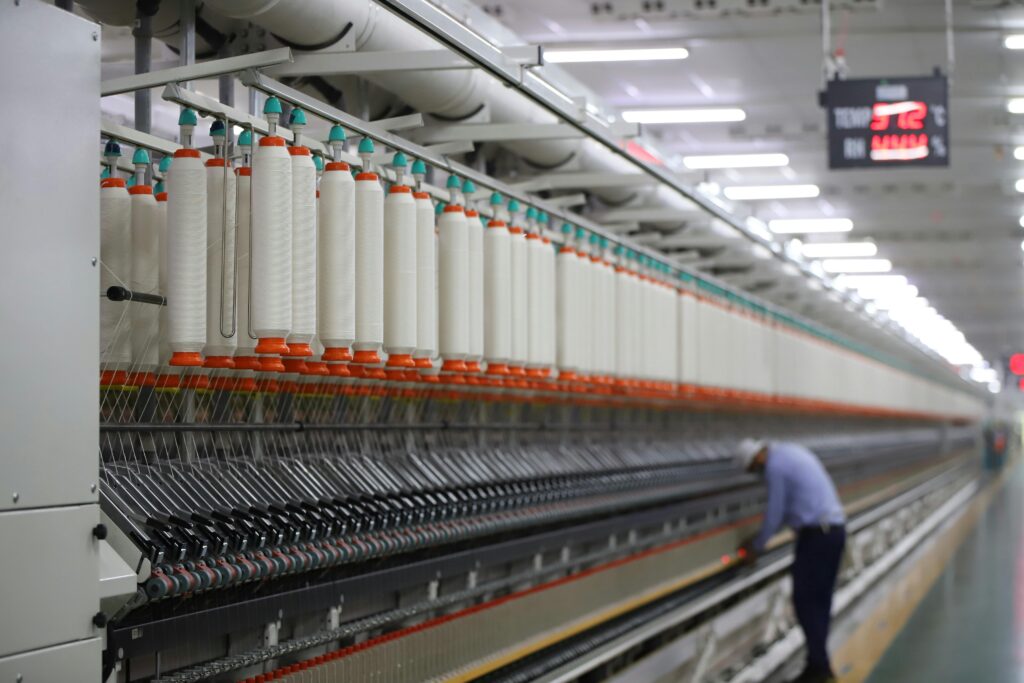
The First Industrial Revolution (c. 1760–1840) was triggered by the invention of the steam engine and the mechanization of textile production in Britain. James Hargreaves’ spinning jenny, Edmund Cartwright’s power loom, and Eli Whitney’s cotton gin transformed textile manufacturing from a cottage industry into a factory-based enterprise. For the first time, a single machine could do the work of dozens of human hands, and production moved from the home to the factory.
The Second Industrial Revolution (c. 1870–1914) was defined by electricity, the internal combustion engine, and the rise of mass production. Henry Ford’s introduction of the moving assembly line at his Highland Park plant in 1913 is the defining moment of this era. By breaking the production of the Model T into a sequence of simple, repetitive tasks, Ford reduced the time to assemble a car from over 12 hours to 93 minutes, and cut the price of the Model T by more than two-thirds. This was not merely a manufacturing innovation; it was a social revolution that made consumer goods accessible to the working class for the first time.
The Third Industrial Revolution (c. 1960–1990) brought electronics, computers, and programmable logic controllers (PLCs) to the factory floor. Automation allowed machines to perform repetitive tasks with greater speed and precision than human workers, and the introduction of Computer Numerical Control (CNC) technology enabled the production of complex parts with unprecedented accuracy. This era also saw the rise of lean manufacturing, pioneered by Toyota’s Taiichi Ohno and Shigeo Shingo in the 1940s through 1970s, which challenged the mass-production orthodoxy by demonstrating that eliminating waste was a more powerful lever for competitive advantage than simply increasing volume.
The Fourth Industrial Revolution (c. 2011–present), also known as Industry 4.0, is defined by the convergence of cyber-physical systems, the Industrial Internet of Things (IIoT), cloud computing, and artificial intelligence. The “smart factory“, a fully connected, self-optimizing production environment, is the defining vision of this era. The Fifth Industrial Revolution (c. 2021–present), or Industry 5.0, represents a values-based correction to Industry 4.0’s singular focus on efficiency. Introduced by the European Commission in 2021, Industry 5.0 places human well-being, environmental sustainability, and operational resilience on equal footing with economic efficiency.
What Are the Types of Manufacturing?
The types of manufacturing can be understood at two distinct levels: the strategic level, which describes how a manufacturer relates to customer demand, and the process level, which describes the physical methods used to create the product. Both levels of classification are essential to a complete understanding of what manufacturing is in practice.
At the strategic level, manufacturing is divided into three primary types, each representing a different answer to the fundamental question of when to produce:
| Manufacturing Type | Production Trigger | Best Suited For | Key Risk |
|---|---|---|---|
| Make-to-Stock (MTS) | Demand forecast | High-volume, standardized products with stable demand | Overproduction or stockouts from inaccurate forecasting |
| Make-to-Order (MTO) | Confirmed customer order | High-value, customized products (e.g., aircraft, bespoke machinery) | Long lead times and uneven production flow |
| Make-to-Assemble (MTA) | Customer order (for final assembly) | Modular products with customer-selectable options (e.g., computers, cars) | Component inventory obsolescence if demand does not materialize |
Make-to-Stock (MTS) is the traditional mass-production model, in which manufacturers produce goods based on demand forecasts and hold them as finished goods inventory until a customer order is received. The primary advantage of MTS is the ability to fulfill orders immediately from stock, which is critical in markets where customers expect immediate availability. The primary challenge is the accuracy of the demand forecast: producing too much results in excess inventory and carrying costs, while producing too little results in stockouts and lost revenue. Consumer packaged goods, automotive parts, and electronics components are typical MTS products.
Make-to-Order (MTO) is the opposite approach, in which production does not begin until a confirmed customer order is in hand. This eliminates the risk of finished goods inventory but introduces the challenge of longer lead times. MTO is the standard model for highly customized or high-value products, such as commercial aircraft, industrial machinery, and bespoke furniture. Because each product is built to a specific customer’s requirements, MTO manufacturers can often command a premium price, but they must manage the complexity of a highly variable production schedule.
Make-to-Assemble (MTA), also known as assemble-to-order, is a hybrid of the MTS and MTO models. In an MTA environment, the manufacturer produces or procures components and sub-assemblies in advance of receiving customer orders, capturing the efficiency benefits of pre-production, but defers final assembly until a specific order is received. This strategy allows for a high degree of product customization and faster delivery times than a pure MTO model. It is well-suited for products with a modular architecture, such as personal computers, where the customer can select from a range of processor, memory, and storage options, but the underlying components are standard and can be pre-built.
What Are the Different Manufacturing Processes?
The manufacturing processes used on the factory floor represent the tactical layer of the manufacturing system. While the MTS/MTO/MTA framework describes when to produce, the process framework describes how to produce. The five primary manufacturing processes, repetitive, discrete, job shop, batch process, and continuous process, differ in their production volume, product variety, and degree of customization.
| Manufacturing Process | Volume | Variety | Customization | Typical Industries |
|---|---|---|---|---|
| Repetitive | Very High | Very Low | None | Automotive parts, electronics, appliances |
| Discrete | High | High | Moderate | Automobiles, smartphones, furniture, aircraft |
| Job Shop | Low | Very High | High | Bespoke furniture, custom prototypes, specialized equipment |
| Batch Process | Medium | Medium | Low | Food & beverage, pharmaceuticals, chemicals |
| Continuous Process | Very High | Very Low | None | Oil refining, metal smelting, paper production |
Repetitive manufacturing is characterized by dedicated production lines that run continuously, producing the same or very similar products with minimal changeover. This is the purest form of mass production, optimized for maximum throughput at minimum cost per unit. The trade-off is inflexibility: a repetitive manufacturing line is difficult and expensive to reconfigure for a different product.
Discrete manufacturing involves the assembly of distinct, identifiable products from a bill of materials (BOM). The finished products, cars, smartphones, aircraft, can, in theory, be disassembled back into their component parts. Unlike repetitive manufacturing, discrete manufacturing can accommodate a higher degree of product variety on the same production line, making it more flexible but also more complex to manage. Effective inventory management and production scheduling are critical capabilities in a discrete manufacturing environment.
Job shop manufacturing is the most flexible and the least efficient of the five processes. It is used for the production of custom or semi-custom products in small batches, often to a unique customer specification. A job shop is typically organized into functional departments, welding, machining, painting, and the product follows a unique routing through these departments based on its specific requirements. This process is ideal for bespoke products, prototypes, and small-run specialty items, but the high degree of customization comes at the cost of longer lead times and higher per-unit costs.
Batch process manufacturing involves the production of goods in discrete batches according to a formula or recipe. At the end of each batch, the equipment is cleaned and prepared for the next run, which may be a different product. This process is the standard in the food and beverage, pharmaceutical, and chemical industries, where products are created by mixing, heating, or chemically transforming ingredients rather than assembling components. The batch process allows for quality control and manageable inventory levels across a diverse product portfolio.
Continuous process manufacturing runs 24 hours a day, 7 days a week, producing a single product without interruption. This process is used for high-volume commodity products, crude oil refining, steel production, paper manufacturing, where the raw materials are liquids, gases, or granules that flow continuously through the production system. The capital investment required for a continuous process plant is enormous, but the cost per unit is correspondingly low.
What Are the Key Manufacturing Techniques?
Beyond the five primary processes, manufacturers employ a range of manufacturing techniques, strategic and operational methodologies that shape how the production system is designed and managed. Understanding these techniques is essential to understanding the full scope of what manufacturing encompasses in a modern industrial context.
Lean manufacturing is the most influential manufacturing technique of the 20th century. Developed by Toyota’s Taiichi Ohno and Shigeo Shingo between the 1940s and 1970s, lean manufacturing is a production philosophy centered on the systematic elimination of waste, or muda in Japanese. Lean defines waste as any activity that consumes resources without adding value from the customer’s perspective. The seven classic wastes are transport, inventory, motion, waiting, overproduction, over-processing, and defects. By relentlessly identifying and eliminating these wastes, lean manufacturers can reduce lead times, improve quality, and lower costs simultaneously. The Toyota Production System (TPS) is the original and most fully realized expression of lean manufacturing principles.
Agile manufacturing is the counterpart to lean, designed for environments where demand is volatile and unpredictable. While lean optimizes for efficiency in stable, high-volume environments, agile optimizes for responsiveness in dynamic, high-variety environments. Agile manufacturing emphasizes flexible production systems, modular product designs, and cross-functional teams that can rapidly reconfigure to meet changing customer requirements. The fashion industry, with its fast-changing trends and short product lifecycles, is a canonical example of an environment where agile manufacturing principles are essential.
Additive manufacturing, more commonly known as 3D printing, is a process that creates three-dimensional objects by depositing material layer by layer, guided by a digital design file. Unlike traditional subtractive manufacturing processes, which create a part by cutting, drilling, or grinding away material from a solid block, additive manufacturing builds the part up from nothing, which eliminates material waste and enables the production of complex geometries that would be impossible to achieve with conventional methods. Additive manufacturing has applications across industries, from aerospace (producing lightweight structural components) to medicine (creating patient-specific implants) to consumer products (rapid prototyping).
Digital manufacturing refers to the integration of computer systems, data analytics, and connected devices into the production process. It is the operational expression of Industry 4.0 on the factory floor, encompassing technologies such as the Industrial Internet of Things (IIoT), digital twins, and AI-powered predictive maintenance. A key function of digital manufacturing is the creation of real-time visibility across the entire production system, enabling manufacturers to detect and respond to problems before they escalate.
Just-in-Time (JIT) manufacturing is a production technique in which materials and components arrive at the production line exactly when they are needed, in the exact quantity needed. JIT eliminates the cost of holding excess inventory but requires a highly reliable supply chain and precise production scheduling. It is a core component of the lean manufacturing toolkit.
What Are the Main Manufacturing Systems?
Manufacturing systems represent the organizational architecture of the factory, the way in which production resources (people, machines, materials) are arranged and managed to achieve the production objectives. Manufacturing systems are generally classified into four main types, ranging from the most flexible to the most efficient:
| Manufacturing System | Volume | Flexibility | Cost per Unit | Typical Application |
|---|---|---|---|---|
| Custom Manufacturing System | Very Low | Very High | Very High | Bespoke, one-of-a-kind items (e.g., custom yachts, art) |
| Intermittent Manufacturing System | Low-Medium | High | High | Small-batch, varied products (e.g., specialty chemicals) |
| Continuous Manufacturing System | Very High | Very Low | Very Low | Mass-produced, standardized goods (e.g., beverages, paper) |
| Flexible Manufacturing System (FMS) | High | High | Low | High-volume products with frequent design changes |
A custom manufacturing system produces individual, high-value items largely by hand or with specialized machines, to the exact specifications of a single customer. Quality, not volume, is the defining objective. A continuous manufacturing system is the opposite: it is designed for the mass production of a single, standardized product, using an assembly line where semi-skilled workers complete successive stages of assembly as the product moves past them. A flexible manufacturing system (FMS) uses programmable, automated equipment, including robots, to produce a high volume of products that can be varied relatively easily. The FMS is designed to capture the efficiency of a continuous system while retaining the adaptability of a custom system.
What Are Examples of Manufacturing?
The manufacturing environment is extraordinarily diverse, and the best manufacturing examples are those that illustrate this diversity. The common thread across all examples of manufacturing is the transformation of inputs into a product of greater value, but the inputs, the processes, and the outputs vary enormously.
Automotive manufacturing is the archetypal example of manufacturing in the industrial era. A modern automobile assembly plant is a masterclass in discrete and repetitive manufacturing, where thousands of components, sourced from hundreds of suppliers across multiple countries, are assembled into a finished vehicle on a moving assembly line. Toyota’s Georgetown, Kentucky plant, for example, produces approximately 500,000 vehicles per year, employing more than 9,000 workers. The automotive industry is also the birthplace of lean manufacturing, and it continues to be the proving ground for the most advanced manufacturing technologies, from collaborative robots to AI-powered quality inspection.
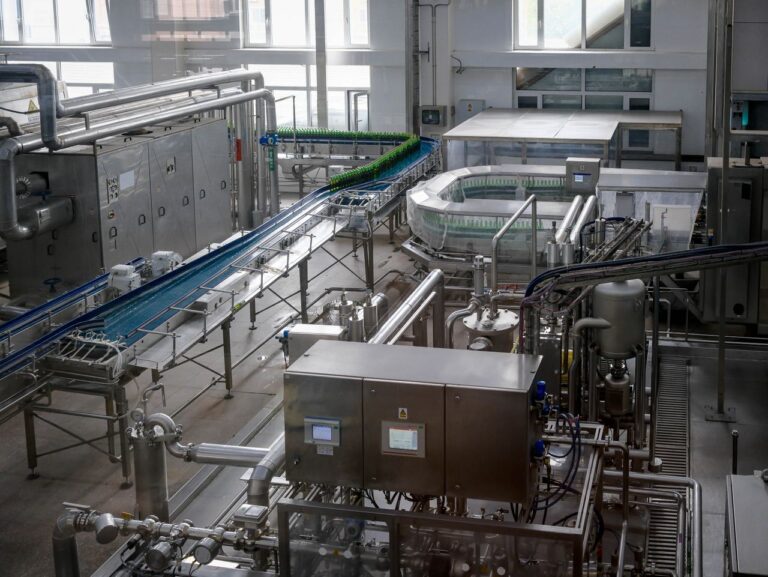
Food and beverage manufacturing is the largest manufacturing sub-sector in the United States, representing over 20% of total manufacturers’ product sales. It is a prime example of process manufacturing, encompassing everything from a large-scale brewery using a continuous fermentation process to a small, artisan bakery producing in daily batches. The fundamental principle is the same in both cases: raw ingredients, grain, water, yeast, flour, sugar, are transformed through a series of physical and chemical processes into a consumable product. The scale, the technology, and the capital investment are radically different, but both qualify as manufacturing goods under the NAICS definition.
Pharmaceutical manufacturing is one of the most highly regulated manufacturing environments in the world. It relies on both batch and continuous process manufacturing, with an extraordinary emphasis on quality control, traceability, and regulatory compliance. Every step in the production of a pharmaceutical product must be documented and validated in accordance with Good Manufacturing Practices (GMP), as mandated by the FDA and equivalent regulatory bodies worldwide. A single deviation from the approved process can result in the rejection of an entire batch, a product recall, or a facility shutdown.
Electronics manufacturing is a sector that combines the full spectrum of manufacturing processes. The fabrication of semiconductors, the silicon chips that power every electronic device, is a continuous process manufacturing operation of extraordinary precision, conducted in cleanrooms where the air is filtered to remove particles as small as 0.1 microns. The assembly of those chips into finished devices, smartphones, laptops, servers, is a discrete manufacturing operation, often highly automated with robotic pick-and-place systems. The electronics industry is also characterized by the most complex and globally distributed supply chains in the world, with components sourced from dozens of countries and assembled in a handful of specialized manufacturing hubs.
Apparel manufacturing demonstrates that manufacturing is not exclusively a capital-intensive, high-technology enterprise. The global fashion industry is a labor-intensive form of discrete manufacturing, in which fabric is cut, sewn, and assembled into garments by skilled workers. The industry is undergoing a significant transformation, driven by the rise of fast fashion, which demands the ability to move a new design from concept to store shelf in as little as two weeks, and by the increasing adoption of automation and digital manufacturing technologies.
What Are the Risks in Manufacturing?
Manufacturing is a complex, capital-intensive, and operationally demanding business, and a complete manufacturing description must include an honest assessment of the risks that can disrupt production, erode profitability, and damage a company’s reputation. These risks are not hypothetical; they are the lived reality of every manufacturer, from the smallest job shop to the largest multinational corporation.
Supply chain disruptions represent perhaps the most pervasive and consequential risk in modern manufacturing. The COVID-19 pandemic provided a stark demonstration of how quickly a global supply chain can unravel. The shortage of semiconductor chips that began in 2020 and persisted for years forced automotive manufacturers to idle assembly lines and cut production by millions of vehicles, costing the industry an estimated $210 billion in revenue in 2021 alone. Supply chain risk arises from a wide range of sources: natural disasters, geopolitical conflicts, supplier bankruptcies, transportation bottlenecks, and the kind of systemic, correlated shocks that no individual risk model can fully anticipate.
Labor shortages and skills gaps are a structural challenge for the manufacturing sector. The National Association of Manufacturers estimates that 3.8 million new manufacturing positions will need to be filled by 2033, and that nearly 2 million of those positions could go unfilled due to a shortage of qualified workers. The manufacturing workforce is aging, with a large cohort of experienced workers approaching retirement. At the same time, the increasing sophistication of manufacturing technology, from CNC machining to collaborative robots to AI-powered quality systems, is raising the skill requirements for manufacturing jobs, creating a widening gap between the capabilities of the available workforce and the needs of the modern factory.
Fluctuating raw material prices are a constant source of financial risk for manufacturers. The prices of key inputs, steel, aluminum, copper, rare earth elements, agricultural commodities, can fluctuate dramatically in response to changes in global supply and demand, currency movements, and geopolitical events. Even when manufacturers lock in the price of raw materials through long-term contracts or hedging instruments, they may remain exposed to fluctuating energy and transportation costs, which can erode margins with equal speed.
Regulatory compliance is a significant and growing cost for manufacturers. The regulatory environment governing manufacturing operations spans environmental standards, workplace health and safety, product safety, data privacy, and trade compliance. Non-compliance can result in substantial fines, facility shutdowns, and reputational damage. In highly regulated industries such as pharmaceuticals, medical devices, and food processing, the cost of maintaining regulatory compliance is a major component of the total cost of manufacturing.
Quality control failures represent one of the most visible and costly risks in manufacturing. A single major product recall can have devastating financial and reputational consequences. General Motors’ ignition switch recall in 2014 cost the company an estimated $4.1 billion in direct costs, and the reputational damage was incalculable. In the pharmaceutical and food industries, a quality failure can result in consumer harm, regulatory action, and the permanent destruction of brand equity built over decades.
Cybersecurity threats have emerged as a critical risk for modern manufacturers as factories become more connected. Manufacturing is now the most frequently targeted sector for cyberattacks, according to IBM’s X-Force Threat Intelligence Index. Ransomware attacks on manufacturing facilities can bring production to a complete halt, with recovery times measured in days or weeks and financial losses that can reach into the hundreds of millions of dollars.
What Is the Manufacturing Process? A Step-by-Step Guide
Understanding what manufacturing involves in practice requires tracing the full journey of a product from concept to delivery. While the specific steps vary by industry and product type, the following framework captures the essential stages of the manufacturing process:
Product Conception and Market Research is the starting point of every manufacturing journey. It begins with the identification of an unmet market need or an opportunity to improve an existing product. This phase involves competitive analysis, customer research, and the development of a preliminary product concept. The goal is to validate that there is a genuine market demand for the product before committing significant resources to its development.
Product Design and Engineering translates the validated concept into detailed technical specifications. Designers and engineers create CAD models, define materials and tolerances, and conduct simulation analyses to ensure that the product will perform as intended. Effective product design must balance functionality, aesthetics, manufacturability, and cost. The principle of Design for Manufacturing (DFM), optimizing the product design to make it easier and cheaper to produce, is applied at this stage to avoid costly redesigns later in the process.
Prototyping and Testing is the phase in which the design is converted into a physical prototype for testing and validation. Low-fidelity prototypes, 3D-printed models, handmade mockups, are used to test form and basic function in the early stages. Higher-fidelity prototypes, built with production-representative materials and processes, are used for more rigorous functional and durability testing. The prototype phase is the last opportunity to identify and correct design flaws before the cost of change escalates dramatically.
Production Planning converts the finalized design into an actionable manufacturing strategy. This phase involves selecting the appropriate manufacturing process, designing the production line layout, establishing the bill of materials (BOM), selecting and qualifying suppliers, and developing the quality control plan. Production planning also includes the determination of the optimal production volume, the make-to-stock, make-to-order, or make-to-assemble strategy, based on the demand forecast and the product’s cost structure.
Pilot Production and Ramp-Up is the phase in which the production process is validated at a small scale before committing to full production. A pilot run identifies process issues, training gaps, and equipment problems that were not apparent in the design phase. The insights gained from the pilot run are used to refine the production process before the ramp-up to full volume.
Full-Scale Production and Quality Control is the operational core of the manufacturing process. At this stage, the production system is running at its designed capacity, producing goods to the defined specifications. Quality control is embedded throughout this phase, from incoming inspection of raw materials to in-process statistical process control (SPC) to final inspection before shipment.
Post-Production and Continuous Improvement encompasses the activities that occur after the product leaves the factory: distribution, order fulfillment, warranty management, and the analysis of field performance data. The insights gained from post-production analysis feed back into the design and production planning phases, driving continuous improvement in product quality and manufacturing efficiency.
What Is the Future of Manufacturing?
The future of manufacturing will be defined by the convergence of three imperatives: technological advancement, sustainability, and resilience. The manufacturers who thrive in the coming decade will be those who can navigate the tension between these imperatives and build production systems that are simultaneously more efficient, more adaptable, and more responsible than those of the past.
Artificial intelligence and machine learning are already transforming manufacturing operations, and their impact will only deepen. AI applications in manufacturing range from predictive maintenance, analyzing sensor data to predict equipment failures before they occur, to AI-powered quality inspection, which can detect defects with greater speed and accuracy than human inspectors. AI is also being applied to supply chain optimization, production scheduling, and demand forecasting, enabling manufacturers to make better decisions faster in an increasingly complex and volatile environment.
The Industrial Internet of Things (IIoT) is the data infrastructure on which all other advanced manufacturing technologies depend. A network of connected sensors, actuators, and devices creates a continuous stream of real-time data from every point in the production system. This data enables manufacturers to monitor equipment health, track material flows, and optimize energy consumption in real time. As IIoT technology matures and the cost of sensors continues to fall, the density of connected devices on the factory floor will increase dramatically, creating an unprecedented level of operational visibility.
Robotics and collaborative robots (cobots) will continue to transform the manufacturing workforce. Traditional industrial robots, large, fast, and powerful, are designed to operate in caged-off areas, separated from human workers for safety reasons. Cobots, by contrast, are designed to work safely alongside humans in a shared workspace, equipped with sensors and force-limiting technology that allows them to detect and respond to human presence. Cobots are enabling a new model of human-machine collaboration in which machines handle the physically demanding, repetitive, and ergonomically hazardous tasks, while human workers focus on the complex, adaptive, and creative tasks that machines cannot perform.
Sustainability and the circular economy will become central strategic imperatives for manufacturers, driven by regulatory pressure, customer expectations, and the recognition that resource efficiency is a competitive advantage. The circular economy model, which aims to eliminate waste by keeping materials in use for as long as possible, is fundamentally reshaping product design, production processes, and business models across the manufacturing sector. Manufacturers who can demonstrate credible progress on sustainability will access new markets, attract better talent, and build more resilient supply chains.
Reshoring and supply chain regionalization represent a structural shift in the geography of global manufacturing. The vulnerabilities exposed by the COVID-19 pandemic and the escalating geopolitical tensions of the 2020s have prompted many manufacturers to reassess the wisdom of hyper-concentrated, globally optimized supply chains. The trend toward reshoring, bringing manufacturing operations back to domestic or near-shore locations, is being accelerated by advances in automation that are reducing the labor cost advantage of low-wage manufacturing locations.
Conclusion: Manufacturing as a Strategic Capability
The question “what is manufacturing?” does not have a simple answer, and it never did. The manufacturing description that begins with “the transformation of raw materials into finished goods” is accurate but incomplete. Manufacturing is the physical foundation of the modern economy, the system through which human ingenuity is converted into the products that define our standard of living. It is also the primary engine of technological innovation, accounting for 52% of all private-sector R&D in the United States. And it is, increasingly, a strategic battleground where the competitive advantage of nations and companies is won or lost.
The manufacturing experience meaning in the 21st century is not just about making things efficiently. It is about building production systems that can navigate volatility, adapt to change, and create value in a world that is more complex, more interconnected, and more demanding than at any point in history. The manufacturers who understand this, who treat manufacturing not as a cost center to be minimized but as a strategic capability to be developed, are the ones who will define the next chapter of industrial history.
How Intelycx Helps Turn Manufacturing KPIs into Daily Guidance
Manufacturing KPIs only create value when they are accurate, real-time, and connected to action. That is the gap Intelycx is built to close.
The Intelycx platform connects legacy and modern machines into a single data foundation, normalizes and enriches signals so KPIs are calculated consistently across lines and sites, and provides real-time dashboards for operators, engineers, and leaders. On top of this connected data, Intelycx layers AI-driven insights so teams understand not just what changed in a KPI, but why, and what to do about it.
If you are working to move beyond spreadsheets and lagging reports, a unified manufacturing AI platform like Intelycx can help you turn KPIs from static charts into a living system for maximizing production efficiency every day. You can learn more about our solutions and approach at intelycx.com.