Every year, more than 2 million patients worldwide owe their lives, or the quality of their lives, to a manufactured medical device. A pacemaker that fires at precisely the right millisecond. A surgical robot that holds tolerances tighter than a human hand can achieve. A glucose monitor that transmits real-time data to a clinician three states away. These outcomes are not accidents. They are the product of the most demanding manufacturing discipline on earth: medical manufacturing.
The paradox at the heart of this industry is what might be called the “Zero-Defect Mandate” — a standard that redefines acceptable risk. In automotive manufacturing, a 3.4 defects-per-million-opportunities (DPMO) rate earns a Six Sigma certification. In medical manufacturing, that same rate is a catastrophe. A single non-conforming implant, a single mislabeled syringe, a single sterility breach — any of these can trigger a recall, a regulatory shutdown, or a patient fatality. Medical manufacturing is the only manufacturing sector where the cost of a defect is measured not in dollars, but in lives. And yet this same sector must simultaneously innovate faster than any other, bringing novel devices from concept to clinical use in a regulatory environment that demands exhaustive documentation at every step.
This article defines medical manufacturing in full, maps its industry sectors, explains the five-stage manufacturing lifecycle, details the regulatory frameworks that govern it, and identifies where intelligent manufacturing platforms close the compliance and quality gap that paper-based systems cannot.
How Is Medical Manufacturing Defined?
Medical manufacturing — also referred to as healthcare manufacturing, medical device manufacturing, or the medical equipment manufacturing industry — is the design, production, testing, and distribution of instruments, devices, and equipment used in the diagnosis, prevention, monitoring, treatment, or alleviation of disease and injury in human patients.
| Entity | Attribute | Value |
|---|---|---|
| Medical manufacturing | Scope | Instruments, implants, diagnostic equipment, wearables, surgical tools, in vitro diagnostics |
| Medical manufacturing | Regulatory authority | FDA (US), EU MDR, ISO 13485, GMP |
| Medical manufacturing | Primary differentiator | Biocompatibility, sterility, and zero-defect quality requirements |
| Medical manufacturing | Market size (2025) | $678.88 billion globally, growing at approximately 6% CAGR |
| Medical manufacturing | US market position | Largest in the world, representing over 40% of global medtech revenue |
| Medical manufacturing | US employment | Over 500,000 direct jobs; approximately 2 million direct and indirect |
The definition provided by the U.S. Food and Drug Administration (FDA) is precise: a medical device is an instrument, apparatus, implant, machine, tool, in vitro reagent, or similar article intended to diagnose, prevent, mitigate, treat, or cure disease, and one that achieves its purpose through physical, structural, or mechanical action, not through chemical or metabolic means. This distinction separates medical devices from pharmaceuticals and defines the entire manufacturing discipline that produces them.
What Does the Medical Manufacturing Industry Include?
The medical manufacturing industry — sometimes called the medical instrument manufacturing or medical equipment manufacturing industry — is not a single sector. It is a family of highly specialized sub-industries, each with its own materials science, process requirements, and regulatory pathway.
| Industry Sector | Representative Products | Key Manufacturing Processes |
|---|---|---|
| Orthopedics | Hip implants, knee replacements, spinal implants | CNC machining, casting, grinding, metal injection molding |
| Surgical Instruments & Technologies | Dilators, sutures, robotic surgery systems | Micromachining, surface treatments, laser cutting |
| Diagnostic Apparatus | MRI machines, ultrasound, endoscopes | Imaging systems, micromanufacturing, IT integration |
| Cardiovascular Devices | Pacemakers, defibrillators, drug-eluting stents | Micromolding, assembly, power source integration |
| Diabetes Devices | Continuous glucose monitors (CGM), insulin pumps | Nanotechnology, sensor manufacturing, assembly |
| In Vitro Diagnostics (IVD) | Blood analyzers, PCR systems, test kits | Precision assembly, reagent manufacturing |
| Dental Instruments | Implants, drills, imaging equipment | Additive manufacturing, machining, 3D imaging |
| Wearable & Connected Devices | Health patches, smartwatches, remote monitors | PCB assembly, miniaturization, wireless integration |
The medical device manufacturing industry in the United States alone comprises 9,009 medical equipment and supplies manufacturing establishments and 5,010 electronic instrument manufacturing establishments, as of 2022. More than 6,500 medtech companies operate in the US, the vast majority of which are small and medium-sized enterprises with fewer than 100 employees. The US accounts for over 40% of global medtech revenue and exported more than $103 billion in medical technology products in 2023, making it the world’s largest exporter of medical devices.
How Does the Medical Devices Manufacturing Process Work?
The medical devices manufacturing process follows a five-stage lifecycle defined by the FDA. Each stage carries specific documentation, validation, and compliance requirements. Skipping or compressing any stage does not accelerate time-to-market; it triggers regulatory rejection and, in the worst case, patient harm.
Stage 1: Device Discovery and Concept. The process begins with clinical problem identification and user needs definition. Engineers and clinicians define the device’s intended use, performance specifications, and technical feasibility. The FDA then classifies the device based on risk: Class I (lowest risk, general controls), Class II (moderate risk, performance standards and 510(k) clearance), or Class III (highest risk, Premarket Approval supported by clinical trial data). Classification determines the depth of testing, documentation, and regulatory review required for every subsequent stage.
Stage 2: Preclinical Research and Prototype Development. Engineers develop prototypes and conduct laboratory verification and validation testing. Higher-risk devices require animal studies before clinical trials. Manufacturing methods such as injection molding, CNC machining, additive manufacturing, and complex assembly are evaluated for production feasibility. Design issues identified at this stage cost a fraction of what they cost to correct after regulatory submission.
Stage 3: Pathway to Approval. Class II devices typically follow the 510(k) route, demonstrating substantial equivalence to a legally marketed predicate device. Class III devices require Premarket Approval (PMA) supported by clinical evidence. Devices serving small patient populations may qualify for a Humanitarian Device Exemption (HDE). Documentation requirements scale directly with device risk classification.
Stage 4: FDA Review and Manufacturing Facility Inspection. FDA reviewers evaluate safety and effectiveness data. For high-risk devices, an Advisory Committee reviews evidence before a final decision. The FDA also inspects the manufacturing facility, assessing compliance with current Good Manufacturing Practices (cGMP), production records, supplier controls, and quality systems. Approval depends on both the clinical evidence and the demonstrated reliability of the manufacturing operation.
Stage 5: Post-Market Safety Monitoring. Regulatory oversight does not end at market launch. Manufacturers manage complaint handling, adverse event reporting, and corrective and preventive actions (CAPAs). The FDA conducts routine and unannounced inspections. Post-market surveillance is a permanent, ongoing obligation, not a one-time milestone.
What Manufacturing Processes Are Used in Medical Device Manufacturing?
The manufacturing of medical devices draws on a broad set of precision processes. The selection of process depends on device type, required material properties, production volume, and tolerance requirements.
| Process | Best Application | Medical Examples | Key Advantage |
|---|---|---|---|
| CNC Machining | High-precision metal and polymer parts | Surgical tools, orthopedic implants, housings | Dimensional accuracy to ±0.001 in |
| Injection Molding | High-volume plastic components | Syringes, casings, catheter components | Cost-efficient at scale; broad material range |
| Sheet Metal Fabrication | Structural frames, brackets, housings | Device stands, adapters, exterior panels | Low tooling cost; high strength-to-weight ratio |
| Additive Manufacturing (3D Printing) | Custom and low-volume parts, prototypes | Patient-specific implants, surgical guides | Geometric complexity; rapid iteration |
| Laser Cutting and Welding | Precision-cut stainless components | Stent components, instrument housings | Accuracy to one micron; minimal heat distortion |
| PCB Assembly | Electronic control systems | Pacemakers, patient monitors, imaging systems | Enables device intelligence and connectivity |
| Cleanroom Assembly | Sterile final assembly | Implants, IV equipment, wound care products | Eliminates bioburden contamination risk |
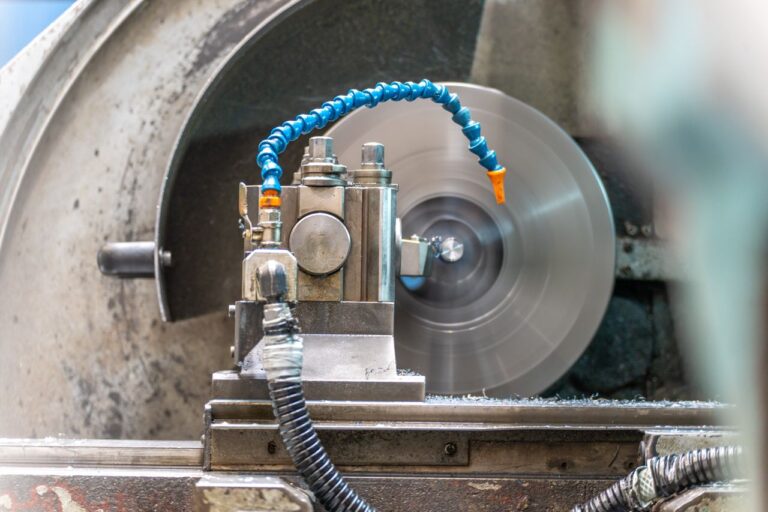
The tolerances required in the medical manufacturing equipment environment are categorically tighter than in general manufacturing. Where general manufacturing accepts tolerances of ±0.005 to 0.010 inches, medical device manufacturing routinely requires ±0.001 inches, a fivefold tighter specification. Materials must also meet biocompatibility requirements: stainless steel for surgical instruments, medical-grade polymers (polyethylene, polypropylene, PMMA, PVC, polycarbonate) for injection-molded components, ceramics for dental and orthopedic applications, and titanium alloys for implantable devices.
How Does Medical Manufacturing Differ from All Other Manufacturing?
The medical device manufacturing industry operates under constraints that have no parallel in any other manufacturing sector. The following comparison makes the distinction concrete.
| Dimension | Medical Manufacturing | General Manufacturing |
|---|---|---|
| Dimensional tolerance | ±0.001 in | ±0.005 to 0.010 in |
| Regulatory oversight | FDA, EU MDR, ISO 13485, cGMP | Industry-specific QA programs |
| Consequence of defect | Patient injury or death; recall; regulatory shutdown | Product replacement; warranty claim |
| Traceability requirement | Mandatory at batch, lot, and unit level | Optional |
| Sterility requirement | Mandatory for implantables and surgical devices | Minimal or none |
| Biocompatibility requirement | Mandatory; materials tested against ISO 10993 | Not applicable |
| Documentation burden | Every process step documented and auditable | Selective documentation |
| Post-market obligation | Ongoing adverse event reporting, CAPA, surveillance | Limited |
This is why the medical manufacturing industry cannot adopt the same operational playbook as automotive, aerospace, or consumer electronics manufacturing. The regulatory framework is not a compliance overhead — it is the engineering specification. Every process parameter, every supplier qualification, every change to a bill of materials must be documented, validated, and, in many cases, submitted to a regulatory authority before implementation.
What Regulatory Frameworks Govern Medical Manufacturing?
Medical manufacturing operates under a layered regulatory architecture that spans national agencies, international standards bodies, and quality management frameworks.
FDA (United States). The FDA classifies all medical devices into three risk classes and enforces compliance through 21 CFR Part 820 (Quality System Regulation), 21 CFR Part 11 (electronic records), and the Unique Device Identifier (UDI) system, which requires serialized traceability from raw material to patient use. The FDA conducts facility inspections and issues Warning Letters, consent decrees, and import alerts for non-compliance.
EU MDR (European Union). The EU Medical Device Regulation (MDR 2017/745) replaced the legacy MDD 93/42/EEC directive and introduced significantly stricter requirements for clinical evidence, post-market surveillance, and Notified Body oversight. Manufacturers selling into the EU must achieve CE marking and maintain a Quality Management System (QMS) certified to ISO 13485.
ISO 13485. This international standard specifies QMS requirements specific to medical device manufacturers. Unlike ISO 9001, ISO 13485 is not a generic quality standard. It requires documented procedures for design controls, risk management (ISO 14971), supplier qualification, and post-market surveillance. Certification to ISO 13485 is a prerequisite for market access in most regulated jurisdictions.
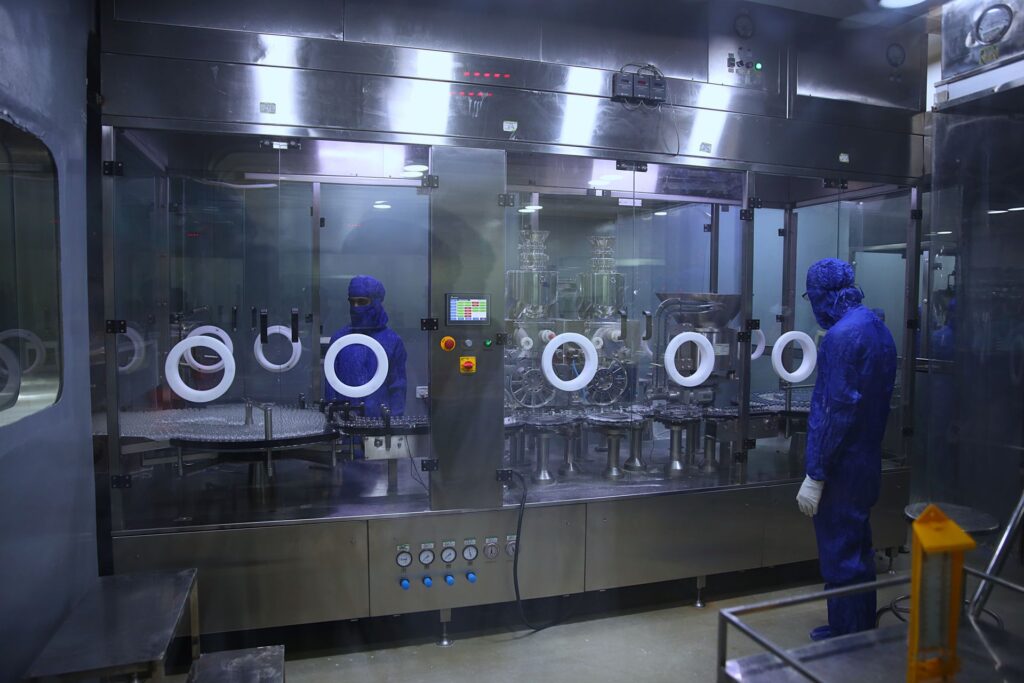
Good Manufacturing Practices (GMP). GMP requirements govern the physical environment, personnel qualifications, equipment validation, process controls, and documentation systems in medical device manufacturing facilities. Cleanroom classifications (ISO 7, ISO 8) define the acceptable particle counts for sterile manufacturing environments.
Non-compliance with any of these frameworks carries severe consequences. A single FDA Warning Letter can halt production, block new product approvals, and trigger mandatory recalls. The medical device manufacturing industry has no margin for regulatory shortcuts.
What Role Does Quality Control Play in Medical Device Manufacturing?
Quality control in medical manufacturing is not a final inspection step. It is a continuous, embedded discipline that runs from raw material qualification through post-market surveillance. The medical devices manufacturing process integrates quality at every stage through a combination of statistical process control (SPC), failure mode and effects analysis (FMEA), corrective and preventive action (CAPA) systems, and electronic batch records.
The Zero-Defect Mandate dictates that prevention is not merely preferable to correction; it is the only financially viable strategy. Biocompatibility testing (ISO 10993) validates that materials in contact with the human body do not cause cytotoxicity, sensitization, or systemic toxicity. Sterility assurance confirms that implantable and surgical devices are free of viable microorganisms. Mechanical and functional testing verifies that devices perform as specified under real-world conditions. Every test result becomes a permanent part of the device’s technical file, a document that must be available for regulatory inspection at any time.
To enforce the Zero-Defect Mandate without destroying throughput, leading manufacturers deploy automated quality systems. Intelycx NEXACTO automates quality inspection and non-conformance management, replacing manual inspection logs with a closed-loop quality system that detects deviations, triggers CAPAs, and generates the audit-ready documentation that regulators require. By detecting defects as small as 250 microns in real time, NEXACTO ensures that non-conforming products never reach the next assembly station, let alone the patient.
Deep Dive: The Economic Impact of the Zero-Defect Mandate
To truly understand the value of intelligent systems in the medical equipment manufacturing industry, one must quantify the cost of poor quality and the administrative burden of compliance. In the medical sector, the financial burden of remaining analog is profound.
The cost of quality failures is asymmetric. A single product recall in the medical device sector costs an average of $600 million when accounting for remediation, regulatory response, legal liability, and brand damage, a figure that dwarfs the investment required to prevent the failure in the first place.
Beyond catastrophic recalls, there are hidden costs that erode EBITDA daily:
The “Data Janitor” Tax: In many facilities, highly skilled quality engineers spend up to 40% of their time acting as “data janitors,” manually extracting data from disparate systems, cleaning it in spreadsheets, and compiling the batch records required for lot release. This is a massive business cost reduction opportunity.
The Cost of “Lagging” Data: When a manufacturer relies on end-of-shift reports, they are managing through a rear-view mirror. If a CNC machine begins to drift out of tolerance at 9:00 AM, but the report is not generated until 5:00 PM, the facility has incurred eight hours of scrap. This latency tax is a direct drain on profitability.
The Traceability Burden: Maintaining unit-level traceability across a complex supply chain requires immense administrative effort. When data is fragmented, compiling a complete device history record (DHR) can take days, delaying product shipments and tying up working capital in finished goods inventory.
This is where Intelycx CORE delivers measurable economic impact. CORE connects every machine, sensor, and process parameter on the medical device shop floor into a single real-time data layer, eliminating the data silos that cause traceability gaps and audit failures. By acting as a universal translator at the edge, CORE automates the creation of electronic device history records (eDHR), eliminating the Data Janitor tax and accelerating lot release times by up to 60%.
Medical Manufacturing in Business: Real-World Use Cases
To move beyond theoretical definitions, we must look at how intelligent manufacturing technologies are applied on the shop floor to drive measurable ROI while upholding the Zero-Defect Mandate.
Example 1: Predictive Quality in Orthopedic Implants A Tier-1 manufacturer of titanium hip replacements faced a 6% scrap rate due to micro-fractures occurring during the CNC machining process. By implementing Intelycx CORE to monitor spindle load and vibration data in real time, the facility identified the acoustic signature of tool wear before it caused a defect. Action: Automated alerts prompted operators to change cutting tools precisely when needed, rather than on a fixed schedule. Result: Scrap was reduced to 0.4%, tool life was extended by 18%, and the company achieved an annual manufacturing cost savings of $1.2 million.
Example 2: Supply Chain Agility in In Vitro Diagnostics During a period of high demand volatility, a manufacturer of diagnostic test kits struggled with stock-outs of critical reagents. By implementing an enterprise digital transformation strategy that integrated their internal ERP with their suppliers’ inventory systems, they created a real-time visibility network. Action: The system automatically adjusted procurement orders based on live production consumption rates. Result: The manufacturer reduced raw material inventory by 22% while completely eliminating production downtime caused by material shortages.
Example 3: Automated Traceability in Cardiovascular Devices A producer of pacemakers spent an average of 72 hours compiling and reviewing paper-based batch records before a lot could be released for shipment. Action: The company deployed Intelycx NEXACTO to digitize the entire quality workflow, automatically linking test results, operator signatures, and machine parameters to the specific serial number of each device. Result: Lot release time was reduced from 72 hours to 4 hours, freeing up millions of dollars in working capital and ensuring perfect compliance during FDA audits.
What Are the Key Challenges in Medical Device Manufacturing?
The medical device manufacturing industry faces structural challenges that distinguish it from every other manufacturing sector.
Regulatory complexity and pace of change. The EU MDR transition, FDA’s evolving guidance on software-as-a-medical-device, and the global proliferation of country-specific regulatory frameworks create a compliance landscape that changes faster than most manufacturers can track. Every regulatory change requires documented process updates, revalidation, and, in many cases, new regulatory submissions.
Supply chain qualification. In medical manufacturing, every supplier is a regulatory extension of the manufacturer. A single unqualified component from an unaudited supplier can render an entire batch non-conforming. Supply chain disruptions expose the fragility of lean, just-in-time supply models in a sector where buffer stock is a patient safety requirement.
Workforce knowledge management. The medical device manufacturing workforce is aging. The specialized knowledge required to operate validated processes, interpret SPC charts, and execute complex assembly procedures resides disproportionately in experienced technicians approaching retirement. This “Tribal Knowledge” risk — the loss of undocumented process expertise — is a direct threat to manufacturing quality and regulatory compliance.
To combat this, forward-thinking manufacturers deploy Intelycx ARIS. ARIS delivers AI-powered operator guidance at the point of work, ensuring that complex standard operating procedures (SOPs) are executed correctly every time. By digitizing the expertise of veteran operators into video-augmented workflows, ARIS institutionalizes Tribal Knowledge, accelerates the onboarding of new talent by 40%, and prevents the human errors that lead to compliance deviations.
Cost pressure versus quality investment. The medical device manufacturing industry faces relentless pricing pressure from healthcare payers, group purchasing organizations, and government reimbursement systems. At the same time, the cost of quality investment (validation, documentation, testing, regulatory affairs) is rising. Manufacturers that attempt to resolve this tension by cutting quality investment do not reduce costs; they defer them, with interest, to the point of a recall or a regulatory action.
How Is Technology Transforming Medical Manufacturing?
The medical device manufacturing industry is undergoing a structural transformation driven by converging forces: artificial intelligence, additive manufacturing, and connected devices.
Artificial Intelligence and Predictive Analytics. AI algorithms applied to manufacturing process data detect anomalies before they produce non-conforming product. In medical manufacturing, where a single out-of-specification batch can trigger a recall, predictive quality detection is not a productivity tool — it is a patient safety mechanism. AI-powered vision systems inspect components at speeds and resolutions that human inspectors cannot match, identifying surface defects, dimensional deviations, and assembly errors in real time.
Additive Manufacturing. 3D printing has moved from prototyping to production in medical manufacturing. Patient-specific implants, custom surgical guides, and anatomical models for pre-operative planning are now routinely produced using selective laser sintering (SLS), metal powder bed fusion, and stereolithography (SLA). The ability to manufacture complex geometries that traditional subtractive processes cannot produce, combined with low tooling costs and rapid iteration, makes additive manufacturing a strategic capability for the medical instrument manufacturing sector.
Connected Devices and the Internet of Medical Things (IoMT). Wearable health monitors, implantable sensors, and remote patient monitoring systems are blurring the boundary between medical device and digital health platform. Manufacturing these devices requires PCB assembly capabilities, wireless protocol integration, cybersecurity validation, and software-as-a-medical-device (SaMD) regulatory compliance, a set of requirements that did not exist a decade ago.
What Is the Future of Medical Manufacturing?
The medical manufacturing industry is converging toward what analysts describe as the “Autonomous MedTech Factory”: a manufacturing environment where AI-driven process control, real-time quality monitoring, and connected supply chains eliminate the human error vectors that account for the majority of quality escapes and regulatory findings.
Three trends define this trajectory. First, personalized medicine manufacturing, defined as the production of patient-specific devices, implants, and diagnostics at scale, requires manufacturing systems that can handle high-mix, low-volume production without sacrificing the traceability and quality control that high-volume production systems provide. Second, digital quality systems are replacing paper-based QMS platforms, driven by FDA’s increasing emphasis on data integrity and electronic records under 21 CFR Part 11. Third, sustainable medical manufacturing is emerging as a regulatory and commercial priority, with manufacturers under pressure to reduce single-use plastic waste, energy consumption, and carbon footprint without compromising sterility or biocompatibility.
The manufacturers that will lead the next decade of the medical device manufacturing industry are those that treat manufacturing intelligence not as an IT project but as a core operational competency: one that connects quality, compliance, and productivity into a single, continuously improving system.
Technical Glossary
510(k) Clearance: FDA pathway for Class II medical devices demonstrating substantial equivalence to a predicate device already on the market.
Biocompatibility: The property of a material that allows it to perform its intended function without eliciting harmful local or systemic effects in the patient.
CAPA (Corrective and Preventive Action): A quality system process for identifying, investigating, and eliminating the root causes of non-conformances and preventing their recurrence.
cGMP (Current Good Manufacturing Practices): FDA regulations governing the methods, facilities, and controls used in manufacturing, processing, and packing of medical devices.
Class I / II / III Devices: FDA risk-based classification system: Class I (lowest risk), Class II (moderate risk, 510(k)), Class III (highest risk, PMA required).
EU MDR (EU Medical Device Regulation 2017/745): The European regulatory framework governing medical device market access, replacing the legacy MDD directive.
ISO 13485: International standard specifying QMS requirements for organizations involved in the design, production, installation, and servicing of medical devices.
ISO 14971: International standard for the application of risk management to medical devices.
PMA (Premarket Approval): FDA’s most stringent device marketing application, required for Class III devices, supported by clinical trial data.
SPC (Statistical Process Control): A method of quality control that uses statistical methods to monitor and control manufacturing processes.
UDI (Unique Device Identifier): FDA-mandated serialized identification system enabling traceability of medical devices from manufacturer to patient.
Validation: The process of establishing documented evidence that a manufacturing process consistently produces a product meeting its predetermined specifications.
How Intelycx Helps Turn Manufacturing KPIs into Daily Guidance
Manufacturing KPIs only create value when they are accurate, real-time, and connected to action. That is the gap Intelycx is built to close.
The Intelycx platform connects legacy and modern machines into a single data foundation, normalizes and enriches signals so KPIs are calculated consistently across lines and sites, and provides real-time dashboards for operators, engineers, and leaders. On top of this connected data, Intelycx layers AI-driven insights so teams understand not just what changed in a KPI, but why, and what to do about it.
If you are working to move beyond spreadsheets and lagging reports, a unified manufacturing AI platform like Intelycx can help you turn KPIs from static charts into a living system for maximizing production efficiency every day. You can learn more about our solutions and approach at Intelycx.com.