
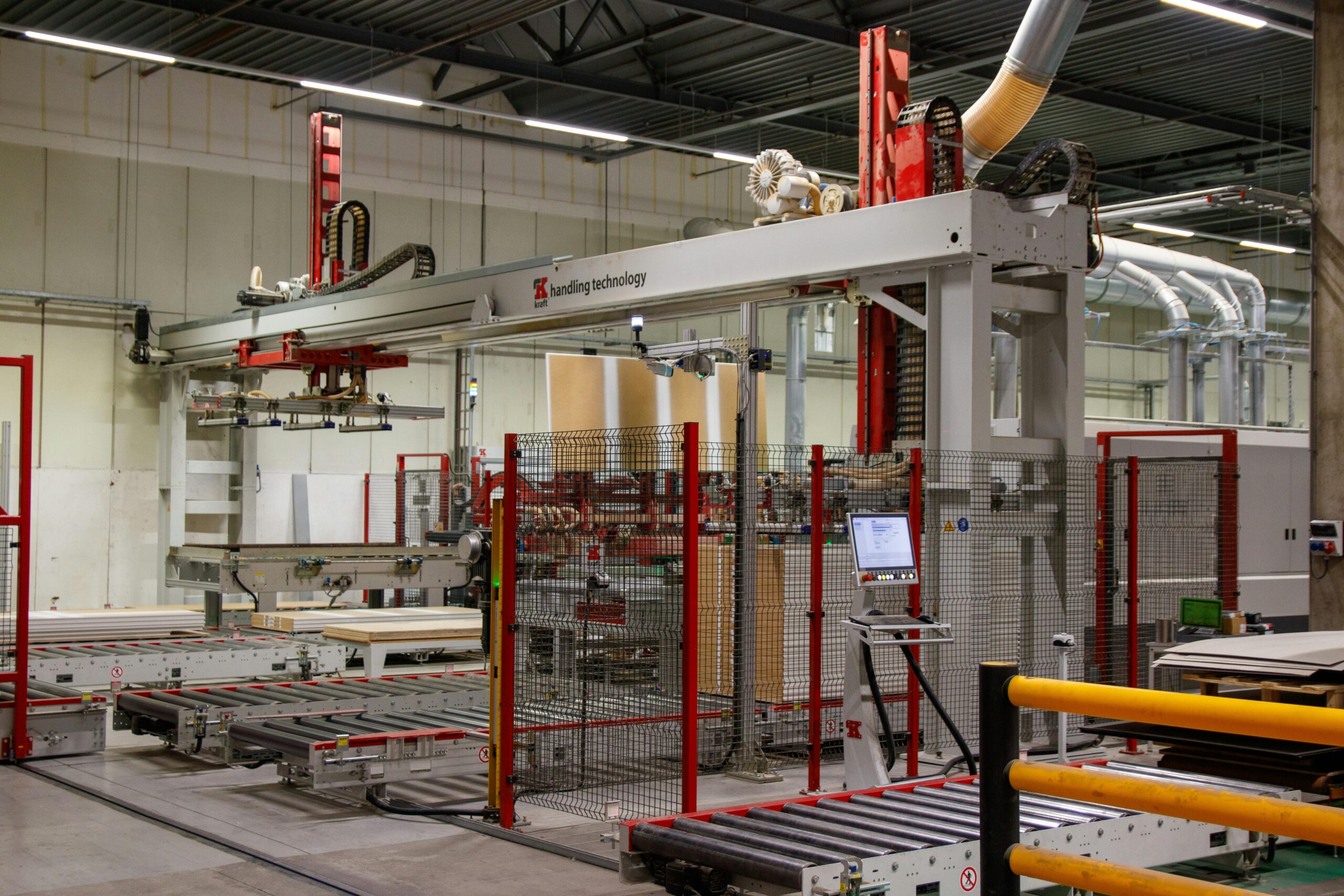
The Conformance Crisis: Why Quality Control Has Become a Strategic Imperative
There is a dangerous assumption embedded in most manufacturing operations: that quality control is a department, not a discipline. The result is predictable. Defects that should have been caught at the machine level migrate downstream, accumulate value at every subsequent workstation, and ultimately arrive at the customer, or worse, in a regulatory filing. The Cost of Poor Quality (COPQ) in a typical US manufacturing facility does not appear as a line item on the income statement. It is buried in scrap rates, rework labor, warranty claims, and the invisible “hidden factory” that runs parallel to the official production floor. According to the American Society for Quality (ASQ), COPQ can consume between 15% and 40% of a manufacturer’s total revenue, a figure that dwarfs most quality department budgets by an order of magnitude.
This is the Conformance Crisis: the gap between the quality a facility believes it is producing and the quality it is actually delivering. It is not a technology problem. It is a systems problem, one that emerges when production quality control is treated as a final checkpoint rather than a continuous, integrated discipline embedded at every stage of the manufacturing process.
This article provides a definitive answer to “what is quality control in manufacturing,” defines the roles, responsibilities, methodologies, and career paths within the quality function, and demonstrates how a modern industrial quality control system transforms conformance from a cost center into a competitive weapon.
What is Quality Control in Manufacturing?
Quality control in manufacturing is the systematic process of verifying that products meet defined specifications and customer requirements at every stage of the production cycle, from incoming raw materials through in-process checks to final inspection and shipment. It is the operational mechanism through which a manufacturing facility enforces its quality standards, ensuring that every unit leaving the plant conforms to the engineering specifications established by the design and process teams.
In EAV (Entity-Attribute-Value) terms, the semantic structure of quality control in manufacturing can be expressed as follows:
| Entity | Attribute | Value |
|---|---|---|
| Quality Control System | Function | Defect Detection and Conformance Verification |
| Quality Control System | Scope | Raw Materials → In-Process → Final Product → Shipment |
| Quality Controller | Primary Responsibility | Inspection, Testing, Documentation, and Corrective Action |
| Manufacturing Quality | Standard | ISO 9001:2015, AS9100, GMP, FDA 21 CFR |
| Cost of Poor Quality (COPQ) | Range | 15%–40% of Total Revenue |
| Six Sigma Process | Defect Rate | 3.4 Defects Per Million Opportunities (DPMO) |
What is the Difference Between Quality Control and Quality Assurance?
The distinction between quality control (QC) and quality assurance (QA) is one of the most misunderstood concepts in manufacturing quality management. The American Society for Quality (ASQ) defines the two as follows: Quality Assurance is “part of quality management focused on providing confidence that quality requirements will be fulfilled,” while Quality Control is “part of quality management focused on fulfilling quality requirements.” The difference is directional: QA is proactive and process-oriented, while QC is reactive and product-oriented.
In practice, a manufacturing quality control team inspects and tests finished or in-process goods to identify defects. A quality assurance team audits the processes, procedures, and systems that produce those goods to prevent defects from occurring in the first place. Both functions are essential components of a complete Quality Management System (QMS), and neither can substitute for the other. Quality assurance in manufacturing establishes the framework; quality control in manufacturing executes within it.
| Dimension | Quality Control (QC) | Quality Assurance (QA) | Quality Management System (QMS) |
|---|---|---|---|
| Focus | Product (Detection) | Process (Prevention) | Organization (Strategy) |
| Question Answered | “Does this product meet the standard?” | “Are our processes designed to prevent defects?” | “Is quality aligned with our business goals?” |
| Primary Tool | Inspection, Testing, SPC | Audits, FMEA, Process Design | Policy, Planning, Resource Management |
| Nature | Reactive | Proactive | Strategic |
| Standard | ISO 9001 Clause 8 | ISO 9001 Clause 4–7 | ISO 9001 (Full System) |
Why is Quality Important in Manufacturing?
The question of why quality is important in manufacturing is answered most directly by examining the cost of its absence. A single major field recall in the automotive sector can cost a manufacturer between $500 million and $4 billion in direct costs, as demonstrated by GM’s $4.1 billion ignition switch recall and Toyota’s estimated $2 billion recall in 2010, before accounting for the long-term brand damage that suppresses future sales. In the pharmaceutical sector, a single FDA warning letter can halt production at an entire facility, with remediation costs that routinely exceed $100 million. These are not edge cases; they are the predictable consequences of treating quality control for manufacturing as a compliance exercise rather than a strategic function.
Manufacturing quality creates value across five distinct dimensions that extend well beyond defect prevention:
Operational efficiency is the first dimension. A facility with robust production quality control generates fewer non-conforming parts, which means less rework labor, lower scrap material costs, and a more predictable supply chain. Every defective unit that is caught at the machine level rather than at final inspection or, worse, at the customer’s receiving dock represents an exponential reduction in the cost of correction.
Regulatory compliance is the second dimension. In the US market, manufacturers in aerospace, defense, food, pharmaceuticals, and medical devices operate under mandatory quality standards that carry legal and financial penalties for non-compliance. ISO 9001:2015, AS9100 Rev D, FDA 21 CFR Part 820, and GMP regulations are not optional frameworks; they are conditions of market access. A mature industrial quality control system is the mechanism through which these standards are operationalized.
Customer retention is the third dimension. Research consistently demonstrates that the cost of acquiring a new customer is five to seven times higher than the cost of retaining an existing one. Product quality control is the primary driver of customer retention in manufacturing, because it is the most direct expression of a manufacturer’s commitment to delivering what was promised.
Brand equity is the fourth dimension. In an era of global supply chain transparency, a single quality failure, a contaminated food batch, a defective medical device, a recalled automotive component, can permanently alter consumer perception of a brand that took decades to build.
Competitive differentiation is the fifth dimension. As global manufacturing competition intensifies, quality in manufacturing has become a primary basis for competitive advantage. Manufacturer quality control performance is now routinely evaluated by customers as a condition of supplier qualification, not just at the point of initial award but on a continuous basis through supplier scorecards and periodic audits. Manufacturers who can demonstrate consistent, documented quality performance secure preferred supplier status, command premium pricing, and access markets that are closed to competitors with weaker quality records.
What Does Quality Control Do in Manufacturing?
Understanding what quality control does in manufacturing requires examining the function at three levels: the strategic level, the managerial level, and the operational level. Quality control manufacturing operations are most effective when these three levels are aligned, when the strategic quality policy is translated into operational inspection procedures that are executed consistently on the shop floor.
At the strategic level, quality control management establishes the quality policy, defines the acceptable quality levels (AQL) for each product family, and ensures that the quality management system is aligned with the organization’s business objectives. This includes determining which quality standards the facility will certify to, allocating resources for quality infrastructure, and establishing the metrics by which quality performance will be measured and reported.
At the managerial level, the quality manager oversees the implementation of the quality control process, manages the quality engineering team, and serves as the primary interface between the production floor and the regulatory or customer audit function. The quality manager is responsible for ensuring that non-conformance reports (NCRs) are investigated, that corrective and preventive actions (CAPAs) are implemented and verified, and that the facility’s quality performance data is reported accurately to senior leadership.
At the operational level, the quality controller, also referred to as a quality inspector or quality technician, executes the physical inspection and testing activities that verify product conformance. These quality control duties are rigorous and systematic. They include the receiving and inspection of incoming raw materials against purchase order specifications, the testing of in-process parts against dimensional and functional criteria, the documentation of all inspection results, the immediate reporting of non-conformances to production supervisors, and the meticulous maintenance of calibration records for all measurement equipment.
What are the Types of Quality Checks in Manufacturing?
Quality checks in manufacturing are structured around four distinct inspection points in the production flow, each serving a different purpose in the overall quality control system.
Incoming Quality Control (IQC), also called pre-production inspection, is the first line of defense. Before any raw material or purchased component enters the production process, it is inspected against the approved supplier specifications. IQC may include dimensional checks, material certification review, chemical analysis, or functional testing, depending on the criticality of the component. In industries such as food and pharmaceuticals, IQC also includes expiration date verification and microbiological testing.
In-Process Quality Control (IPQC) is the most operationally critical form of quality control for manufacturing. IPQC involves monitoring and testing products at defined checkpoints throughout the production cycle, not just at the end. The purpose of IPQC is to detect process drift before it generates a large quantity of non-conforming parts. Statistical Process Control (SPC) is the primary tool used in IPQC, enabling quality controllers to distinguish between normal process variation and signals that indicate a process is moving out of control.
Final Quality Control (FQC), also called final inspection, is the verification of finished goods against the product specification before they are released to the shipping department. FQC may involve 100% inspection for high-value or safety-critical products, or acceptance sampling using an AQL-based sampling plan for high-volume, lower-criticality items.
Outgoing Quality Control (OQC), sometimes called pre-shipment inspection, is the final check before products leave the facility. OQC verifies that the correct products have been packaged, labeled, and prepared for shipment in accordance with the customer’s requirements. Together, these four inspection stages form a comprehensive manufacturing for quality framework, one that treats conformance as a continuous discipline rather than a terminal event.
What are the 7 Basic Tools of Quality Control?
Before discussing broader methodologies, it is essential to understand the seven basic tools of quality, as defined by the American Society for Quality (ASQ). These are the fundamental graphical and statistical techniques used at the operational level to identify and solve quality problems.
Cause-and-Effect (Fishbone) Diagram: An organizational tool used to explore all the potential causes of a specific quality problem, grouping them into categories (e.g., Machine, Method, Material, Man, Measurement, Environment).
Check Sheet: A simple, structured form used to collect and tally data in real time at the location where the data is generated. It is the most basic tool for data collection.
Control Chart: A graph used to study how a process changes over time. By plotting quality data in time order and comparing it to upper and lower control limits, a control chart distinguishes between common cause and special cause variation.
Histogram: A bar graph that shows the frequency distribution of a set of data, revealing the central tendency, spread, and shape of the data.
Pareto Chart: A bar chart that displays the causes of a problem in descending order of frequency, combined with a line graph showing the cumulative percentage. It is used to identify the “vital few” causes that are responsible for the majority of problems, based on the 80/20 principle.
Scatter Diagram: A graph that plots pairs of numerical data, one variable on each axis, to look for a relationship between them. It is used to test for correlation between two variables.
Stratification (Flow Chart or Run Chart): A technique used to separate data gathered from a variety of sources so that patterns can be seen. It is often used in conjunction with other tools like Pareto charts or histograms.
What are the Most Effective Quality Control Methods?
The selection of quality control methods depends on the nature of the product, the production volume, the regulatory environment, and the level of quality risk associated with a defect escaping to the customer. The most effective quality control systems in manufacturing typically combine multiple methods into an integrated approach.
Statistical Quality Control (SQC) is the application of statistical methods to monitor and control the manufacturing process. SQC encompasses both Statistical Process Control (SPC), which monitors the process in real time using control charts, and acceptance sampling, which uses probability theory to determine whether a batch of products meets the specified quality level based on a sample. SQC is the foundation of data-driven quality management in manufacturing.
Six Sigma and DMAIC is a structured problem-solving methodology that aims to reduce process variation to the point where a process produces fewer than 3.4 defects per million opportunities. The DMAIC framework (Define, Measure, Analyze, Improve, Control) provides a rigorous, data-driven approach to identifying and eliminating the root causes of quality problems. Six Sigma is particularly effective for complex, multi-variable quality problems where the root cause is not immediately apparent.
Total Quality Management (TQM) is a philosophy-driven approach that seeks to embed quality consciousness into every function and level of the organization. TQM is not a set of tools but a cultural commitment to continuous improvement, customer focus, and employee empowerment. The success of TQM depends on leadership commitment and the creation of systems that make it easy for every employee to identify and report quality issues.
The Taguchi Method is a quality engineering approach developed by Japanese engineer and statistician Genichi Taguchi. Unlike other QC methods that focus on detecting and correcting defects after they occur, the Taguchi Method focuses on designing products and processes that are inherently robust to variation. By identifying the optimal combination of design parameters that minimizes sensitivity to uncontrollable factors (noise), the Taguchi Method prevents defects from occurring in the first place.
Lean Manufacturing and Jidoka contribute to quality through the concept of “building quality in” rather than “inspecting quality in.” Jidoka, one of the two pillars of the Toyota Production System, empowers both machines and operators to stop production the moment a defect is detected, preventing the creation of additional non-conforming parts. The 5S methodology (Sort, Set in Order, Shine, Standardize, Sustain) creates the organized, standardized work environment in which quality problems are visible and immediately addressable.
The 100% Inspection Method involves inspecting every unit produced rather than relying on sampling. While resource-intensive, 100% inspection is the appropriate method for products where a single defect can have catastrophic consequences, such as aerospace components, medical devices, or safety-critical automotive parts. In modern manufacturing, 100% inspection is increasingly performed by automated vision systems rather than human inspectors, enabling inspection at production speed without the fatigue-related accuracy degradation that affects human inspectors.
What is In-Process Quality Control for Manufacturing?
In-process quality control for manufacturing is the practice of monitoring and verifying product quality at multiple points within the production cycle, rather than relying solely on end-of-line inspection. It is the most operationally impactful form of quality control because it intercepts defects at the point of creation, before they accumulate additional production value and before they propagate downstream to affect subsequent operations.
The architecture of an effective IPQC system is built on three components. The first is control point identification: a systematic analysis of the production process to identify the stages where quality characteristics are most likely to deviate from specification. This analysis is typically performed using a Process Failure Mode and Effects Analysis (PFMEA), which ranks each potential failure mode by its severity, occurrence probability, and detectability.
The second component is real-time measurement and monitoring: the use of gauges, sensors, coordinate measuring machines (CMMs), vision systems, or other measurement devices to capture quality data at each control point. In a connected factory environment, this data is transmitted directly to the quality management system, where it is analyzed by SPC algorithms that generate alerts when a process shows signs of drifting out of control.
The third component is closed-loop corrective action: the process by which a quality signal at an IPQC point triggers an immediate response, whether that is a machine parameter adjustment, a production stop, or an operator notification, that prevents the production of additional non-conforming parts.
In-process quality control for manufacturing is the stage where the greatest leverage exists for reducing COPQ. Intelycx CORE is the machine connectivity platform that enables this closed-loop IPQC architecture. By connecting directly to production equipment and streaming real-time machine data, spindle load, vibration, temperature, cycle time, and other process parameters, CORE provides the data foundation on which a true in-process quality control system is built. When CORE data is correlated with quality inspection results from Intelycx NEXACTO, manufacturers gain the ability to identify the specific machine conditions that precede a quality failure, enabling predictive quality control rather than reactive defect detection.
What are the Quality Control Roles and Responsibilities?
The quality function in a manufacturing organization is structured around a hierarchy of roles, each with distinct responsibilities and required competencies.
The Quality Manager is the senior leader of the quality function, responsible for establishing and maintaining the quality management system, ensuring regulatory compliance, and reporting quality performance to senior leadership. The quality manager defines the quality policy, allocates quality resources, and serves as the primary point of contact for customer and regulatory audits. In organizations pursuing ISO 9001 or AS9100 certification, the quality manager is typically the Management Representative responsible for the QMS.
The Quality Engineer is the technical specialist responsible for designing and improving the quality control process. Quality control duties at the engineer level include developing control plans, writing inspection procedures, conducting FMEA studies, analyzing quality data to identify trends and root causes, and leading corrective action investigations. The quality engineer is the bridge between the design function (which defines what quality looks like) and the production function (which is responsible for achieving it).
The Quality Inspector (or quality controller) is the operational role responsible for executing the physical inspection and testing activities that verify product conformance. Quality control duties at the inspector level include performing incoming, in-process, and final inspections; operating measurement and test equipment; documenting inspection results; and reporting non-conformances to the quality engineer or quality manager.
The Quality Auditor is responsible for conducting systematic, independent assessments of the quality management system to verify that it is being implemented effectively and in accordance with the applicable standards. Internal audits are a mandatory requirement of ISO 9001 and most other quality management standards.
Is Quality Control a Good Career?
Quality control is a strong and durable career path in manufacturing. The Bureau of Labor Statistics (BLS) projects an average of approximately 67,800 annual job openings for quality control inspectors in the US, driven by the ongoing need to replace workers who retire or transition to other roles. The manufacturing industry’s continued growth, particularly in sectors such as aerospace, medical devices, and advanced electronics, sustains strong demand for quality professionals at all levels.
The quality control career path offers clear upward mobility. Entry-level quality inspector roles provide the foundational experience in inspection techniques, measurement equipment, and quality documentation that are prerequisites for advancement into quality engineering and quality management positions. Many quality managers began their careers as inspectors and progressed through the quality engineer role, accumulating the technical depth and organizational experience required for senior leadership.
What is quality control experience? In the context of career development, quality control experience encompasses three categories of competency. The first is technical competency: proficiency with measurement and test equipment (calipers, CMMs, vision systems, hardness testers), familiarity with quality methodologies (SPC, Six Sigma, FMEA), and knowledge of the applicable quality standards for the relevant industry (ISO 9001, AS9100, GMP, FDA 21 CFR). The second is process competency: the ability to read and interpret engineering drawings, understand manufacturing processes, and identify the relationship between process parameters and product quality characteristics. The third is behavioral competency: attention to detail, the ability to communicate quality findings clearly to production and engineering teams, and the confidence to escalate quality issues even when doing so creates production pressure.
The most effective quality professionals combine all three categories of competency. As Kimberly McHugh, Director of Strategic Sales at Aerotek with over 24 years of experience in the life sciences industry, has noted: “Attention to detail is a must. Quality control workers need to spot anything unusual and feel confident speaking up to prevent issues from becoming bigger problems.”
How Do You Implement a Quality Control Plan?
A quality control plan is the operational document that defines how quality will be verified at each stage of the production process for a specific product or product family. It is the bridge between the engineering specification (which defines what quality looks like) and the production floor (which is responsible for achieving it). An effective quality control plan contains six essential elements.
Quality objectives and acceptance criteria define the specific quality characteristics that will be measured, the measurement method that will be used, and the acceptance limits that determine whether a part is conforming or non-conforming. These criteria must be derived directly from the engineering drawing and customer requirements, not from historical production capability.
Control point identification specifies where in the production flow each quality characteristic will be verified, whether at incoming inspection, at a specific in-process operation, or at final inspection. The selection of control points should be driven by the PFMEA, with the highest-risk characteristics receiving the most frequent and rigorous inspection.
Sampling plan defines how many units will be inspected at each control point and what the acceptance and rejection criteria are for the sample. For high-volume production, this typically involves an AQL-based sampling plan derived from ISO 2859-1, the international standard that replaced the US military’s MIL-STD-105E.
Measurement system analysis (MSA) verifies that the measurement and test equipment used in the inspection process is capable of detecting the variation that matters. An MSA study (typically a Gauge R&R study) quantifies the contribution of measurement system error to the total observed variation, ensuring that inspection results are reliable.
Non-conformance management defines the process for handling parts that fail inspection, including quarantine, disposition (rework, scrap, or use-as-is with deviation), root cause investigation, and corrective action.
Document control and records management ensures that all inspection results, non-conformance reports, and corrective action records are captured in a controlled, retrievable format that satisfies the traceability requirements of the applicable quality standard.
What are the Challenges of Quality Control in Manufacturing?
The implementation of effective quality control in manufacturing is complicated by a set of persistent structural challenges that no single technology or methodology can fully resolve.
Process variation is the most fundamental challenge. Every manufacturing process exhibits natural variation, in raw material properties, machine performance, tooling wear, environmental conditions, and operator technique. The goal of quality control is not to eliminate variation (which is impossible) but to distinguish between variation that is inherent to the process (common cause variation) and variation that signals a specific, correctable problem (special cause variation). This distinction requires statistical sophistication that many manufacturing organizations lack.
The tribal knowledge gap is the most urgent challenge in 2026. As the generation of experienced quality inspectors and engineers who built their expertise over decades of hands-on production experience retires, the tacit knowledge they carry, the ability to “see” a subtle surface defect, to “hear” a machine that is about to produce an out-of-tolerance part, exits the facility with them. This knowledge cannot be fully captured in a written inspection procedure. It requires a different kind of system.
Intelycx ARIS addresses this challenge directly. ARIS is an AI-guided knowledge management platform that captures the inspection criteria, visual references, and decision logic of expert quality personnel and delivers them to operators at the point of execution. When a new inspector encounters an ambiguous surface condition, ARIS provides the visual comparison and decision guidance that previously existed only in the mind of a veteran quality lead. This ensures that quality expertise is institutional rather than individual, persistent rather than perishable.
Measurement system integrity is a challenge that is frequently underestimated. A quality control system is only as reliable as the measurement data it generates. If the gauges and instruments used in the inspection process are not properly calibrated, if the measurement procedure introduces systematic error, or if the measurement system lacks the resolution to detect the variation that matters, the inspection results will be misleading regardless of how rigorously the inspection protocol is followed.
Technology integration complexity is an increasingly significant challenge as manufacturers invest in Industry 4.0 quality technologies. The value of AI-powered vision inspection, real-time SPC, and automated non-conformance management depends entirely on the quality of the data infrastructure that connects these systems to each other and to the production process. Without a reliable, real-time data layer connecting machines, sensors, and quality systems, these technologies operate as isolated islands rather than as an integrated quality control system.
What are the Benefits of Quality Control in Manufacturing?
The benefits of a mature quality control system in manufacturing are measurable, compounding, and strategically significant.
Reduced Cost of Poor Quality is the most immediate and quantifiable benefit. By catching defects earlier in the production cycle, at the machine level rather than at final inspection or at the customer, manufacturers reduce the cost of correction by an order of magnitude. A defect detected at the machining operation costs a fraction of the same defect detected at final assembly, and a fraction of a fraction of the same defect detected by the customer.
Improved First Pass Yield (FPY) is a direct consequence of effective in-process quality control. FPY, the percentage of units that complete the production process without requiring rework or being scrapped, is one of the most sensitive indicators of overall process health. Even a single-digit percentage point improvement in FPY in a high-volume production environment can generate millions of dollars in annual cost savings through reduced scrap, rework, and warranty claims.
Regulatory compliance and market access are strategic benefits that are often undervalued until they are lost. Manufacturers who maintain certified quality management systems (ISO 9001, AS9100, IATF 16949) gain access to customers and markets that are closed to non-certified suppliers. The quality certification is not merely a badge, it is a demonstrated, audited capability that commands premium pricing and preferred supplier status.
Customer retention and brand equity are the long-term strategic benefits of consistent manufacturing quality. Customers who receive conforming products on time, every time, do not need to be sold. They renew contracts, expand their spend, and provide the referrals that reduce customer acquisition costs.
Workforce capability and engagement are benefits that are rarely discussed in the context of quality control but are critically important. When quality systems are well-designed and properly supported by technology, they make it easier for operators to do their jobs correctly. Clear inspection criteria, real-time feedback, and guided decision support reduce the cognitive burden on the production workforce and create an environment where quality is achievable rather than aspirational.
Conclusion
The trajectory of industrial quality control in 2026 and beyond is defined by three converging forces: the maturation of AI-powered inspection technology, the integration of quality data into the broader manufacturing intelligence ecosystem, and the shift from reactive defect detection to predictive quality management.
AI-powered 100% inspection is replacing sampling-based inspection in an increasing number of manufacturing environments. Systems like Intelycx NEXACTO perform 100% visual inspection at production speed, maintaining 99%+ accuracy across every shift without the fatigue-related performance degradation that limits human inspection. This is not an incremental improvement over manual inspection, it is a categorical change in what is possible. For the first time in manufacturing history, it is economically feasible to inspect every unit rather than a statistical sample, eliminating the risk of defective parts escaping through the gaps in a sampling plan.
Predictive quality management is the next frontier. By correlating real-time machine data from Intelycx CORE with quality inspection results from NEXACTO, manufacturers can identify the specific process conditions, a tool wear pattern, a temperature drift, a vibration signature, that precede a quality failure. This enables intervention before the defect occurs, rather than after it has already been produced. The shift from “detect and discard” to “predict and prevent” is the defining quality transformation of the Industry 4.0 era.
Autonomous quality systems, in which machines adjust their own process parameters in response to quality feedback without human intervention, represent the ultimate expression of this trajectory. In this model, quality control is no longer a separate function that checks the output of the production process; it is embedded within the production process itself, creating a self-correcting system that continuously optimizes for conformance.
The manufacturers who invest in this trajectory today are not merely improving their quality metrics. They are building the operational infrastructure that will define competitive advantage in the next decade of global manufacturing.
Glossary of Quality Control Terms
Acceptable Quality Level (AQL): The maximum percentage of defective units in a batch that is considered acceptable as a process average. AQL is used to determine sampling plan parameters in acceptance sampling.
Calibration: The process of comparing a measuring instrument against a known reference standard to verify its accuracy and adjust it if necessary.
Control Chart: A statistical tool used to monitor process performance over time, distinguishing between common cause variation (inherent to the process) and special cause variation (indicating a problem).
Corrective and Preventive Action (CAPA): A structured process for investigating the root cause of a quality problem (corrective action) and implementing measures to prevent its recurrence (preventive action).
Defects Per Million Opportunities (DPMO): A Six Sigma metric that measures the number of defects in a process relative to the total number of opportunities for a defect to occur, normalized to one million opportunities.
Failure Mode and Effects Analysis (FMEA): A systematic, proactive method for identifying potential failure modes in a product or process, assessing their severity and probability, and implementing controls to prevent them.
First Pass Yield (FPY): The percentage of units that complete the production process without requiring rework or being scrapped. FPY is a primary indicator of process quality and efficiency.
Gauge R&R (Repeatability and Reproducibility): A measurement system analysis study that quantifies the contribution of the measurement system to the total observed variation in a quality characteristic.
Ishikawa (Fishbone) Diagram: A root cause analysis tool that organizes potential causes of a quality problem into categories (Machine, Method, Material, Man, Measurement, Environment) to facilitate systematic investigation.
Non-Conformance Report (NCR): A formal document used to record any product, material, or process that does not meet the specified requirements, including the disposition decision and corrective action taken.
Overall Equipment Effectiveness (OEE): A composite KPI that measures manufacturing performance across three dimensions: Availability, Performance, and Quality. The Quality component of OEE is directly driven by the first pass yield of the production process.
Process Capability Index (Cpk): A statistical measure of how well a process can produce parts within specification limits, accounting for both the process variation and the centering of the process relative to the specification.
Statistical Process Control (SPC): The application of statistical methods, primarily control charts, to monitor and control a manufacturing process in real time, enabling intervention before defects are produced.
Total Quality Management (TQM): A management philosophy that seeks to embed quality consciousness into every function and level of the organization, with a focus on continuous improvement, customer satisfaction, and employee empowerment.
How Intelycx Helps Turn Manufacturing KPIs into Daily Guidance
Manufacturing KPIs only create value when they are accurate, real-time, and connected to action. That is the gap Intelycx is built to close.
The Intelycx platform connects legacy and modern machines into a single data foundation, normalizes and enriches signals so KPIs are calculated consistently across lines and sites, and provides real-time dashboards for operators, engineers, and leaders. On top of this connected data, Intelycx layers AI-driven insights so teams understand not just what changed in a KPI, but why, and what to do about it.
If you are working to move beyond spreadsheets and lagging reports, a unified manufacturing AI platform like Intelycx can help you turn KPIs from static charts into a living system for maximizing production efficiency every day. You can learn more about our solutions and approach at intelycx.com.